What to Eat in Hokkaido in Winter: From Sapporo Ramen Alleys to Otaru Seafood Markets
Knowing what to eat in Hokkaido in winter is easy; choosing is the hard part. After all, the island grows, catches and cooks some of Japan’s best comfort food. In winter, everything arrives steaming, rich and built for the cold. Over seven days, I ate ramen in two cities and learned some lessons. Here are seven dishes worth planning your trip around, plus prices and timing.
Quick Info
| Info | Details |
|---|---|
| Ramen | Around ¥1,000 to ¥1,500 per bowl |
| Soup curry | Around ¥1,300 to ¥1,600 |
| Kaisen don | Around ¥2,000 to ¥5,000 |
| Hairy crab | From around ¥3,000 for a small crab |
| Food tour | Join a night ramen crawl in Sapporo |
| Where to stay | Hotels near Sapporo’s food streets |
| Car rental | Compare rental cars in Hokkaido |
| eSIM | Get data for menus and maps |
The Ultimate Hokkaido Food Guide: 7 Winter Dishes You Cannot Miss
So, what to eat in Hokkaido in winter? Think warm bowls, fresh seafood and grilled meat. Before you start, though, learn one local rule. Seafood markets open early, often around 07:00, and wind down by early afternoon. So eat seafood in the morning, and save ramen and curry for later. Also, most single dishes cost under ¥2,000. Crab, premium bowls and jingisukan meals cost more. Queues are part of the experience, so build in extra time. See how I fit meals into my 7-day Hokkaido winter itinerary.

1. Miso Ramen and the Best Sapporo Ramen Alley
Sapporo is famous for miso ramen. Typically, the broth is rich and nutty, often topped with butter and sweet corn. For the classic experience, head to Ganso Ramen Yokocho in Susukino. Inside, this narrow alley packs small ramen shops side by side. It is the best Sapporo ramen alley for atmosphere, so expect queues at night. In fact, many shops seat fewer than ten people.
Nearby, Shin Ramen Yokocho is newer and usually less crowded. If the lines at Ganso look long, walk over there instead. Want a guide to help you choose? Book a night ramen crawl through the alleys.
On my first evening in Asahikawa, I went straight for the local ramen. Asahikawa’s style is soy-based, quite different from Sapporo’s famous miso ramen. My bowl arrived with a thin layer of fat floating on top. At first, I thought it looked heavy. Then I realized its purpose. That layer trapped the heat, so my soup stayed hot until the last sip. Outside, it was well below freezing, and that mattered. Try both styles, because Hokkaido ramen changes from city to city.

2. Soup Curry: Sapporo Restaurant Recommendations
Soup curry, meanwhile, is Sapporo’s own creation. It is a spicy, thin broth packed with large vegetables and often a chicken leg. Ordering works in steps. First, choose your broth. Next, pick a spice level, on a scale that varies by restaurant. Some scales stop at 10, while others run past 100. Then choose your rice portion and any extra toppings.
For soup curry Sapporo restaurant recommendations, start with Garaku and Suage. Both are hugely popular, so expect to wait. Many shops now use a numbered ticket or a LINE queue. So you can wait somewhere warm. A standard chicken and vegetable bowl costs around ¥1,300 to ¥1,600.
My first soup curry order was a lesson in pride. The menu asked me to choose a broth, toppings, rice size and spice level. I picked a spice number that sounded brave. Within three spoonfuls, my eyes were watering and my lips were on fire. Meanwhile, the local office worker beside me ordered a much milder level. Before I even got a table, I had waited in a queue run through LINE. The app pinged me when my turn came. Start low on the spice scale, because you can always add heat later.

3. Jingisukan: Grilled Lamb on a Dome
Jingisukan is grilled lamb or mutton, cooked on a dome-shaped iron pan at your table. Around it, vegetables sizzle at the edges. The ridged dome lets fat run down to flavor them. Its name comes from Genghis Khan, a nod to the grill’s warrior-helmet shape. In Susukino, the small chain Daruma is a local favorite. Overall, it is smoky, fun and very local.
There is one catch, though. The smoke clings to everything. Thankfully, many restaurants hand you a large plastic bag at the door. Then put your coat and scarf inside and tie it closed. Expect to spend around ¥3,500 to ¥4,500 per person with drinks. Also, bring cash, since many places do not accept cards.

4. Kaisen Don: Fresh at the Otaru Seafood Market
Simply put, kaisen don is a rice bowl topped with raw seafood. Think salmon roe, sea urchin, scallops and crab. Many counters also let you pick two or three toppings. For the freshest bowls, go to the Otaru seafood market early. Kaisen don at Sankaku Market usually costs around ¥2,000 to ¥5,000. Arrive before 09:00 to avoid the longest queues. Staying in Sapporo instead? Nijo Market serves similar bowls near Odori. Either way, Otaru seafood market kaisen don, fresh from the catch, is hard to beat. Here is how to plan your Otaru day trip.
5. Hairy Crab and King Crab at Nijo Market
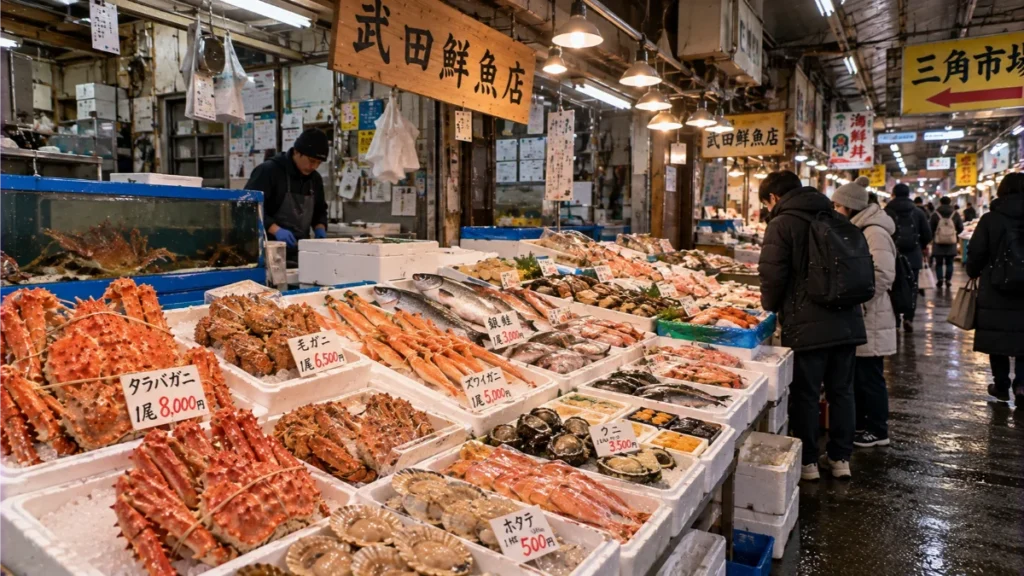
Crab is a winter highlight in Hokkaido. However, it helps to know what you are buying. Most king crab sold in Hokkaido is imported, often from Russia or Alaska. By contrast, hairy crab, or kegani, is the true local specialty. It is smaller, with sweet meat and rich crab miso inside. If you want a local taste, choose hairy crab.
So what is the Hokkaido king crab price at Sapporo Nijo Market? In winter, king crab usually costs around ¥10,000 to ¥13,000 per kilogram. At Nijo, small hairy crabs start around ¥3,000, while king crab starts near ¥6,000. Some stalls will also point you to nearby restaurants that cook your crab. Naturally, prices depend on size and season.
For a sit-down crab meal, though, try lunch instead of dinner. Dinner sets at crab restaurants often cost ¥10,000 to ¥15,000. Lunch versions can cost around ¥4,000. These prices change, so treat them as a guide.

6. Hokkaido Dairy: Soft-Serve, Cheese and Milk
Notably, Hokkaido produces around half of Japan’s milk. As a result, dairy here tastes noticeably rich and creamy. Try a soft-serve ice cream, even in the snow. Surprisingly, locals do it all winter. Cheese tarts and fresh milk are also worth a taste. In Otaru, sweet shops sell famous double-layer cheesecakes, too. Plus, farm shops around Biei and Furano sell fresh dairy. The richness is real, so pace yourself if you are sampling a lot.

7. Seicomart Hot Chef: The Storm-Night Rescue
Then there is Seicomart, Hokkaido’s own convenience store chain. Look for the orange sign with a bird logo. Inside, many branches have a Hot Chef counter with freshly cooked meals. Katsudon and big rice balls are local favorites. Best of all, most dishes cost around ¥500 to ¥600. On stormy nights, when restaurants close early, it is a genuine lifesaver.

Practical Tips
Eat seafood early. Markets open around 07:00 and wind down by early afternoon. So plan seafood for breakfast or an early lunch.
Carry cash. Market stalls, jingisukan restaurants and small ramen shops often prefer cash. Keep several thousand yen with you.
Choose lunch sets. Crab and sushi restaurants often offer cheaper lunch menus. Better still, lunch crowds are often smaller.
Protect your coat. At jingisukan restaurants, bag your coat as soon as you sit down. Otherwise, it will smell of smoke for days.
Prepare for crab. Crab shells are messy and spiky. So pack wet wipes, or ask for kitchen scissors.
Use queue apps. Popular soup curry shops often use LINE or ticket queues. Sign up, then wait somewhere warm.
Plan food stops around your route. Here is how I moved between cities by train. Staying near food streets helps, too. See my guide to where to stay in Hokkaido in winter. After eating, warm up with the best winter activities for non-skiers.
Rent a car for rural food stops. Farm cafés and coastal towns are easier by car. Compare rental cars for your Hokkaido route.
Stay connected. Translation apps make menus much easier. Set up an eSIM before you arrive.

FAQ
What should I eat first in Hokkaido in winter? Start with Sapporo miso ramen. Then try soup curry and fresh seafood.
Where is the best ramen alley in Sapporo? Ganso Ramen Yokocho in Susukino is the classic. Shin Ramen Yokocho nearby is usually less crowded.
How much does crab cost at Nijo Market? Small hairy crabs start around ¥3,000. King crab usually costs around ¥10,000 to ¥13,000 per kilogram.
Is soup curry very spicy? Only if you choose a high level. So start low, because each restaurant uses its own scale.
When should I visit seafood markets? Go early, ideally before 09:00. Many stalls sell out and close by early afternoon.
Do restaurants in Hokkaido accept cards? Many do. However, small shops and markets often prefer cash. Carry yen to be safe.