Best Day Trips from Sapporo in Winter: Otaru Canals & Jozankei Onsens
One day, I walked Otaru’s snowy canal past old stone warehouses. The next morning, I was soaking in a steaming rock pool in Jozankei. Both trips started from my Sapporo base, and neither needed a car. Otaru suits seafood lovers and history fans, while Jozankei is all about hot springs. For me, they are the best day trips from Sapporo in winter.
Quick Info
| Info | Details |
|---|---|
| Sapporo to Otaru | Train, about 35 to 45 minutes |
| Sapporo to Jozankei | Bus, about 60 to 80 minutes |
| Kaisen don at Sankaku Market | Around ¥2,000 to ¥5,000 |
| Guided option | Explore Otaru with a local guide |
| Where to stay | Sapporo hotels near the trains and buses |
| Car rental | Compare rental cars in Hokkaido |
| eSIM | Get data for maps and bus apps |

One Day in Otaru: Skip the Tourist Crowds for the Freshest Sankaku Market Seafood
Otaru was once a busy herring and trading port. Its stone warehouses and old bank buildings date from that boom. Today, it is an easy train ride from Sapporo, usually 35 to 45 minutes. A single ticket costs around ¥750 to ¥800. So for one Otaru trip, you rarely need a rail pass. Plus, trains run often, so you can leave whenever suits you.
The secret is timing. Tour buses arrive mid-morning and fill the canal by lunchtime. Meanwhile, seafood counters get long queues by then. So start early, eat first and see the canal afterward. Want to plan both day trips around a full week? See my 7-day Hokkaido winter itinerary.
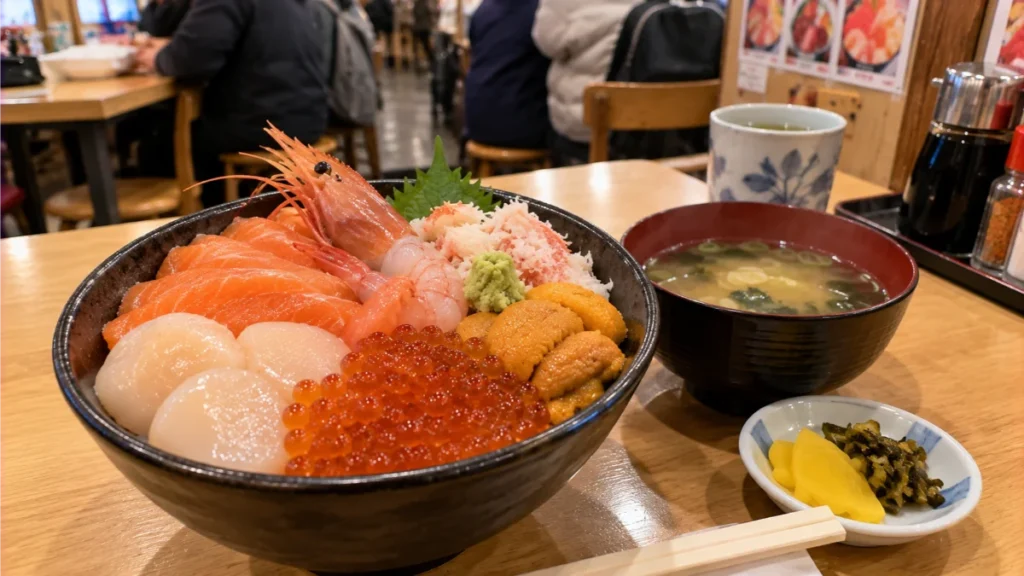
Sankaku Market Otaru Kaisen Don Price and Timing
Sankaku Market sits right beside Otaru Station. Inside, small counters serve kaisen don, rice bowls topped with raw seafood. So what is the Sankaku Market Otaru kaisen don price? Most bowls cost around ¥2,000 to ¥5,000. Simple bowls start near ¥2,000, while sea urchin and crab push prices higher. Many counters also let you build your own bowl from two or three toppings. Prices change with the catch, so treat these as a guide.
Some counters open around 07:00 or 08:00. Aim to arrive around 08:00, or before 09:00 at the latest. By mid-morning, lines at popular counters can stretch for an hour or more. If the queue looks hopeless, cross the road to Chuo Market. It usually has far smaller crowds. Also, carry cash, because some shops do not accept cards. Here is what else to eat in Hokkaido in winter.
Things to Do in Otaru: Winter Guide
After breakfast, walk downhill to the canal. From there, the famous view sits near Asakusa Bridge, where warehouses line the water. Next, stroll Sakaimachi Street, packed with glass workshops, music box shops and sweet shops. Snow piles high along the pavements, so the walk feels like a winter postcard. Afterward, warm up inside Kitaichi Glass, where a café glows under oil lamps. Use this guide to things to do in Otaru in winter as a loose plan.
Otaru humbled me within ten minutes of leaving the station. The road down to the canal slopes gently, and it was pure ice. I slipped, landed on my hip and laughed so I would not cry. A kind older woman pointed me to a nearby convenience store. There, I bought clip-on ice grips called suberidome for around ¥1,000. I strapped them onto my boots right outside the shop. After that, I walked the canal like a local. Buy a pair on your first day, not after your first fall.
In February, the Otaru Snow Light Path festival usually lights the canal with snow lanterns. It typically runs for about ten days, with lights from early evening. Each night, volunteers light candles inside rows of snow lanterns. Also, weekdays are calmer than weekends. Dates change yearly, so check the official schedule.

Otaru Christmas Illumination Photography Spots
If you visit in December, Otaru adds seasonal lights for the holidays. However, displays change each year, so check local listings before you go. Either way, the same viewpoints work beautifully. Here are the best Otaru Christmas illumination photography spots.
First, stand on Asakusa Bridge at dusk for the classic canal shot. Then the gas lamps glow as the sky turns blue. Next, head to the steam clock outside the Otaru Music Box Museum. It whistles every 15 minutes, so time your photo. Finally, climb Funami-zaka slope for a long view down to the harbor. Go slowly, because that slope gets icy.
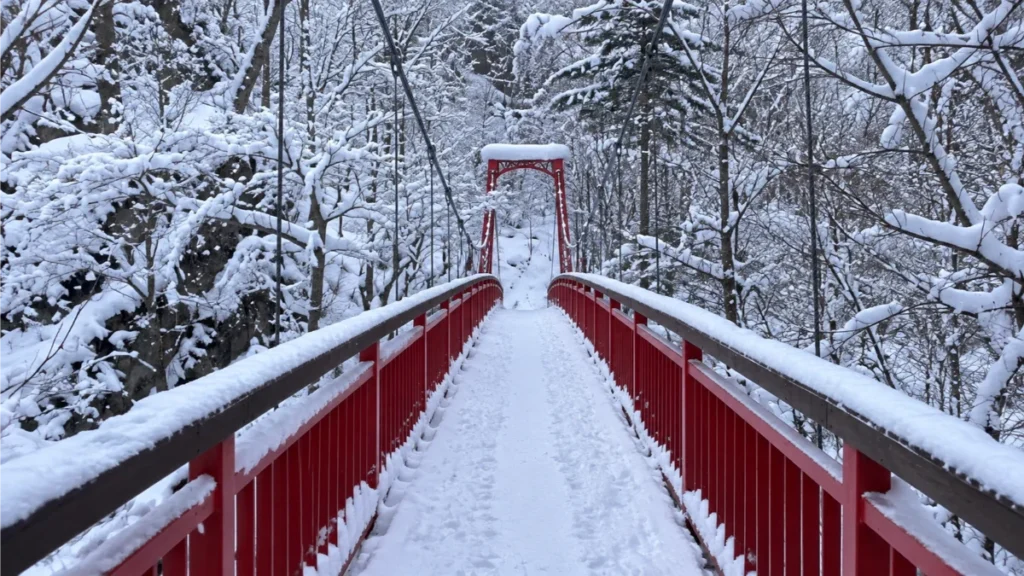
Jozankei Day Trip from Sapporo in Winter
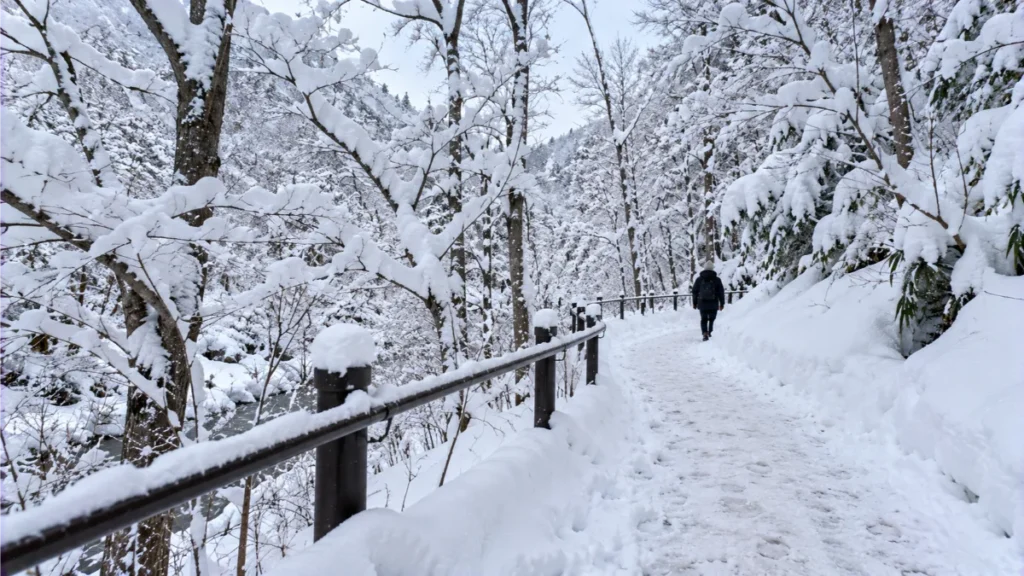
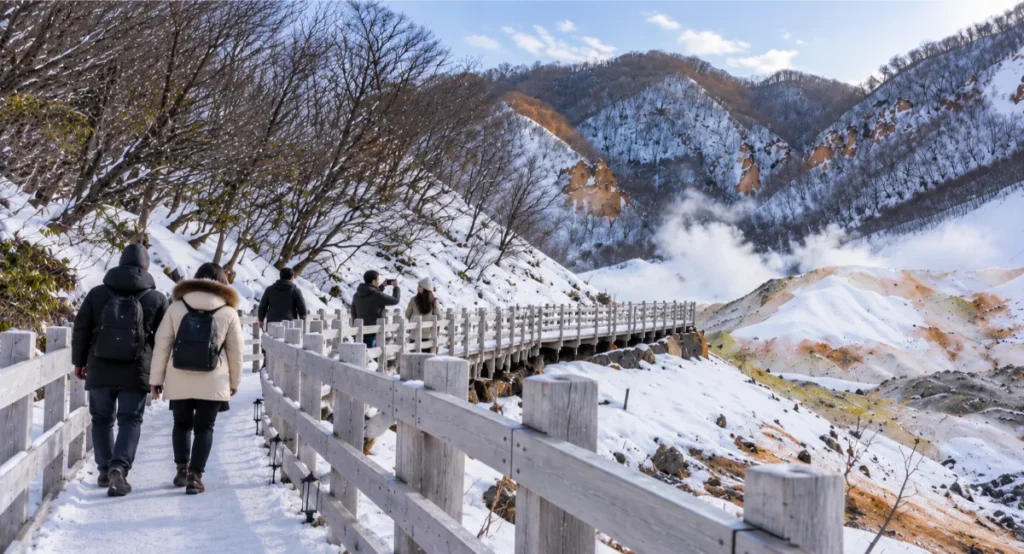
A Jozankei day trip from Sapporo in winter feels like a reset. Steam rises from the river, and snow weighs down every pine branch. Overall, the town is small, quiet and built around hot springs. It is also close enough for an easy morning escape. Look out for kappa statues around town, based on a local water spirit legend. Free foot baths dot the streets, too. Meanwhile, the Futami suspension bridge offers snowy river views. Altogether, it ranks among the best day trips from Sapporo in winter for slowing down.

How to Get to Jozankei Onsen from Sapporo by Train (or Not)
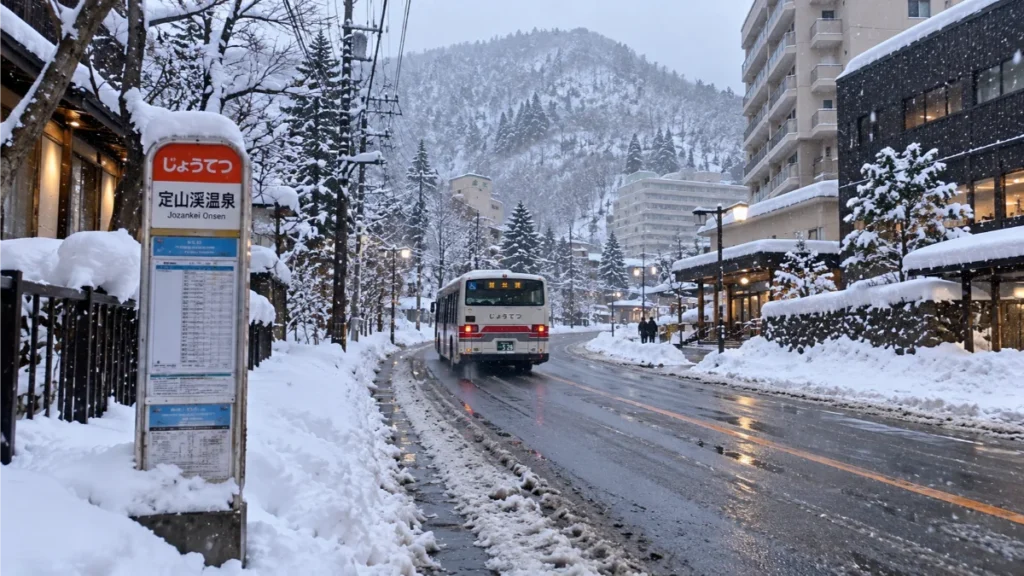
Many visitors search for how to get to Jozankei Onsen from Sapporo by train. However, no train goes there. Instead, you take a bus. That’s the honest answer to how to get to Jozankei Onsen from Sapporo by train. Fortunately, there are two good options.
The Kappa Liner is a reserved express bus, taking about 60 minutes. It costs around ¥1,700, with a small discount when you book online. Alternatively, local Jotetsu buses need no reservation. They take about 75 to 80 minutes and cost around ¥790 one way. Both leave from the Sapporo Station area. Prices and times change, so check before you go.
For Jozankei, I almost booked the bus and the onsen separately. Then I spotted the package ticket at the bus counter in Sapporo Station. It bundled the round-trip bus and entry to Hoheikyo for roughly ¥3,500. That was cheaper than paying for each part on its own. I also went in the morning on purpose. Many hotel onsens there stop accepting day visitors in the afternoon. Those were the prices and rules that week, so double-check before you go. Start early, buy the bundle, and soak while the baths are still open.
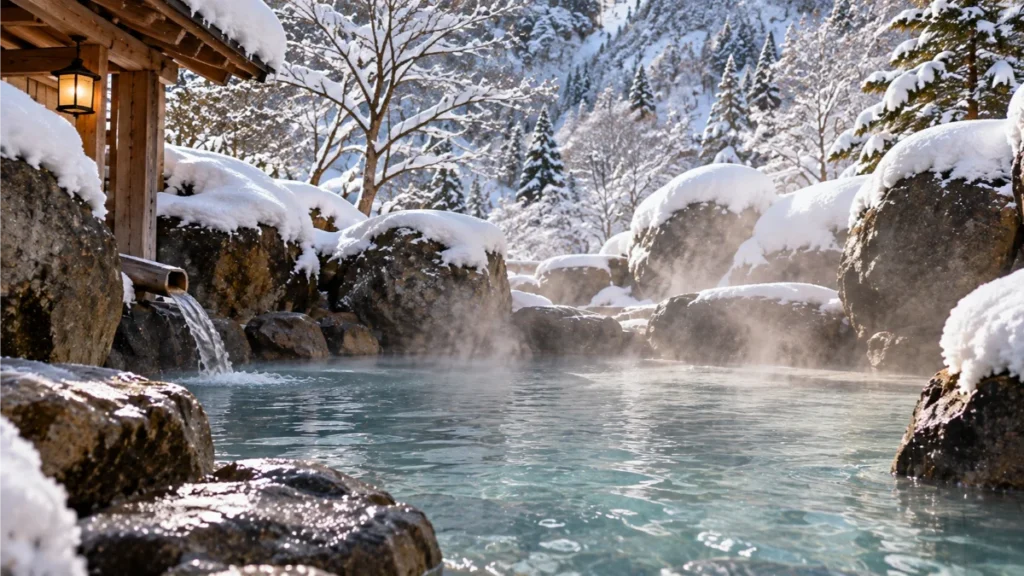
Day-Use Onsen Rules in Jozankei
Unfortunately, day-use rules catch many visitors out. Many hotel baths stop accepting day guests around 14:00 or 15:00. After that, they keep the water for overnight guests. So plan your soak for the morning or early afternoon.
Meanwhile, Hoheikyo is a popular choice for day visitors. It welcomes guests with tattoos, which is rare in Japan. Its large outdoor rock pool is the main draw. Also, bring your own towel, or rent one there. And carry some cash. Here is why Hoheikyo became my favorite onsen.
Basic etiquette applies everywhere, too. First, wash fully before entering the bath. Then keep your small towel out of the water. Many bathers fold it on their head instead.
Practical Tips
Store your luggage at Sapporo Station. Leaving after check-out? The Yamato counter at the station stores bags for around ¥500 for same-day pickup. Then travel light to Otaru or Jozankei.
Spread your trips out. The best day trips from Sapporo in winter deserve a full day each. So avoid squeezing both into one.
Buy ice grips on day one. Otaru’s slopes and Jozankei’s paths get icy fast. Convenience stores sell clip-on grips for around ¥1,000.
Carry cash. Markets, small counters and some onsens prefer cash. Keep a few thousand yen handy.
Book the Kappa Liner ahead. Seats are reserved, and they can sell out on weekends. Otherwise, take the local bus. Here is how I planned buses and trains in winter.
Rent a car only for wider trips. Both day trips work well by train and bus. Still, a car helps if you plan to explore further. Find a rental car for your Hokkaido trip.
Stay connected. Bus apps and maps help you catch the right departure. Set up an eSIM before you arrive. For hotels, see my guide to where to stay in Hokkaido in winter.
FAQ
What are the best day trips from Sapporo in winter? Otaru and Jozankei are two of the easiest and most rewarding. Food lovers prefer Otaru, while onsen fans prefer Jozankei.
Can I take a train to Jozankei? No, there is no train to Jozankei. Take the Kappa Liner express bus or a local Jotetsu bus instead.
How much is kaisen don at Sankaku Market? Most bowls cost around ¥2,000 to ¥5,000. Bowls with sea urchin or crab cost more.
What time should I arrive at Sankaku Market? Arrive around 08:00, or before 09:00 at the latest. Queues grow fast by mid-morning.
When is the Otaru Snow Light Path festival? It usually takes place in February and lasts about ten days. Check the official site for this year’s dates.
Can I visit both Otaru and Jozankei in one day? It is possible, but rushed. Instead, give each one its own day for a relaxed trip.