Best Things to Do in Hokkaido in Winter for Non-Skiers: Onsens, Ice Festivals & Wildlife
I spent a whole week in Hokkaido without clipping into skis once. Instead, I soaked in snowy onsens and walked among glowing ice sculptures. I also watched the afternoon light fade over Biei’s white hills. Not once did I miss the slopes. If you are not a skier either, you are in good company. Here are the best things to do in Hokkaido in winter for non-skiers. Along the way, I share a few personal choices, too.
Quick Info
| Info | Details |
|---|---|
| Sapporo to Noboribetsu | About 1 hour 15 minutes by limited express, plus a short bus |
| Drift ice season | Usually late January to early March |
| Penguin walk | Usually from late December, depending on snow |
| Guided tour | Visit Noboribetsu and Lake Toya in one day |
| Where to stay | Bases for onsens and day trips |
| Car rental | Compare rental cars in Hokkaido |
| eSIM | Get data before you land |
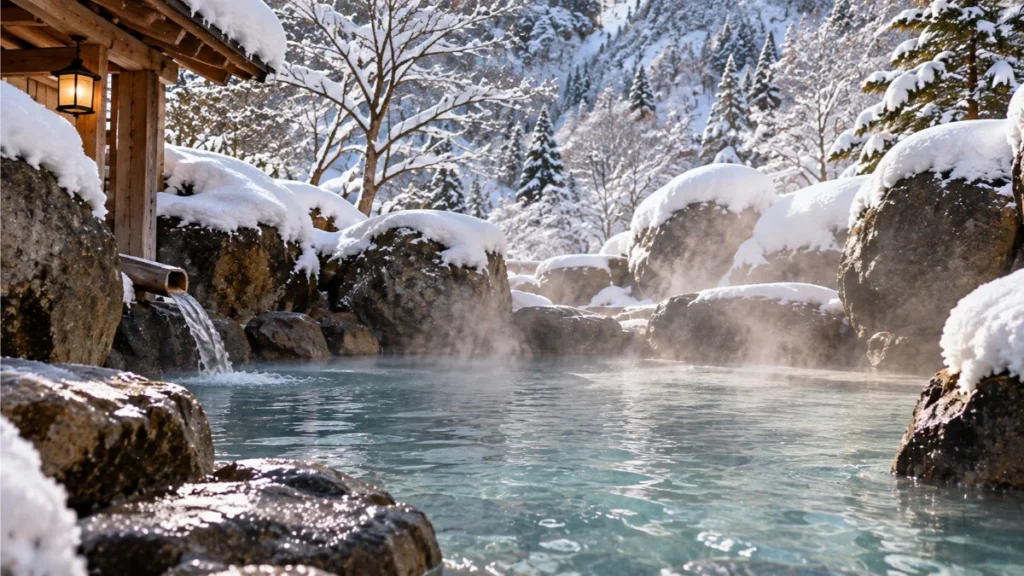
Magical Hokkaido Winter Experiences: Where to Find the Best Outdoor Snow Onsens
An outdoor onsen in falling snow is pure Hokkaido. The air bites your face while hot water wraps your body. For the best outdoor snow onsen in Hokkaido, start close to Sapporo.
Jozankei sits about an hour from the city by bus. There, Hoheikyo onsen has a large outdoor rock pool among the trees. It also welcomes guests with tattoos, which is rare in Japan.
My favorite moment in Hokkaido happened at Hoheikyo, deep in Jozankei. I slipped into the large outdoor rock pool just as snow began to fall. Snowflakes melted on my shoulders while the water stayed wonderfully hot. Around me, steam drifted up into the pine trees. I stayed until my cheeks were cold and my body was not. Afterward, I tried the onsen’s well-known Indian curry, which surprised me completely. Do not skip the outdoor bath in winter, because falling snow makes it unforgettable.
Further south, Marukoma Onsen at Lake Shikotsu has an outdoor bath level with the lake. Meanwhile, Sounkyo in the central mountains offers baths with dramatic valley views. Wherever you go, wash fully before entering. Also, keep your small towel out of the water, and tie up long hair. Plan your Jozankei visit with my day trips from Sapporo guide.

Noboribetsu Onsen Day Trip from Sapporo in Winter
Noboribetsu is Hokkaido’s most famous hot spring town. A Noboribetsu Onsen day trip from Sapporo in winter is easy without a car. First, take a limited express train to Noboribetsu Station, about 1 hour 15 minutes away. Then ride a local bus for about 15 minutes up to the onsen town. Alternatively, one direct bus a day runs from Sapporo, taking around 1 hour 40 minutes. It can sell out, so book ahead.
Once there, walk the boardwalks of Jigokudani, or Hell Valley. This volcanic crater steams with sulfurous vents, especially dramatic against fresh snow. Look out for the demon statues around town, too. In winter, some trails beyond the valley may close, so stick to marked paths.
Afterward, soak at one of the ryokan that offer day-use bathing. For example, Dai-ichi Takimotokan has several types of spring water. One of its indoor baths even looks out toward Hell Valley. Prefer a guided day? Book a Noboribetsu and Lake Toya day tour.

Hokkaido Ice Festivals Beyond Sapporo
Ice festivals rank among the top things to do in Hokkaido in winter for non-skiers. The Sapporo Snow Festival usually runs for about a week in early February. Otaru Snow Light Path then lights the canal with snow lanterns in mid-February.
The one I attended was the Lake Shikotsu Ice Festival, near New Chitose Airport. Its sculptures come from the lake’s clear water, so they glow a natural blue. It typically runs from late January to late February. Here is my full Lake Shikotsu Ice Festival guide.
In the central mountains, the Sounkyo Ice Waterfall Festival continues into early March. Its ice caves and towers are lit in bright colors after dark. Entry to the Sapporo Snow Festival is free. Meanwhile, Shikotsu and Sounkyo charge around ¥1,000. Festival dates change every year, so always check the official websites.
Hokkaido Winter Wildlife: Drift Ice Cruise in Abashiri and Wild Encounters
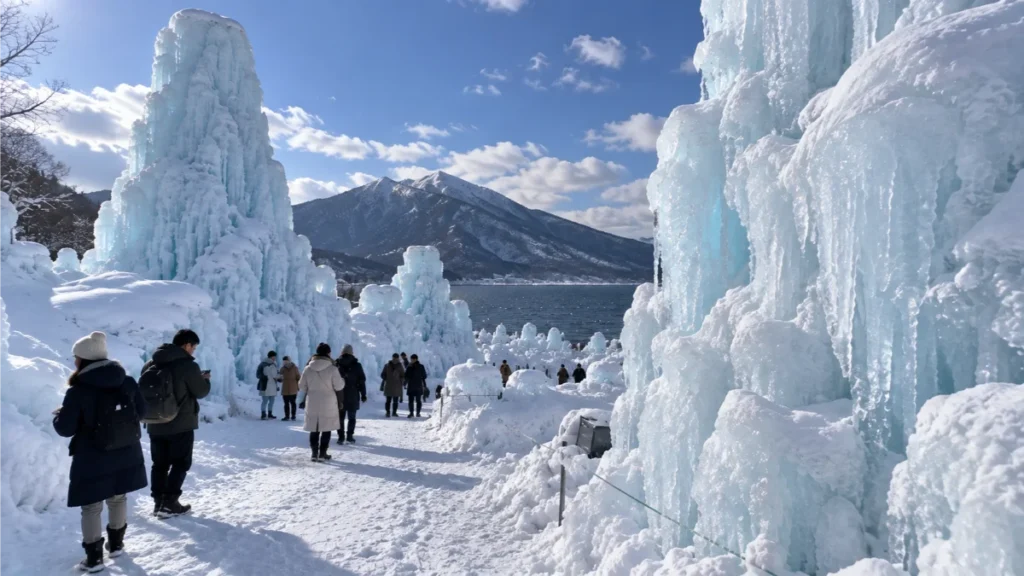
Hokkaido’s wildlife is at its most striking in winter. Snow makes animals easier to spot, and drift ice transforms the northeast coast.
From late January to early March, drift ice often reaches the Sea of Okhotsk. In Abashiri, the Aurora icebreaker carries passengers through it. Further up the coast, Monbetsu runs its own icebreaker, the Garinko-go. However, drift ice is unpredictable. Some weeks the sea is packed. Other weeks, it is almost empty. So check the Japan Meteorological Agency’s sea ice maps before you go. Also, choose flexible tickets if you can. Cruises can be cancelled in rough weather, so leave a spare day. A Hokkaido winter wildlife drift ice cruise in Abashiri needs a little luck.
Elsewhere, wild red-crowned cranes gather near Kushiro in winter. In fact, their courtship dances in the snow are a joy to watch. On the Shiretoko coast, Steller’s sea eagles often perch on the ice. Across the island, you may also see Ezo deer and red foxes from the train. Keep in mind that the east is far from Sapporo. So plan three or four days if wildlife is your main goal.
Asahiyama Zoo Penguin Walk Schedule
Asahiyama Zoo in Asahikawa is one of Japan’s most visited zoos. Interestingly, it once nearly closed, then reinvented itself with exhibits that show natural animal behavior. Today, its winter penguin walk draws big crowds.
The walk usually starts in late December, once enough snow has fallen. It typically takes place in the late morning, with a second walk on some afternoons. However, winter opening hours are short, and the zoo closes over New Year. So check the official Asahiyama Zoo penguin walk schedule for 2026 before you go. From Asahikawa Station, local buses take around 40 minutes. They do not accept national IC cards, so bring cash.
I skipped Asahiyama Zoo, even though my hotel ran a shuttle there. Honestly, I really wanted to see the penguins waddle through the snow. It is famous, and many visitors love it. Still, I prefer seeing animals in the wild, and I follow that rule everywhere. I knew I would feel guilty about it for months afterward. So I spent my afternoon in Biei’s snowy hills instead. There are no buses out there, so I took a taxi from Biei Station. Late that afternoon, I stood before the lone Christmas Tree in an empty field. Nobody else was around. Choose the experiences that fit your values, then plan the logistics around them.

More Winter Experiences for Non-Skiers
Biei itself is perfect for snowy landscapes. Its rolling hills turn completely white, and lone trees stand out against the sky. In the evening, Blue Pond is lit up, even though the water is frozen. See how I fit Biei into my 7-day Hokkaido winter itinerary.
Nearby, Shikisai-no-Oka turns its flower fields into a winter snow park. There, non-skiers can try snow tubing and ride snow rafts pulled by snowmobiles. It is playful, simple fun and needs no experience. Altogether, these are easy things to do in Hokkaido in winter for non-skiers.
Snowmobiling and snowshoeing are popular, too. Before booking, though, check your travel insurance carefully. Many standard policies exclude winter sports without an extra add-on. For a calmer evening, explore what to eat in Hokkaido in winter instead.
Practical Tips
Pack sunglasses. Bright sun on fresh snow can cause snow blindness. Wear sunglasses with strong UV protection, even if you are not skiing.
Check your insurance. Snowmobiles and other winter activities often need special cover. Read your policy before you book.
Carry cash for buses. Some local buses do not accept IC cards. Keep coins and small notes ready.
Have a taxi backup plan. Storms can delay flights and buses. Taxis may run out quickly, so keep local bus times saved on your phone.
Rent a car for remote areas. Crane sites and the drift ice coast are far from Sapporo. Compare rental cars for your Hokkaido trip.
Stay connected. Sea ice maps, bus times and translation apps all need data. Set up an eSIM before you arrive. For bases, see my guide to where to stay in Hokkaido in winter.
FAQ
What can non-skiers do in Hokkaido in winter? Plenty. Try snowy onsens, ice festivals, drift ice cruises and wildlife watching.
Can I visit Noboribetsu as a day trip from Sapporo? Yes. Limited express trains take about 1 hour 15 minutes, followed by a short bus ride.
When is the best time to see drift ice? Usually from late January to early March, with February often best. Conditions change, so check sea ice maps first.
When does the Asahiyama Zoo penguin walk start? It usually starts in late December, depending on snow. Check the official zoo website for this year’s schedule.
Where can I see wild animals in Hokkaido in winter? Visit Kushiro for red-crowned cranes and the Shiretoko coast for sea eagles. Ezo deer appear across the island.
Do I need special insurance for winter activities? Often, yes. Many policies exclude snowmobiling and similar activities without an add-on.