Sapa Food Guide: What to Eat in the Northern Highlands
Six months in Vietnam taught me that northern highland food is completely different from what the rest of the country eats. This Sapa food guide covers the dishes worth seeking out, the ones worth skipping, where to eat them, and how to have the one food experience that most visitors completely miss. Sapa sits at 1,500 meters, and the altitude shapes everything on the plate: heartier, smokier, fermented, and built for cold mornings. The pho you had in Hanoi is not what you’ll find here.
Quick Info
| Dish | What it is | Where to find it |
|---|---|---|
| Thang Co | Horse meat broth stew | Bac Ha Sunday market, Sapa town stalls |
| Men Men | Steamed corn flour cake | Black Hmong villages, morning market |
| Salmon hotpot | Fresh salmon, local herbs | Sapa town restaurants |
| Black chicken hotpot | Free-range mountain chicken | Valley homestays, local restaurants |
| Red Dao herbal tea | Forest herb infusion | Red Dao villages, Ta Phin |
| Smoked buffalo meat | Dried, smoky, intense | Market stalls, highland villages |
| Banh Day | Sticky rice cake | Sapa morning market |
| Corn wine (Ruou Ngo) | Fermented corn spirit | Village homestays, local ceremonies |
Why This Sapa Food Guide Starts at the Market
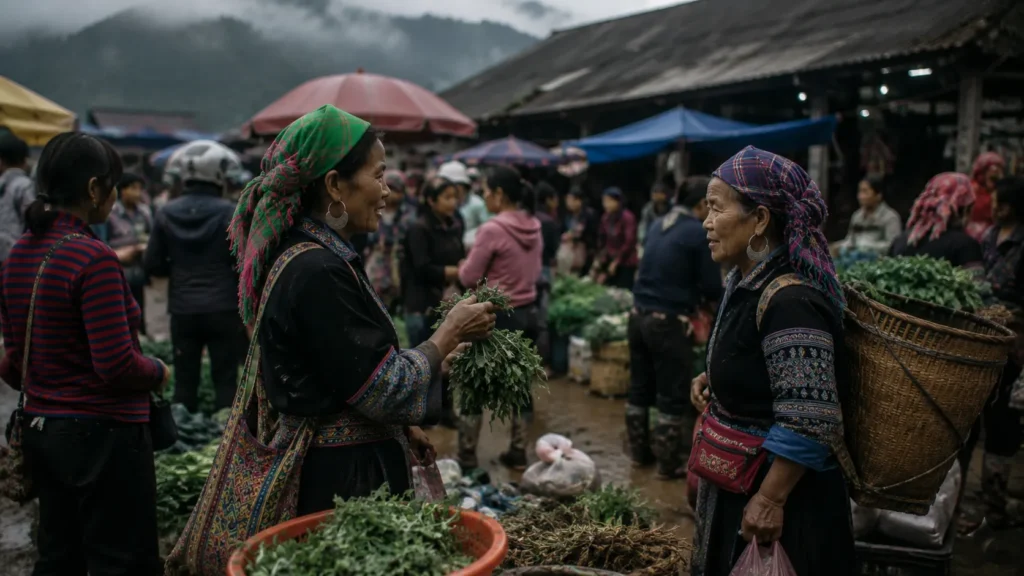
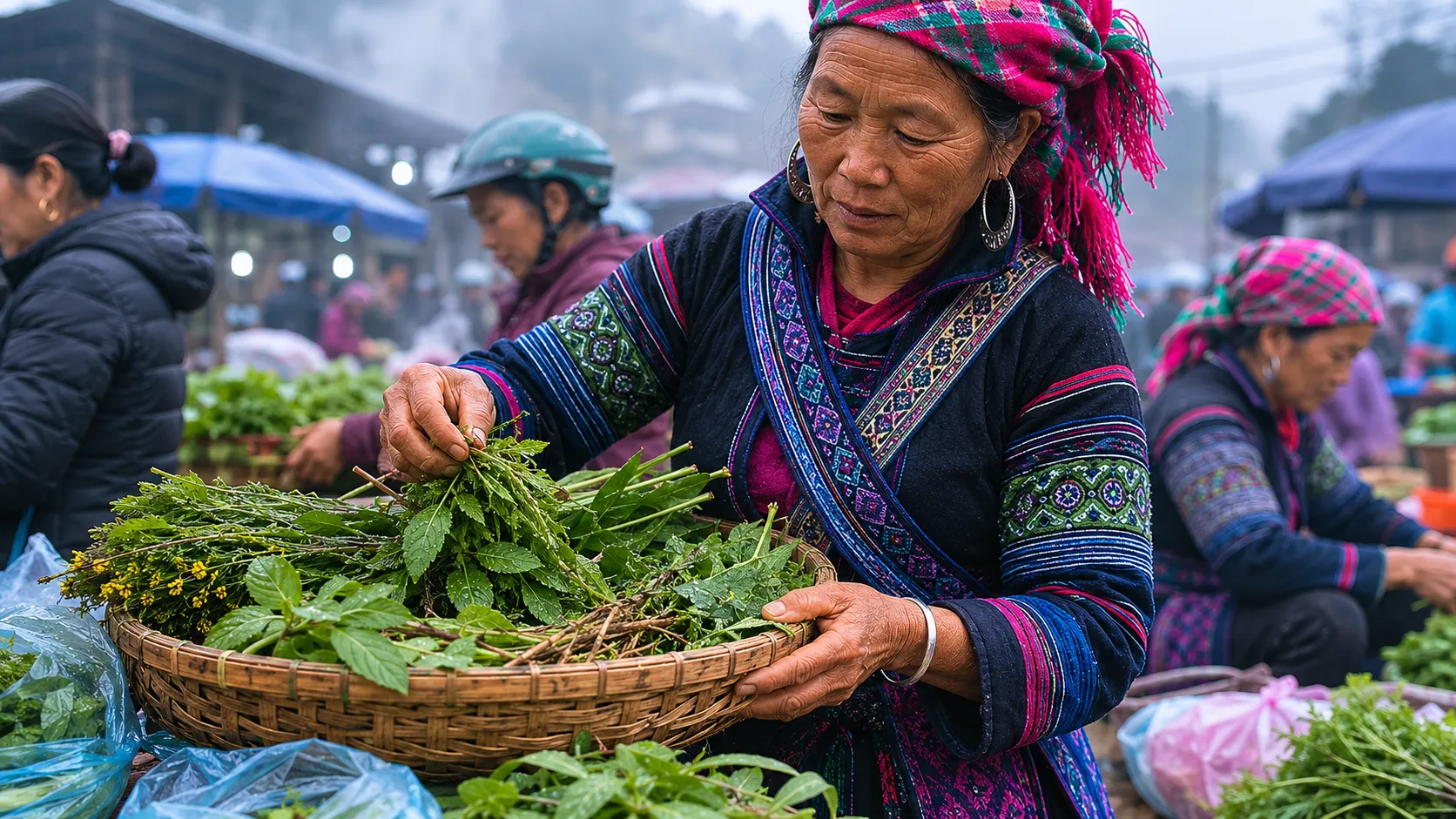
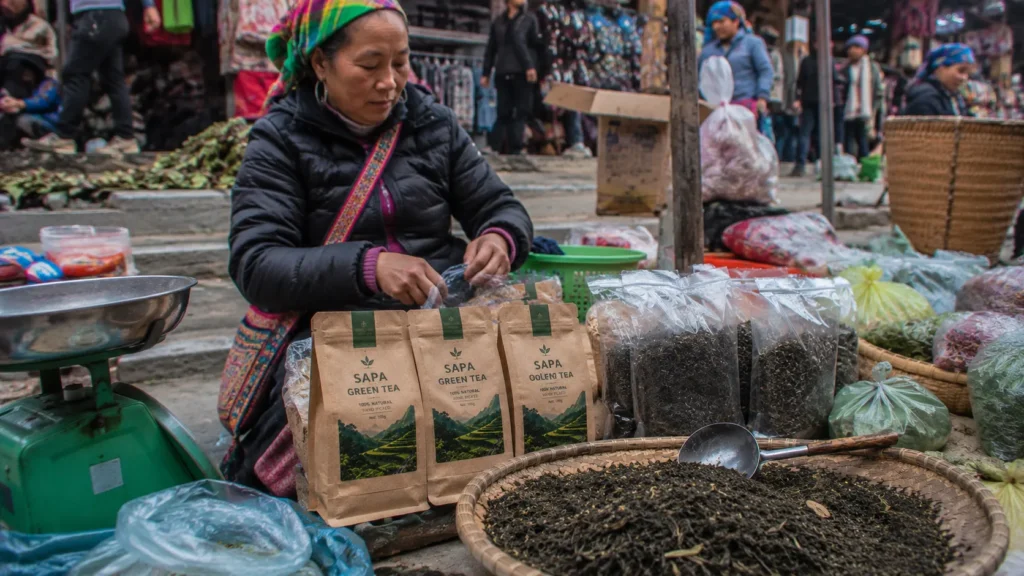
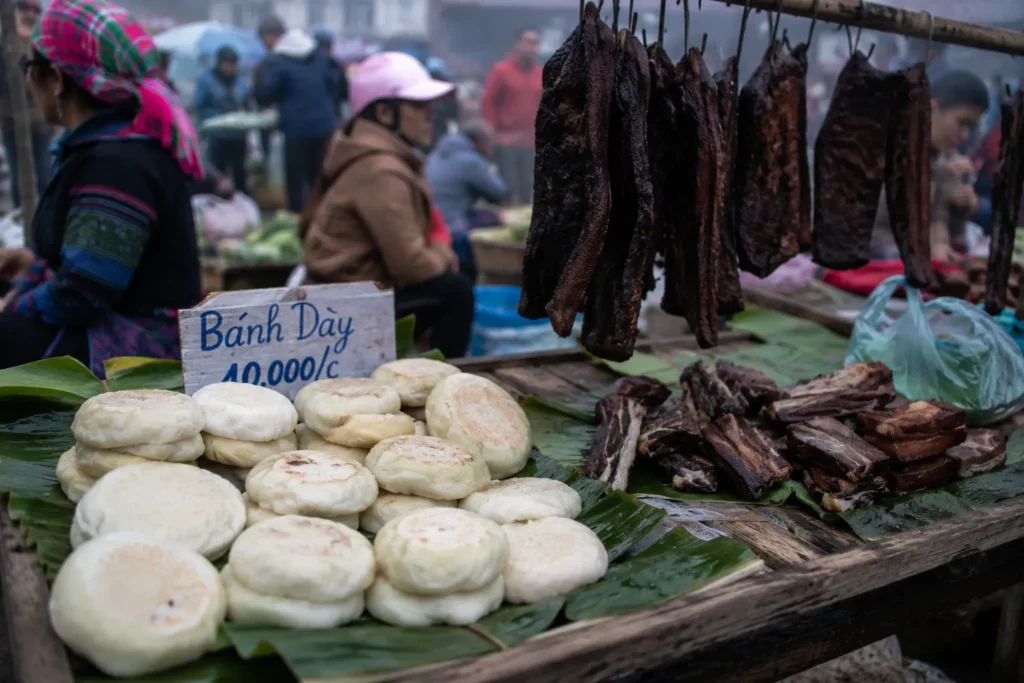
The Sapa food guide that serves you best begins at 5am, not at a restaurant. Sapa Central Market, in the lower section of town below the main plaza, comes alive before sunrise. Local women from the surrounding villages bring in what they grew, foraged, or made that morning. By 8am, the best stalls are picked clean.
This is where you’ll find fresh thang co broth simmering in iron pots, banh day cakes wrapped in banana leaves, and smoked meats hanging from wooden frames. Moreover, the market is where you begin to understand that Sapa food is not street food in the Hanoi sense. It’s highland subsistence cooking made shareable. Accordingly, go early, go hungry, and go with small cash. Nothing here costs more than a few thousand dong.
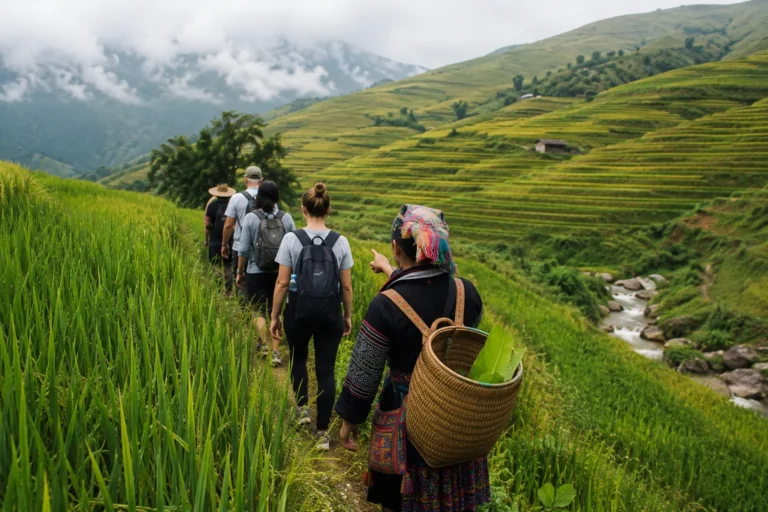
For the best market experience with context, this morning cooking class starts with a guided walk through the market before moving to a Hmong family kitchen in the valley. It’s the most useful two hours you’ll spend on Sapa food.
The Dishes Every Sapa Food Guide Must Cover
Thang Co: The Dish That Divides Visitors
Thang Co is the most famous dish in any honest Sapa food guide, and also the most polarizing. It’s a stew made from horse meat, offal, and internal organs, slow-cooked in a large iron pot with lemongrass, ginger, and local spices. The broth is dark, rich, and intensely flavored.
It originated as a Hmong ceremonial food. Specifically, it was prepared for festivals and gatherings, not everyday meals. However, it’s now available year-round at Sapa market stalls and at the Bac Ha Sunday market, where it’s most authentically served.
The honest assessment: if offal and horse meat are outside your comfort zone, skip it without guilt. However, if you want the single most specific taste of Hmong highland culture, thang co is it. Order a small bowl at a market stall rather than a restaurant version, which tends to be diluted for tourist palates.
Men Men: The Highlands Staple Nobody Talks About
Men men is steamed corn flour, pressed into a dense cake and served with vegetables or fermented sauces. It’s the everyday staple of Black Hmong families, eaten the way rice is eaten in the lowlands. Furthermore, it has a slightly nutty flavor from the highland corn variety used here.
You won’t find men men on most tourist restaurant menus. It appears at morning market stalls, at village homestays, and occasionally as a side dish at local family restaurants. Try it with a spoonful of the accompanying black sesame sauce. It’s worth the effort of finding.
Salmon and Black Chicken Hotpot
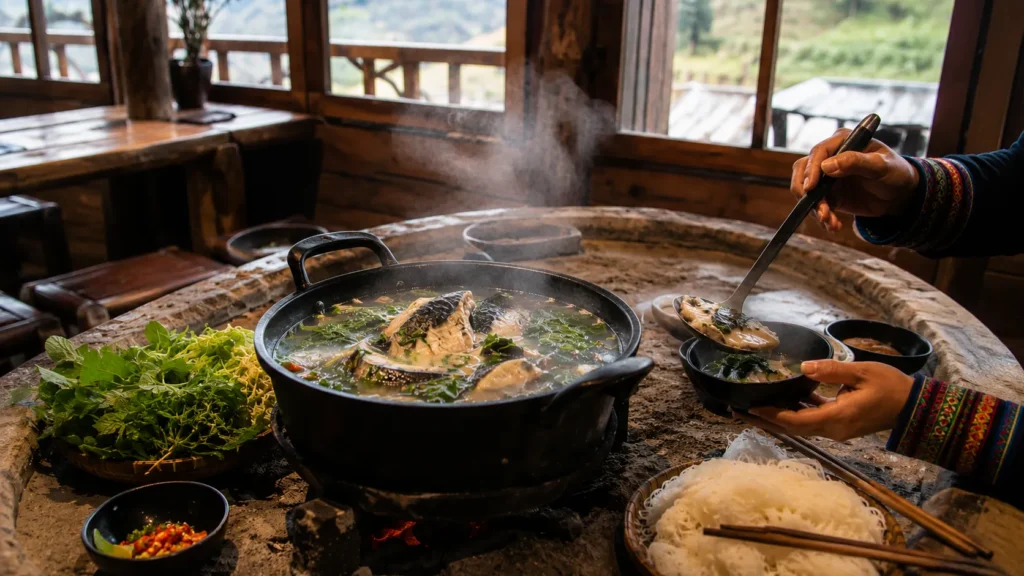
Two hotpot dishes dominate Sapa’s restaurant scene, and both are genuinely good. Sapa salmon comes from fish farms in the cold mountain streams of Lao Cai province. The water temperature keeps the flesh firm and clean-tasting. Salmon hotpot, served with a broth of local herbs and mountain vegetables, is the dish most visitors order and for good reason.
Black chicken (ga den) is a free-range highland breed with dark skin, dark meat, and a flavor considerably more intense than lowland chicken. Black chicken hotpot uses the whole bird, slow-cooked with medicinal herbs that the Red Dao people have used for generations. Additionally, the broth has a dark, complex quality that supermarket chicken simply cannot produce.
Both hotpots are best eaten at valley homestays rather than in Sapa town restaurants. The ingredients travel shorter distances. The recipes stay closer to the original.
The Red Dao Herbal Tradition: Food as Medicine
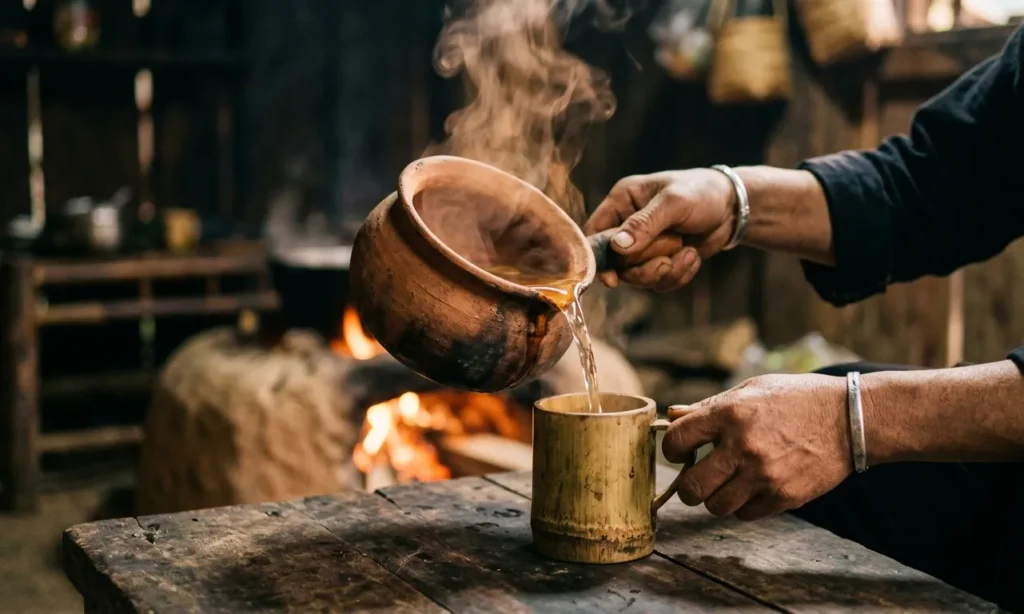
The Red Dao people of Ta Phin village maintain a centuries-old tradition of using forest herbs for healing. This intersects with food in ways that most visitors miss entirely. Red Dao herbal tea, brewed from a blend of roots and leaves collected from the surrounding mountains, is served at homestays and at Ta Phin village itself. The flavor is earthy, slightly bitter, and warming in the cold highland mornings.
Similarly, the Red Dao herbal bath, while not food, is the same medicine tradition applied externally. If you visit Ta Phin, the combination of an herbal meal and a post-trek herbal bath is the most complete Red Dao cultural experience available. This full-day Ta Phin trek includes both the village visit and the traditional herbal bath, finishing with lunch at a local family homestay.
Sapa Street Food: What Actually Lives on the Streets
Sapa’s street food is concentrated around the market area and the Stone Church plaza in the evenings. Here’s what’s worth trying:
Banh day: Sticky rice cakes, hand-pounded and wrapped in banana leaves. Sold at market stalls by Hmong women in the morning. Sweet, chewy, and filling.
Grilled corn: Sold on small charcoal grills near the market in the evening. Highland corn is shorter and denser than lowland varieties. The kernels have more flavor and char beautifully.
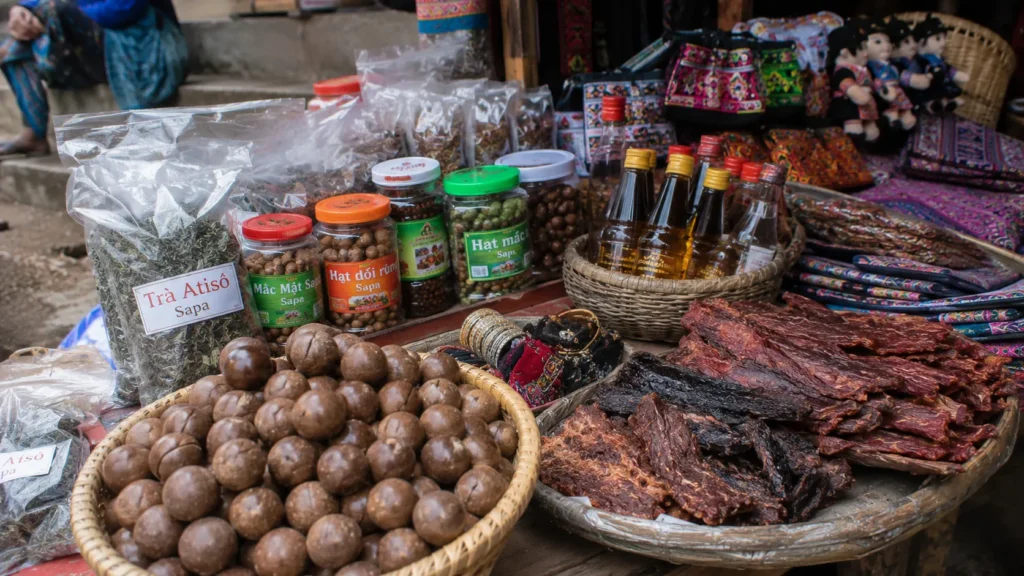
Smoked buffalo meat: Dried strips of buffalo, smoked over wood fires and served with chili sauce. Intensely savory. Available at market stalls and in vacuum-packed form as a take-home option.
Banh mi with highland fillings: A few stalls near the Stone Church serve banh mi with locally sourced fillings including smoked pork, pickled mountain vegetables, and fresh herbs. Different from the Hanoi version in all the right ways.

Corn Wine and the Village Ceremony Experience
Ruou ngo, fermented corn wine, is the ceremonial drink of the highland villages. It’s made from glutinous corn and local yeast, and it ranges from mildly sweet to aggressively strong depending on the batch and the producer.
At a valley homestay dinner, your hosts will often bring out corn wine at the table. Refusing is fine. Accepting, even for one small glass, is understood as respect for the hospitality. The ritual of sharing a drink before a meal is specific to highland culture and doesn’t occur in the same way in lowland Vietnam.
One thing to know: the stronger batches are significantly stronger than they appear. Go slowly, particularly if you have a full trekking day planned for the following morning.
Where to Eat in Sapa: Beyond the Tourist Strip
The main pedestrian strip in Sapa town is full of restaurants aimed at tour groups. They’re not bad. However, the best Sapa food guide doesn’t stop there.
Valley homestay dinners. The single best meal experience in Sapa is a family-cooked dinner at a valley homestay. Eco Hills Homestay in Ta Van village is consistently praised for its family meals: fresh vegetables from the terrace garden, black chicken, and local rice cooked on a wood fire. The food is cooked by Thuy’s family, ordered a la carte, and eaten on a terrace overlooking the rice fields.
The Sapa market food stalls. Already covered above. Go early and eat what the locals are eating.After you’ve eaten your way through the market, 10 Best Things to Do in Sapa: What’s Actually Worth It covers how to fill the rest of your days.
Hmong and Red Dao village cooking. This cooking class with a local Hmong family covers both the market visit and hands-on preparation of spring rolls, local soups, and rice dishes. The class lasts 3.5 hours and ends with the meal you’ve made. It’s the best structured food experience in Sapa. Alternatively, this spring rolls-focused class is shorter and more focused if you’re pressed for time.
Practical Tips for Eating Well in Sapa
Go to the market before 7am. The best stalls are gone by 8am. Thang co, banh day, and smoked meats sell out fast on weekday mornings and are gone within an hour of opening on market days.
Eat at valley homestays, not town restaurants. The food quality gap between a family-cooked valley meal and a town tourist restaurant is significant. Moreover, the price is usually lower. If your accommodation doesn’t offer dinner, ask them to recommend a nearby family who does.
Try the highland corn, not the imported rice. Several homestays serve a mix of highland glutinous rice and regular rice. The glutinous highland variety, slightly purple in color, has a nuttier and more complex flavor. Ask for it specifically.
Book the cooking class before other activities. It reframes every meal you eat afterward. Once you’ve seen the morning market with a local guide, you understand what you’re eating and where it came from. See Where to Stay in Sapa: Best Hotels and Sustainable Homestays 2026 for the best valley bases close to village kitchens.
Activate a Vietnam eSIM before arrival. Finding specific market stalls and village restaurants requires offline maps in the valley. Activate a Vietnam eSIM before your flight and download offline maps for Lao Cai province before leaving Sapa town.
FAQ
What is the most famous food in Sapa? Thang co is the most culturally specific dish in any Sapa food guide. Made from horse meat and offal with highland spices, it’s a Hmong ceremonial food now available at market stalls. Salmon hotpot is the most popular dish among visitors.
Is Sapa food different from the rest of Vietnam? Yes, significantly. Highland food is heartier, smokier, and more fermented than lowland Vietnamese cuisine. The ingredients, especially highland corn, black chicken, and Red Dao herbs, are specific to this altitude and climate.
Where is the best place to eat in Sapa? Valley homestay dinners. Eco Hills Homestay in Ta Van is consistently recommended for family-cooked meals with rice terrace views.
Is there a cooking class in Sapa worth doing? Yes. This Hmong cooking class includes a morning market visit and hands-on cooking at a local family homestay. It’s the most practical and culturally genuine food experience in Sapa.
For everything beyond the table, Sapa Valley Travel Guide: How to Slow-Travel Vietnam’s Highlands covers where to stay, how to get there, and which valleys are worth your time.