The Ultimate Phetchaburi Travel Guide: Bangkok’s Hidden Historical Escape (2026)
This Phetchaburi travel guide covers a town that most travelers drive past on the way to Hua Hin. I almost did the same. Someone mentioned it was just over an hour away from where I was staying and had cave temples, a hilltop palace, and UNESCO-recognized food. Two days later I left with more photos, more stories, and more palm sugar desserts than I planned for. Phetchaburi is not trying to be the next big destination. That is exactly what makes it worth your time.
Quick Info
| Info | Details |
|---|---|
| Getting there | Van from Bangkok 1.5-2 hours, train 2.5-3 hours. Book tickets on 12go |
| From Hua Hin | Van ~1 hour, very easy day trip or overnight |
| Hua Hin day tour | Phetchaburi temples and palace group tour from Hua Hin (if you prefer not to stay overnight) |
| eSIM | Get your Thailand eSIM before you fly |
| Local transport | Tuk-tuk 60-100 THB per trip, bicycle free from most hotels |
| Cash rule | Almost everything is cash only. ATMs available in town center. |
Is Phetchaburi Worth Visiting? What to Expect Beyond the Temples
Is Phetchaburi worth visiting? If you care about history, architecture, and food that goes beyond pad Thai, absolutely. Phetchaburi earned a spot in UNESCO’s Creative Cities Network for gastronomy in 2021. The local cuisine is built around three ingredients you will not find this concentrated anywhere else in Thailand: palm sugar, sea salt from the Ban Laem flats, and Tha Yang limes.
I was staying in Hua Hin when someone mentioned Phetchaburi was just over an hour away. I took a van the next morning and what I found changed my understanding of this region completely.
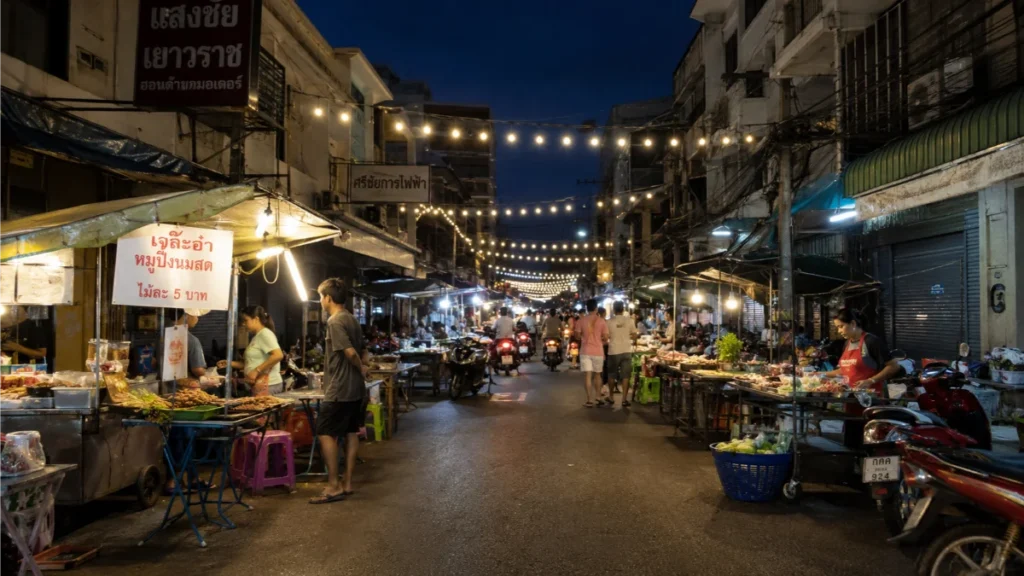
The town sits between Bangkok and the southern coast. It served as a royal retreat for Thai kings across multiple dynasties. That history left behind cave temples filled with Buddha images, a hilltop palace blending Thai, European, and Chinese architecture, and a German Art Nouveau summer palace inside a military camp. Yet almost no international tourists visit. The streets belong to locals, the markets sell to neighbours, and English menus are rare.
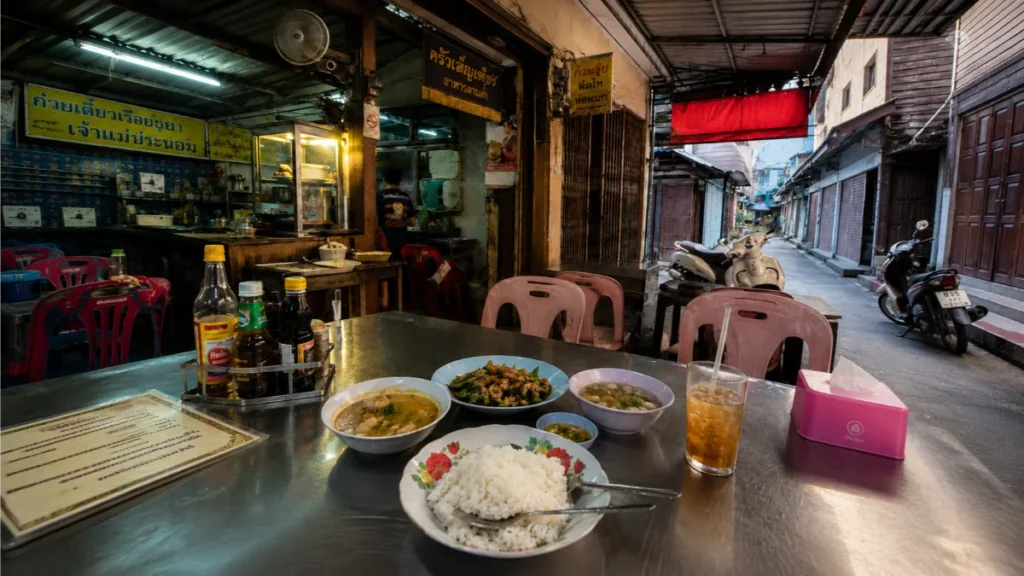
Two signature dishes define the local food scene. Khao Chae is a royal dish of chilled jasmine-scented rice served with sweet shrimp balls, dried fish, and fried shallots. Try it at 133 Baan Khao Chae & Fresh Coffee near Wat Mahathat or at the historic Sapsin Market. Khanom Mo Kaeng is a baked custard made from fresh palm sugar, coconut milk, and egg, topped with crispy shallots. Street vendors sell it throughout the old town.
Top Things to Do in Phetchaburi: Cave Temples & Royal Hilltop Palaces
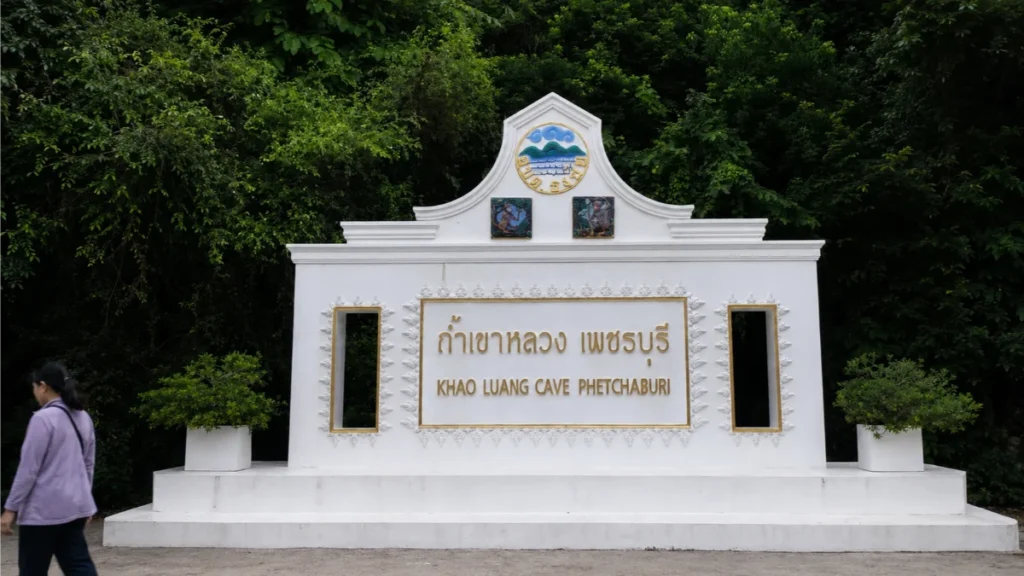
Exploring the Tham Khao Luang Cave (The Iconic Sunbeam Cave)
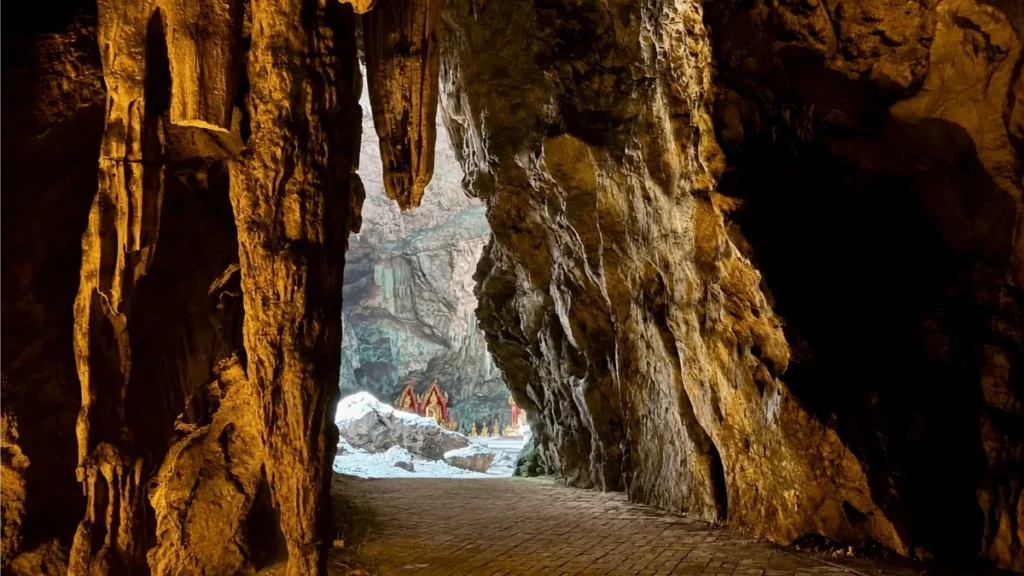
Tham Khao Luang is a natural cave that houses dozens of Buddha images beneath a collapsed ceiling. Between 11:00 and 13:30, sunlight enters through the opening above and illuminates the statues below. The effect draws photographers from across the region. Entry costs just 10 THB. A shuttle from the Wat Bun Tawee parking area below costs 15 to 25 THB return.
Visit on a weekday morning for quieter conditions. Weekend crowds increase significantly. The cave stays cool inside but the walk up is exposed to sun and heat.
One warning about the monkeys. Crab-eating macaques live around both Tham Khao Luang and Khao Wang. They are aggressive around food and shiny objects. Keep everything in a zipped backpack. Remove sunglasses and hats before entering their territory. Avoid direct eye contact.
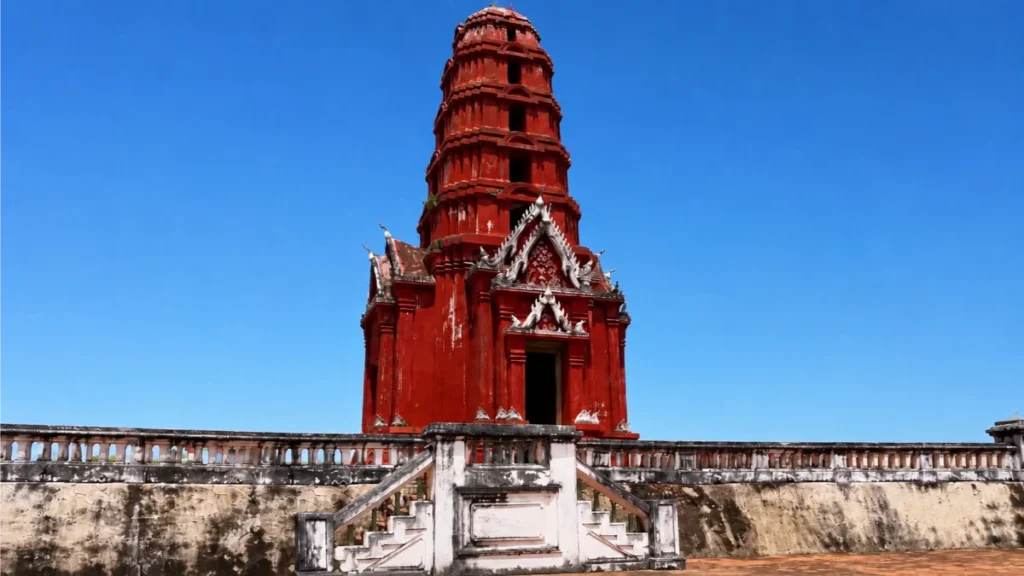
Walking Through Phra Nakhon Khiri Historical Park (Khao Wang)
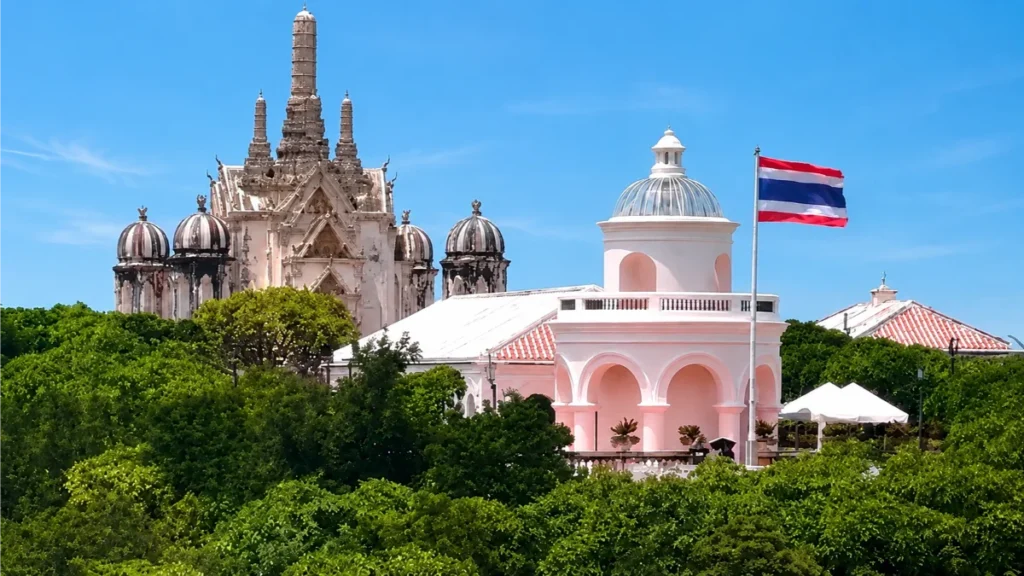
King Rama IV built this hilltop palace complex in the 1850s. Thai, European, and Chinese architectural styles blend across the summit. The views over Phetchaburi town stretch in every direction. Entry costs 150 to 200 THB for foreign visitors. The funicular cable car costs 80 THB return.
I decided to walk up instead of taking the cable car. The stone steps looked manageable from below. What I did not account for was how slippery they get, worn smooth over decades. I was wearing sandals. Halfway up my feet started sliding on every step. I turned around, went back down, and changed into proper shoes. If you plan to walk up Khao Wang, wear shoes with good grip. Sandals are not an option here.
Dress code applies. Cover shoulders and knees. Some royal museum buildings require sleeves, not just a shawl. The climb takes 20 to 30 minutes on foot. Allow two hours total for the palace, museum, and temple complex.
Other Sites Worth Visiting
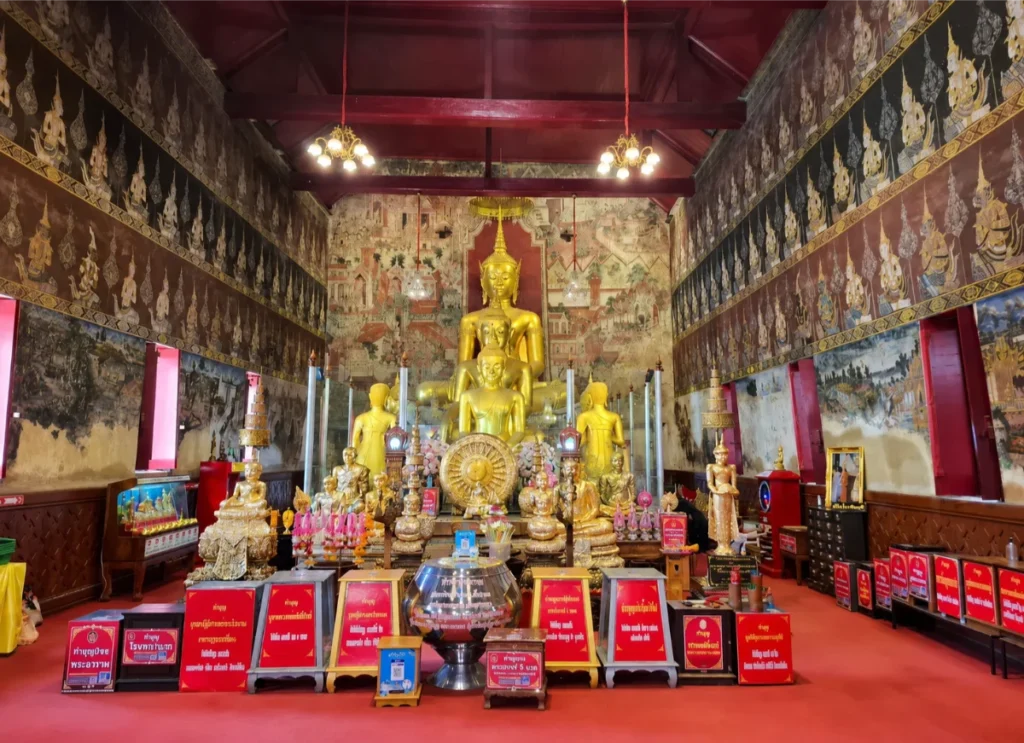
Wat Yai Suwannaram dates to the 17th century Ayutthaya period. The main hall was built without windows to isolate it from the outside world. Inside, 300-year-old frescoes cover every wall. The massive wooden door still carries the axe marks from the 1765 Burmese invasion. Behind the hall, Ho Trai, a wooden manuscript library, stands on stilts in the middle of a pond. It was designed to protect sacred Buddhist texts from ants and termites.
Wat Kamphaeng Laeng holds 12th-century Khmer towers inside an active temple garden. Wat Mahathat Worawihan sits in the town center with free entry. If you visit on a Saturday morning, you can watch traditional Thai dance rehearsals inside the temple grounds. These are training sessions for local students, not tourist performances.
Phra Ram Ratchaniwet (Ban Puen Palace)
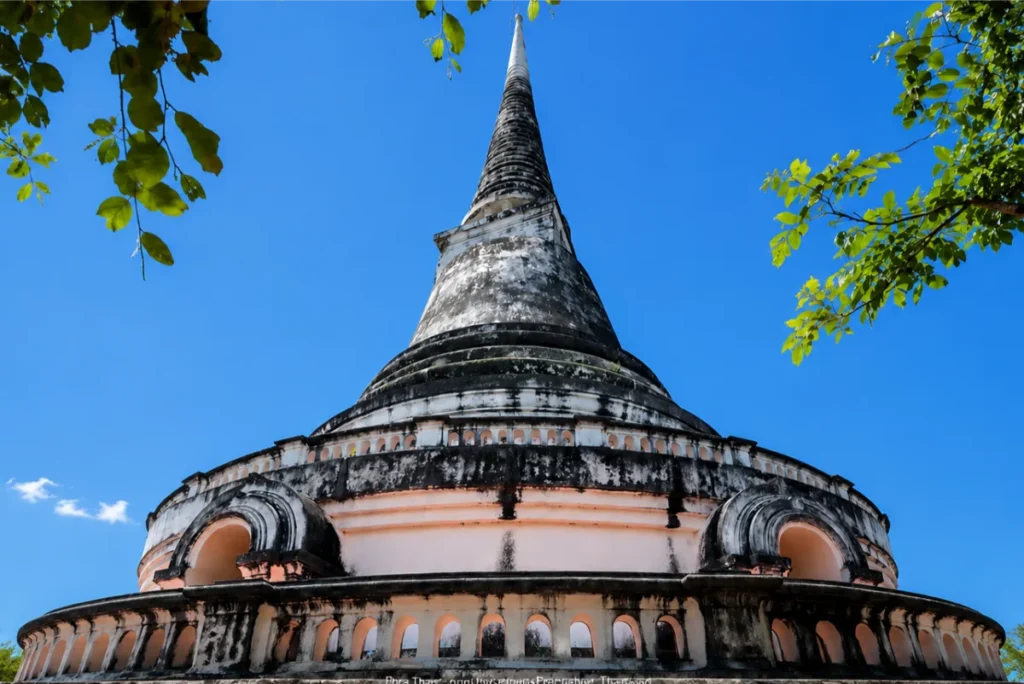
I went to Ban Puen Palace expecting a standard museum visit. The palace sits inside an active military compound. At the north gate, soldiers check your identification before you enter. If you are visiting, make sure you have your passport with you. I registered at the checkpoint, received an entry card, and walked through the grounds. German architect Karl Döhring designed the palace in Wilhelm-era Art Nouveau style for King Rama V. The exterior and landscaped gardens are beautiful and free to photograph. Photography is not permitted inside the palace rooms. Entry is completely free, which surprised me for a building this significant. The palace opens 09:00 to 15:30 daily.
The Perfect 2-Day Phetchaburi Itinerary for Cultural Travelers
Day 1: Palaces and Temples
Start at Khao Wang in the morning while temperatures are lower. Take the funicular up and walk down through the palace complex. After lunch at one of the shophouses near the base, ride to Ban Puen Palace. Remember your passport for the military checkpoint. End the afternoon at Wat Mahathat and explore the surrounding old town streets. If it is a Saturday, catch the Thai dance rehearsal.
Day 2: Cave, History and Gastronomy
Head to Tham Khao Luang around 11:00 for the best light conditions inside the cave. After the cave, ride to Wat Yai Suwannaram. Look for the axe-marked door and the manuscript library on stilts. Finish with a Khao Chae tasting at 133 Baan Khao Chae or the Sapsin Market. Pick up Khanom Mo Kaeng from any street vendor on the way back.
For the full transport breakdown, read How to Get to Phetchaburi.
Phetchaburi’s food scene stands on its own but if you want to explore the wider region’s dining options, Where to Eat in Hua Hin covers seafood, street food, and fine dining an hour south.
Practical Tips
Cash is Essential. Temple entries, tuk-tuks, food vendors, and most restaurants accept cash only. ATMs are available in the town center. Credit cards work at Big C supermarket and a few larger hotels. Carry enough Thai Baht for the day before heading out.
Dress Code. Cover shoulders and knees at all temples and Khao Wang. Some royal museum buildings require sleeves. Carry a light long-sleeve shirt in your bag.
Monkey Safety. Keep all belongings in zipped bags at Khao Wang and Tham Khao Luang. Remove sunglasses, hats, and dangling jewelry before entering monkey areas. Avoid eye contact.
Bicycle First. Phetchaburi is completely flat. Most hotels offer free bicycles. The town center temples sit within easy cycling distance of each other. A bicycle covers more ground than walking and costs nothing.
Stay Connected. Download a Thailand eSIM before your trip so you have data for maps and translation apps. Download the Google Translate Thai language pack for offline use. Street-level English is very limited in Phetchaburi.
FAQ
Is Phetchaburi worth visiting? Yes, especially for travelers who appreciate history, architecture, and authentic Thai food. The town holds cave temples, royal palaces, Khmer ruins, and UNESCO-recognized cuisine. It sits just over an hour from Hua Hin and two hours from Bangkok, making it easy to add to any central Thailand itinerary.
Can I do Phetchaburi as a day trip from Hua Hin? Yes. The van takes about an hour. You can cover Khao Wang and Tham Khao Luang in a single day. If you prefer a guided experience, book the Hua Hin departure group tour which covers the main highlights with transport included.
Can I combine Phetchaburi with Hua Hin?
Absolutely. The two towns sit just over an hour apart by van. Many travelers use Hua Hin as a coastal base and visit Phetchaburi as a cultural day trip. For a full weekend plan combining both, check 3 Days in Hua Hin.
How many days do you need in Phetchaburi?
Two days covers all the major sites comfortably. Day one for Khao Wang, Ban Puen Palace, and the old town temples. Day two for Tham Khao Luang cave, Wat Yai Suwannaram, and the food scene. One day works if you prioritize, but you will feel rushed.
Do I need cash in Phetchaburi? Almost everywhere accepts cash only. Temple entries, tuk-tuks, food vendors, and most local restaurants do not take cards. ATMs are available in the town center. Withdraw enough before heading out for the day.
Is Phetchaburi safe for solo travelers? Very safe. Crime rates are low and locals are welcoming. The main cautions are slippery steps at Khao Wang, aggressive monkeys at both temple sites, and limited English outside hotels. Download offline translation before you arrive.
What food should I try in Phetchaburi? Khao Chae is the signature royal dish of chilled jasmine rice with sweet accompaniments. Try it at 133 Baan Khao Chae near Wat Mahathat. Khanom Mo Kaeng is the traditional palm sugar custard sold by street vendors throughout the old town. Both are unique to this region and difficult to find elsewhere in Thailand.