Peloponnese vs Crete: Which Greek Destination is Better for You?
Most people planning a Greece trip reach the same fork: Peloponnese or Crete? Both offer ancient history, blue water, and good food. However, they deliver completely different experiences. Choosing between Peloponnese vs Crete comes down to how you travel, how much time you have, and what you actually want from a Greek trip.
The honest answer is that neither is objectively better. That said, one is almost certainly better for you specifically. This guide breaks it down without the usual travel-blog hedging.
Quick Info
| Feature | Peloponnese | Crete |
|---|---|---|
| Size | Manageable in 7–10 days | Needs 3+ weeks to cover properly |
| Getting there | Drive from Athens (~2 hrs) | Fly or ferry from Athens |
| Car needed? | Yes, essential | Yes, essential |
| UNESCO sites | 5, all within one road trip | 1 (Knossos area) |
| Crowds | Low to medium | High in summer |
| Cost | Lower overall | Higher, especially coast |
| Best for | History, slow travel, road trips | Beaches, variety, first-time Greece |
| 2026 climate tax | €1.50–€10/night | €1.50–€10/night |
| Car rental | Essential | Essential |
Peloponnese vs Crete: The Core Difference
The Peloponnese is mainland Greece. Crete is Greece’s largest island. That geographic difference shapes everything else in this comparison.
Getting to the Peloponnese from Athens costs around €80 in fuel and tolls. Getting to Crete requires either a flight (from €40 one-way) or an overnight ferry (from €35 passenger, more with a car). Moreover, once you’re in the Peloponnese, you’re already driving. In contrast, Crete requires either a separate car rental or ferry-in with your vehicle.
Crete is also significantly larger. The island stretches nearly 260km from west to east. However, it’s easy to underestimate this. Travelers who plan to “see all of Crete” in 10 days routinely end up spending most of their time driving. The Peloponnese, by comparison, is more compact and more efficiently explored in a week.
Beaches: Crete’s Variety vs. Peloponnese’s Privacy

Crete wins on beach variety. Balos, Elafonisi, and Preveli are world-class beaches with pink sand, lagoons, and dramatic settings. Furthermore, the variety across Crete’s coastline is genuinely impressive, from the north coast’s resort beaches to the south coast’s remote coves.
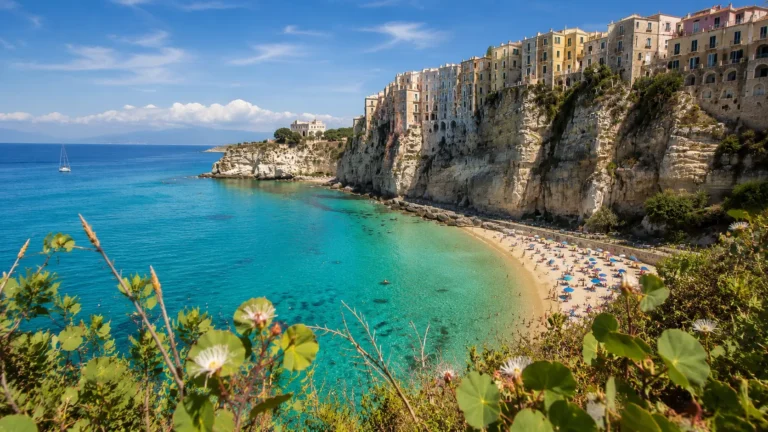
The Peloponnese, however, wins on privacy. Voidokilia’s horseshoe bay in Messenia rivals anything in Crete for beauty. The Mani coastline offers crystal-clear coves with almost no one in them, even in August. Similarly, Elafonisos island, a 10-minute ferry from the southeastern Peloponnese, has white sand and turquoise water that most Crete visitors never see.
The honest trade-off: if you want organized beach infrastructure (sunbeds, beach bars, waterparks for families), Crete is the better choice. If you want beautiful water without the crowds, the Peloponnese delivers more consistently.

History: Minoan vs. Mycenaean and Classical
Both destinations are exceptional for history. However, the type of history differs entirely in the Peloponnese vs Crete comparison.
Crete is the center of Minoan civilization, one of Europe’s earliest cultures. Knossos is the main draw, a sprawling Bronze Age palace that’s genuinely fascinating. Additionally, Crete’s Archaeological Museum in Heraklion holds the finest Minoan collection in the world.
The Peloponnese, meanwhile, covers a broader sweep of Greek history. Mycenae is the heart of Mycenaean civilization, older even than Classical Greece. Olympia is where the ancient games began. Epidaurus has the best-preserved ancient theater in the world. Furthermore, Mystras is a complete Byzantine ghost city that almost no one has heard of outside Greece. Five UNESCO World Heritage Sites sit within a single road trip. No other region in Greece offers this density.
Verdict for history lovers: Peloponnese wins on density and variety. Crete wins on depth for Minoan specifically.
Peloponnese vs Crete: Logistics in 2026

Getting around both destinations requires a car. That said, the logistics differ considerably.
For the Peloponnese, the simplest approach is to fly into Athens, pick up a rental car at the airport, and drive south directly. No additional flight or ferry needed. In 2026, the Attiki Odos ring road bypass means you never enter Athens traffic at all. Total driving time from the airport to Nafplio is about two hours. Compare car rental rates at Athens airport before booking your flights.
For Crete, you either fly directly to Heraklion or Chania (seasonal routes available from many European cities), or take the overnight ferry from Piraeus (Athens port). The ferry costs around €35-50 per passenger one-way, more if you bring a car. Additionally, Crete’s internal road network varies significantly. The north coast highway is fast. The south coast is slow, narrow, and spectacular.
In 2026, both destinations charge a climate resilience tax collected directly by hotels. Budget €5-€10 per night depending on property class. This is not included in your Booking.com price.
Cost Comparison: Peloponnese vs Crete
The Peloponnese is generally cheaper than Crete, particularly in summer. Here’s an honest 2026 comparison:
| Expense | Peloponnese | Crete |
|---|---|---|
| Mid-range hotel/night | €80-€130 | €110-€200 |
| Dinner for two | €35-€55 | €50-€90 |
| Getting there from Athens | ~€80 fuel + tolls | €40-€80 flight or €70-€100 ferry |
| Car rental (7 days) | From ~€200 | From ~€200 |
| Climate tax/night | €1.50-€10 | €1.50-€10 |
| UNESCO entry (3 main sites) | ~€36 | ~€15 (Knossos only) |
Overall, a week in the Peloponnese costs meaningfully less than a week in Crete, particularly for accommodation in peak season. That said, budget travelers can find affordable options on both.

The Vibe: Island Life vs. Mainland Soul
This is the hardest part of the Peloponnese vs Crete comparison to quantify, but also the most important.
Crete feels like an island. There’s a distinct rhythm to it: beach days, evening promenades, tourist infrastructure built over decades. The northern coast towns (Heraklion, Chania, Rethymno) are lively, cosmopolitan, and well-set-up for visitors. Above all, Crete has been absorbing international tourists since the 1970s and does it well.
The Peloponnese feels like the rest of Greece hasn’t caught up yet. Locals still eat dinner at 9pm. The taverna owner asks where you’re from because they’re curious, not because it’s a script. Sparta is a completely ordinary Greek town that no one visits. However, 10 minutes away, the ruined Byzantine city of Mystras has maybe 30 visitors on a weekday.
Accordingly, the Peloponnese rewards travelers who want to feel like they found something. Crete rewards travelers who want a well-organized, comfortable Greek experience with excellent beaches.
Who Should Choose the Peloponnese
Choose the Peloponnese if:
- You have 7-10 days and want to cover the destination properly
- History and archaeology matter more than beach variety
- You prefer fewer crowds and more authentic local character
- You’re comfortable driving mountain roads and navigating without signage in English
- You want a road trip structure, not a resort base
For everything you need to plan the trip, start with Is Peloponnese Worth Visiting in 2026? An Honest Review and Where to Stay in Peloponnese: Best Towns & Hotels for 2026.
Who Should Choose Crete
Choose Crete if:
- You have 2-3 weeks and want genuine variety
- Beach quality and beach infrastructure are priorities
- You want a well-developed tourist ecosystem with lots of options
- You’re traveling with children or mixed-interest groups
- You specifically want Minoan history
That said, if you have 10 days or fewer, Crete will feel rushed. In that case, the Peloponnese is the smarter choice.
Practical Tips
Don’t try to do both in one trip under two weeks. The Peloponnese deserves 7 days. Crete deserves at least 10. Combining both means doing neither properly. Choose one and commit.
The Peloponnese suits first-time mainland Greece visitors. Crete suits first-time island Greece visitors. They’re different experiences of the same country. Similarly, returning visitors often choose the Peloponnese specifically because the islands start feeling repetitive.
Sort your car rental before you fly for either destination. In 2026, IDP requirements apply for non-EU licenses at most local rental offices. Compare rates and availability early — summer slots fill fast on both.
FAQ
Is Peloponnese better than Crete? For trips under 10 days, yes. The Peloponnese is more compact, cheaper, and has more UNESCO history per kilometer. Crete is better for longer trips focused on beaches and variety.
Which is easier to get to from Athens? The Peloponnese. Drive directly from Athens airport in two hours with no flight or ferry required. Crete needs a flight or overnight ferry from Piraeus.
Which is better for slow travel in Greece? The Peloponnese. It’s less developed, less crowded, and rewards lingering. Crete’s northern coast can feel quite touristy in summer. For more on this, see Is Peloponnese Worth Visiting in 2026? An Honest Review.
Can I visit both in one trip? Technically yes, but not comfortably in under two weeks. If you have two weeks, spend 7-8 days in the Peloponnese, then fly to Crete for the remainder. Don’t rush either.
Not sure where to go next? Start with my Peloponnese Travel Guide 2026 for the full picture.
If Athens is your starting point, Best Peloponnese Day Trips from Athens (2026 Guide) covers the easiest one-day options before committing to the full peninsula.
If you’re planning to stop in Nafplio, Nafplio Day Trip from Athens: Is it Enough for One Day? covers the logistics in detail.