Best Time to Visit Sapa: Weather & Season Guide (2026 Updated)
Sapa has a microclimate that doesn’t follow the rules. You can arrive in July sunshine and be wrapped in cold fog by noon. You can book September for the famous golden terraces and find them already harvested. Picking the best time to visit Sapa isn’t about finding a “safe” season. It’s about understanding what you want to see and timing it precisely.
This guide breaks down every season honestly, with 2026 booking windows and one piece of advice that most travel blogs get wrong about the rainy season.
Quick Info
| Season | Months | Best for | Crowds |
|---|---|---|---|
| Spring | February–May | Flooded terraces, trekking | Medium |
| Water Pouring | Late April–Early May | Mirror reflection photography | Low–Medium |
| Summer | June–August | Waterfalls, budget travel | Medium–High |
| Golden Harvest | September–October | Rice terrace photography | Very high |
| Cloud Hunting | November | Mist photography, solitude | Low |
| Winter | December–January | Snow (rare), quiet | Very low |
Deciphering Sapa’s Mountain Microclimate by Season
The best time to visit Sapa depends on a single honest question: what do you actually want to see?
Sapa sits at 1,500 meters above sea level. The microclimate shifts rapidly at this altitude. Morning sunshine can turn to dense fog within two hours. Afternoons in summer bring sudden downpours that clear just as quickly. Additionally, the rice terraces change color dramatically through the year, which makes the timing of your visit more visually significant than almost anywhere else in Southeast Asia.
Here’s what each season actually delivers.
Spring: Peach Blossoms and Mirror-Like Flooded Fields

February and March bring Sapa’s most underrated visual: the bare terraces before planting season, with peach blossom trees along the valley slopes. Temperatures range from 10-18°C, making this the most comfortable season for serious trekking. Furthermore, crowds are significantly lower than autumn.
April and May deliver one of the best-kept secrets of the best time to visit Sapa calendar. In late April, local farmers begin flooding the terraces to prepare for rice planting. This “Water Pouring” period, typically running from late April through early May, creates a mirror effect on the terraces. The sky, clouds, and surrounding mountains reflect perfectly in the flooded fields. Most travel guides skip this entirely, focusing instead on the golden harvest. However, the reflection photography in this window is unique and almost entirely crowd-free.
May is the overall sweet spot for first-timers. Temperatures warm to 18-25°C, the sea is comfortable for trekking, and the terraces are lush green with young rice. Accordingly, for anyone who wants good trekking weather and beautiful scenery without the September crowds, May is the answer.
Summer: Lush Green Terraces and Powerful Waterfalls
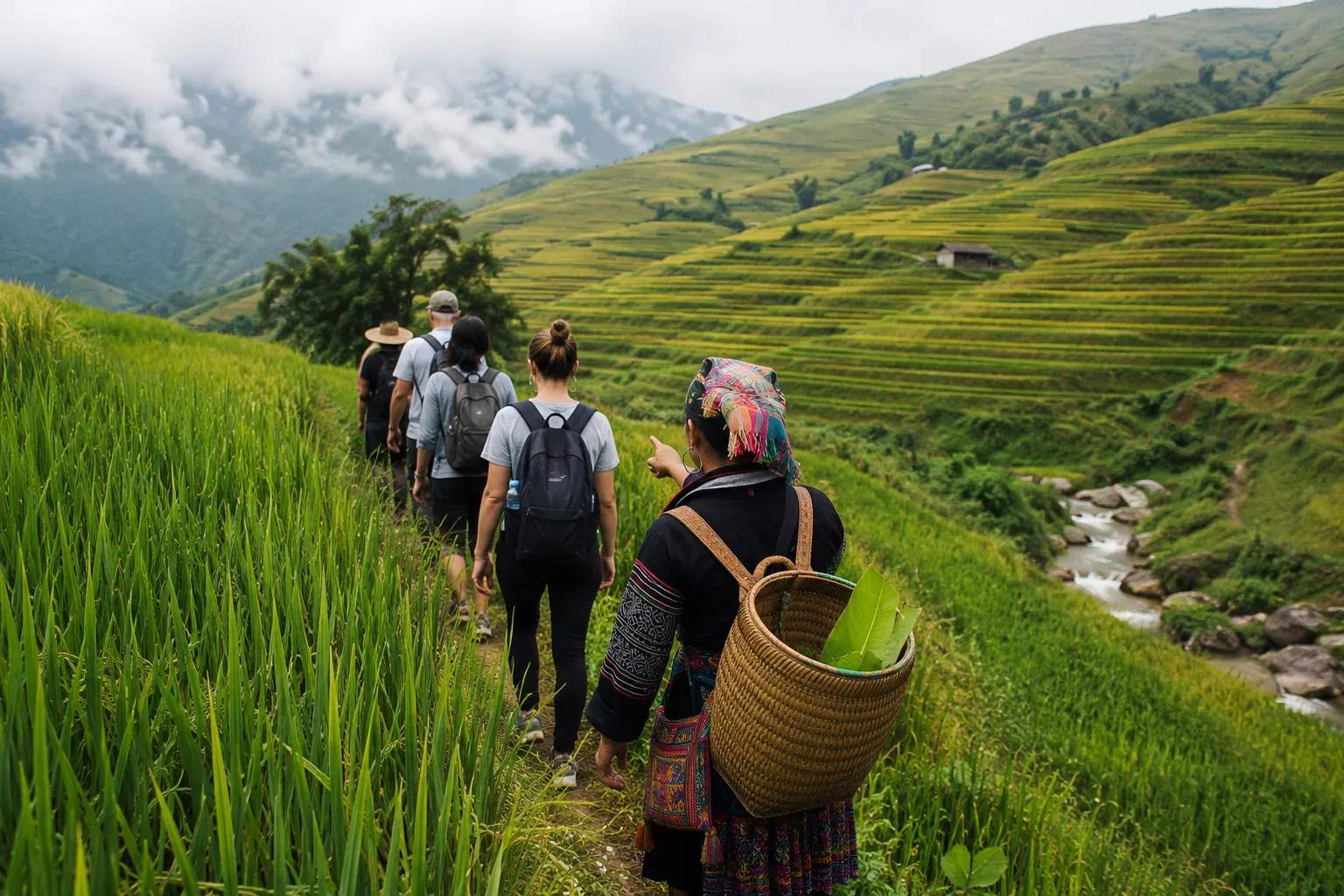
June through August is Sapa’s monsoon season. Heavy rains arrive in the afternoons, turning trekking paths muddy and sometimes slippery. Most travel blogs write this season off entirely.
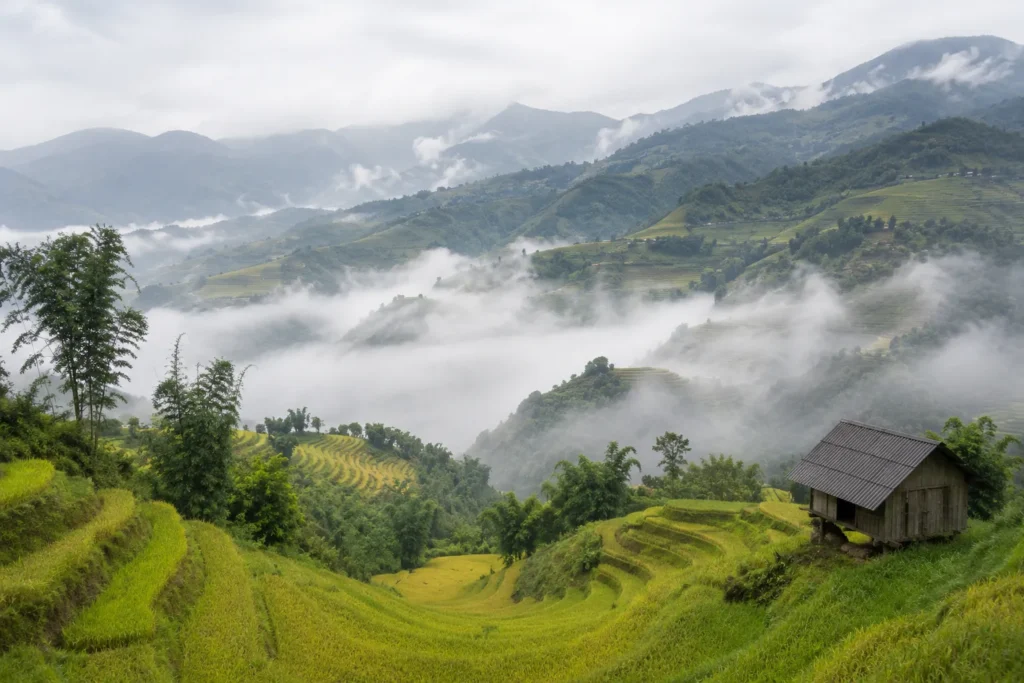
That’s a mistake. The summer rains bring Silver Waterfall and Love Waterfall to their most powerful and most beautiful state. Both are genuinely impressive in full flow. If waterfalls and lush green landscape photography are your priority, June to August actually delivers the best version of these specific sights.
That said, trekking in summer requires appropriate footwear. Waterproof boots or trail shoes with aggressive grip are essential for the valley paths. Moreover, the humidity can make valley walks feel more demanding than expected. Pack light, breathable layers that dry quickly.
The other advantage of summer: prices. Hotels drop around 40% in the low season. VIP sleeper bus seats are available without weeks of advance booking. For budget-conscious slow travelers, this is the most economical window.

Autumn: The Spectacular Golden Harvest Season
September and October are the best time to visit Sapa for most travelers. The rice terraces turn from green to deep gold and amber over a period of three to four weeks. The most intense golden color typically peaks between late September and mid-October, though this varies by altitude and valley microclimate.
The sapa harvest season 2026 comes with a serious logistical warning: this is also the most crowded period of the year by a significant margin. Hotels fill weeks in advance. VIP sleeper buses and luxury train cabins from Hanoi sell out. In 2026, the CT05 expressway makes the journey faster, but demand is higher than ever. Book everything at least three weeks ahead. Check current availability for trains and buses before confirming your travel dates.
For photography, the best light on the golden terraces is in the early morning, from around 6:30am to 9am, before haze builds. Specifically, the Muong Hoa Valley viewpoints above Lao Chai and Ta Van villages face east, making sunrise the optimal shooting window.

Winter: Mystical Fog and Occasional Snow
December and January are Sapa’s quietest months. Temperatures drop to 5-10°C in the valley and below freezing on Fansipan peak. Snow is rare at valley level but does occur, typically one or two brief periods per year.
Winter is for travelers who want Sapa entirely to themselves. The town is quieter than any other season. Valley homestays offer blazing wood fires and local herbal teas. Trekking is cold but manageable with proper layers. Additionally, the entry fees for Cat Cat Village and Muong Hoa Valley remain standard, but the absence of crowds makes even the most commercialized spots feel genuinely peaceful.
Choosing Your Perfect Month Based on Travel Goals

The Best Months for Fansipan with Clear Skies
Fansipan cable car visits depend entirely on weather. The summit sits at 3,143 meters and is frequently shrouded in cloud. The clearest windows are typically in October and November, when the post-monsoon air has dried out and visibility is highest.
The practical approach: don’t book your cable car ticket weeks ahead. Check the Sapa weather camera or local forecasts the morning of your planned visit. If the sky above town is clear by 8am, the summit is likely clear too. In Vietnam, last-minute Klook and 12GoAsia tickets are usually available for cable car slots, which makes this approach workable.
Cloud Hunting Season: Waking Up Above the Mist
November is the best time to visit Sapa for cloud hunters. The phenomenon of standing above a sea of clouds while looking down at fog-filled valleys below is specific to this season. The optimal window is 6:00am to 8:00am, before the morning sun burns the mist away.
The best vantage points for cloud hunting are at higher elevations above town, including Hau Thao village and the hillside above Pao’s Sapa Leisure Hotel. Specifically, the hotel’s terrace at dawn in November is one of the most photographed spots in northern Vietnam for exactly this reason.
Monthly Guide to Sapa Weather
| Month | Temp (°C) | Rainfall | Best for | Crowd level |
|---|---|---|---|---|
| January | 5-12 | Low | Quiet travel, snow chance | Very low |
| February | 7-15 | Low | Peach blossoms, trekking | Low |
| March | 10-18 | Low-medium | Trekking, wildflowers | Low-medium |
| April | 14-22 | Medium | Water pouring, reflections | Medium |
| May | 18-25 | Medium | First-timers, green terraces | Medium |
| June | 20-27 | High | Waterfalls, budget travel | Medium |
| July | 22-28 | Very high | Waterfalls, budget travel | Medium-high |
| August | 21-27 | High | Late summer green, cheaper | Medium |
| September | 18-25 | Medium-low | Golden harvest peak | Very high |
| October | 15-22 | Low | Golden harvest late, clear skies | High |
| November | 10-18 | Very low | Cloud hunting, quiet | Low |
| December | 5-13 | Very low | Winter atmosphere, solitude | Very low |

Practical Tips for Timing Your Sapa Visit
Book 3 weeks ahead for September-October. This is non-negotiable for the harvest season. VIP sleeper buses and luxury train cabins from Hanoi fill completely. Check seat availability early and lock in your dates before accommodation fills too.
Don’t write off the rainy season. June and August prices drop around 40%. The trails are muddier but the waterfalls are extraordinary. Pack proper footwear and embrace the green.
For cloud hunting, set an alarm. The 6:00am to 8:00am window in November is the one that matters. After 9am, the mist burns off and the effect disappears. It’s worth the early start.
Stay at least 4-5 days regardless of season. Sapa’s microclimate means you will lose at least one day to fog or rain. Building buffer into your schedule ensures you still get the clear valley views you came for. See How Many Days in Sapa? 3 Days vs 4 Days vs a Week Comparison for itinerary options by season.
Book your base in the valley. The mist experience is completely different from a valley homestay versus a town center hotel. The valley catches the morning mist in ways that make every season more beautiful. See Where to Stay in Sapa: Best Hotels and Sustainable Homestays 2026 for the best bases by location and budget.
Activate a Vietnam eSIM before arrival. Valley signal is inconsistent. Download offline weather apps and maps before leaving Sapa town. Activate a Vietnam eSIM before your flight for reliable connectivity throughout.
FAQ
What is the best time to visit Sapa for rice terrace photography? Two windows: late April to early May for flooded terrace mirror reflections, and late September to mid-October for golden harvest color. Both are extraordinary but for completely different reasons.
Is Sapa worth visiting in the rainy season? Yes, with adjusted expectations. Trekking is muddier but possible with proper shoes. Waterfalls are at their most powerful. Prices drop around 40%. For the full picture on whether Sapa suits your travel style, see Is Sapa Worth Visiting? An Honest 2026 Assessment.
When is Sapa least crowded? November through March. December and January are the quietest months. November is particularly good for cloud hunting with almost no crowds.
How far in advance should I book for the harvest season? At least three weeks for transport from Hanoi. At least two weeks for valley homestays. Central hotels have more availability but the best valley properties sell out fast in September-October.
Once you know when to go, Sapa Valley Travel Guide: How to Slow-Travel Vietnam’s Highlands has everything you need to plan the rest of your trip.