Sapa Trekking Guide 2026: Guided vs Self-Guided Routes
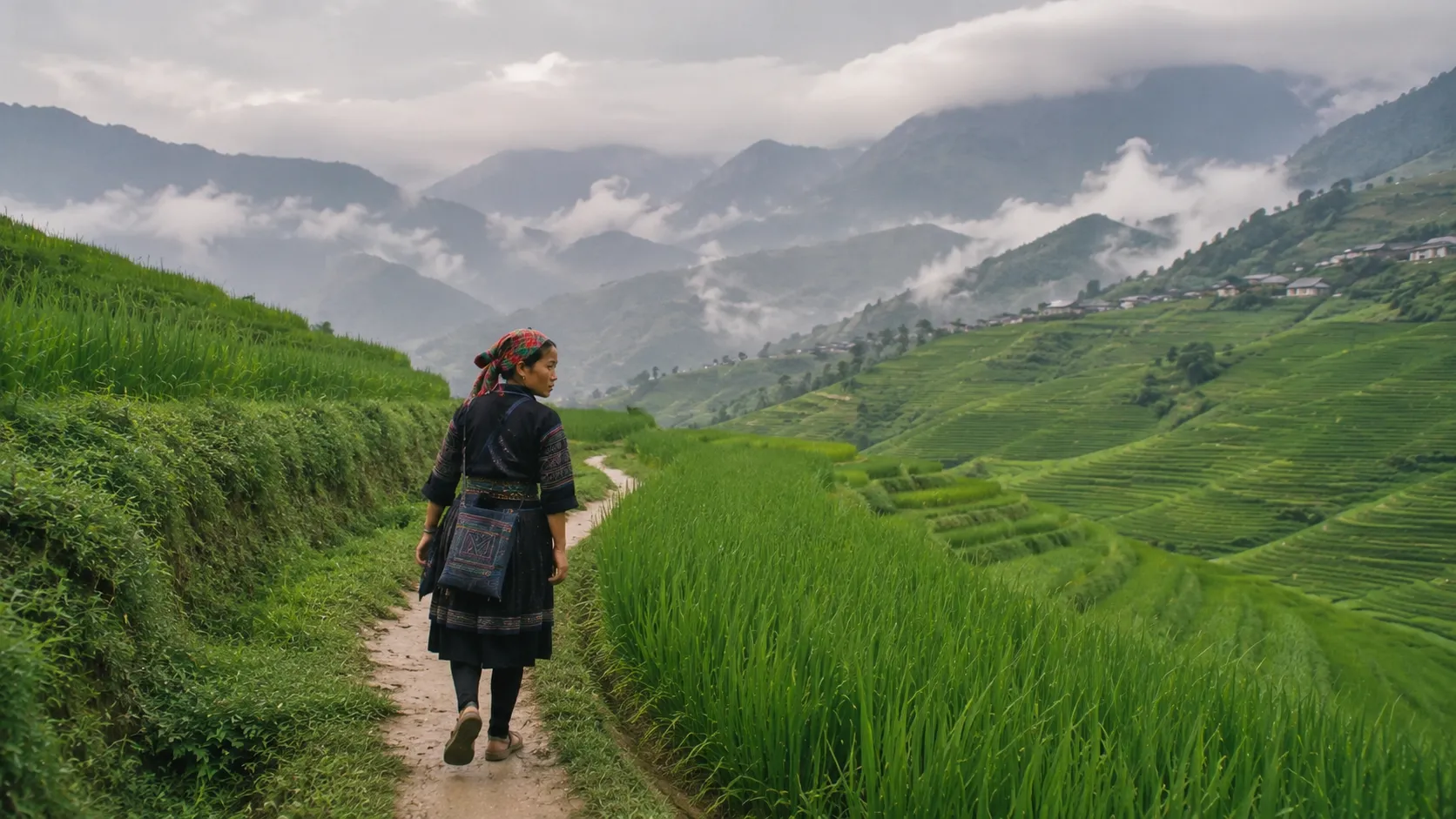
This Sapa trekking guide covers what’s actually on the trails. Sapa’s trails look straightforward on a map. On the ground, they’re less obvious. Path junctions aren’t always marked. Navigation apps route incorrectly at key points. Local women will attach themselves to your group and follow silently for hours before presenting a sales pitch at the end. None of this is in the brochures. It covers the routes worth doing, the guided vs self-guided decision, the specific navigation traps, and the social dynamics that every trekker eventually encounters. Use it before you book anything.
Quick Info
| Route | Distance | Difficulty | Guided option | Self-guided? |
|---|---|---|---|---|
| Muong Hoa Valley (Lao Chai + Ta Van) | 9–11km | Easy–Moderate | Book here | Yes, with caveats |
| Hoang Lien National Park | 10km | Moderate | Private trek | Difficult, not recommended |
| Ta Phin Village + Ma Tra | 8km | Easy–Moderate | Private half-day | Yes |
| Silver + Love Waterfall + Sin Chai | 12km | Moderate | Full-day tour | Possible |
| Sa Seng + Hau Thao | 10km | Moderate–Hard | Contact local guide | xe om + walking |
The Guided vs Self-Guided Decision in This Sapa Trekking Guide
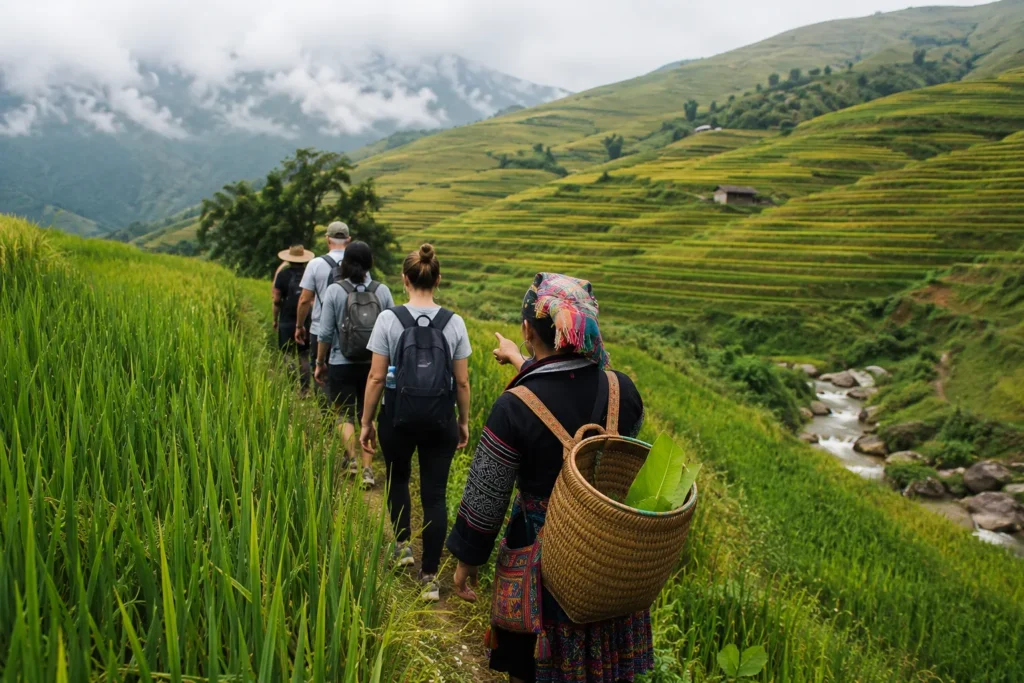
The guided vs self-guided question is the central decision in any Sapa trekking guide. The honest answer depends on two factors: which route you’re doing and how experienced you are with unmarked highland trails.
Choose guided if:
- This is your first Sapa trek
- You want cultural context during the walk
- You’re doing Hoang Lien National Park or remote village routes
- You want your fee to go directly to a community guide
Choose self-guided if:
- You have experience with unmarked trails and offline navigation
- You’ve done the Muong Hoa Valley route at least once before
- You specifically want solitude without group dynamics
I did the valley route self-guided on day three, and guided on day seven. The guided version delivered three times the cultural information for roughly the same physical effort.
Furthermore, guided doesn’t mean tour group. The best guides in Sapa are individual local women from the Hmong and Red Dao communities, hired directly or through platforms like Sapa Sisters ($25-40 per day). A private guide walking with you for a full day is a different experience from a group tour with 12 strangers.
The Main Sapa Trekking Routes
Route 1: Muong Hoa Valley (The Essential Trek)
The Muong Hoa Valley route is the foundational route in this Sapa trekking guide. It runs from Sapa town down through Y Linh Ho, Lao Chai, and Ta Van, finishing at the valley floor. Distance is 9-11km depending on which path variations you take. Elevation loss is around 400 meters.
The trail passes through working rice terraces, Black Hmong villages, and bamboo sections between Y Linh Ho and Lao Chai. A local family homestay in Ta Van typically serves lunch for around 80,000-120,000 VND.
The navigation trap nobody mentions: At the Cau Treo Lao Chai San II suspension bridge, do not cross. Stay on the left bank of the stream and continue forward. Most navigation apps route you across the bridge, which sends you onto a path that doubles back and adds 45 minutes to the route. Stay left, stay on the stream bank, and you’ll arrive directly in Lao Chai village.
Guided option: This full-day guided trek covers the complete Muong Hoa Valley route with a local Hmong guide, lunch at a homestay, and hotel pickup.
Self-guided option: Download ExoTrails offline GPS for the area before leaving Sapa town. The app has accurate trail data for the valley routes and doesn’t rely on internet connection.
Route 2: Hoang Lien National Park

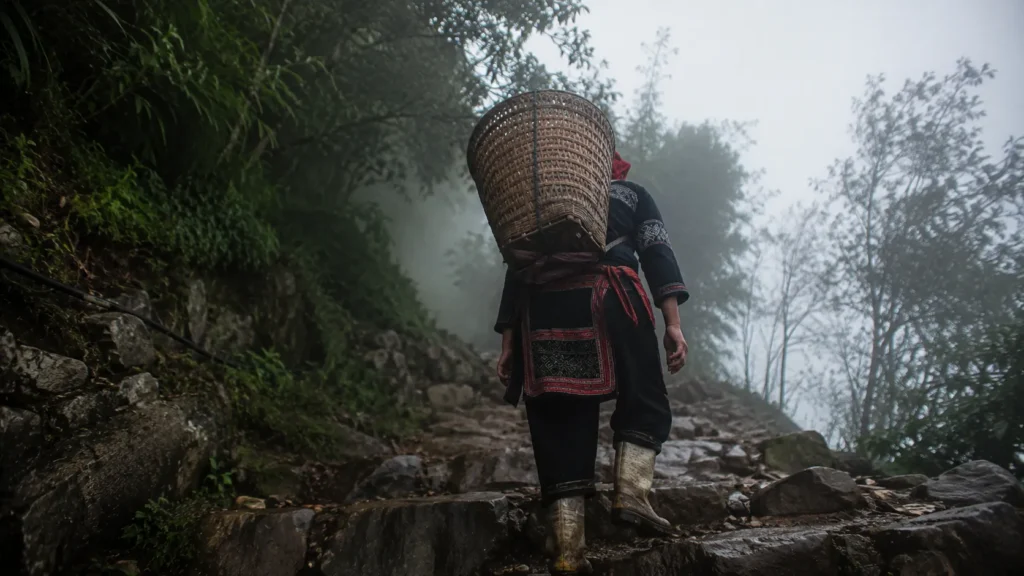
The Hoang Lien National Park route is the most challenging and most rewarding trail in this Sapa trekking guide. The route typically starts above O Quy Ho Pass and descends 10km through primary bamboo forest and mountain terrain to Sin Chai village. Trail markers are minimal throughout.
Self-guiding Hoang Lien is technically possible but not recommended. The forest sections have multiple unmarked junctions and the path becomes indistinct in wet conditions. A wrong turn in the park adds significant time and elevation to the day.
Private guided option: This private trek through Hoang Lien National Park uses a local guide from the area, covers the full 10km descent, and includes a picnic lunch at a wilderness viewpoint. It’s the quietest and most genuinely wild day available near Sapa.
Route 3: Ta Phin Village and Ma Tra
The Ta Phin route heads northeast from Sapa toward Red Dao territory. The trail passes through Black Hmong villages before reaching the Red Dao community at Ta Phin. The round-trip distance is approximately 8km from the road junction, shorter if you arrange a vehicle for one direction.
This is the most culturally specific route in this Sapa trekking guide. The Red Dao embroidery traditions, herbal medicine knowledge, and distinctive red headdresses are specific to this community and not found on the Muong Hoa Valley routes.
Private guided option: This private half-day trek covers Ma Tra and Ta Phin Village with a guide from the Red Dao community.
Self-guided option: The main road to Ta Phin is clearly marked and accessible by xe om. Walking from the junction is straightforward. However, a guide adds significant cultural context that the landscape alone can’t provide.
Route 4: Silver Waterfall, Love Waterfall, and Sin Chai Village
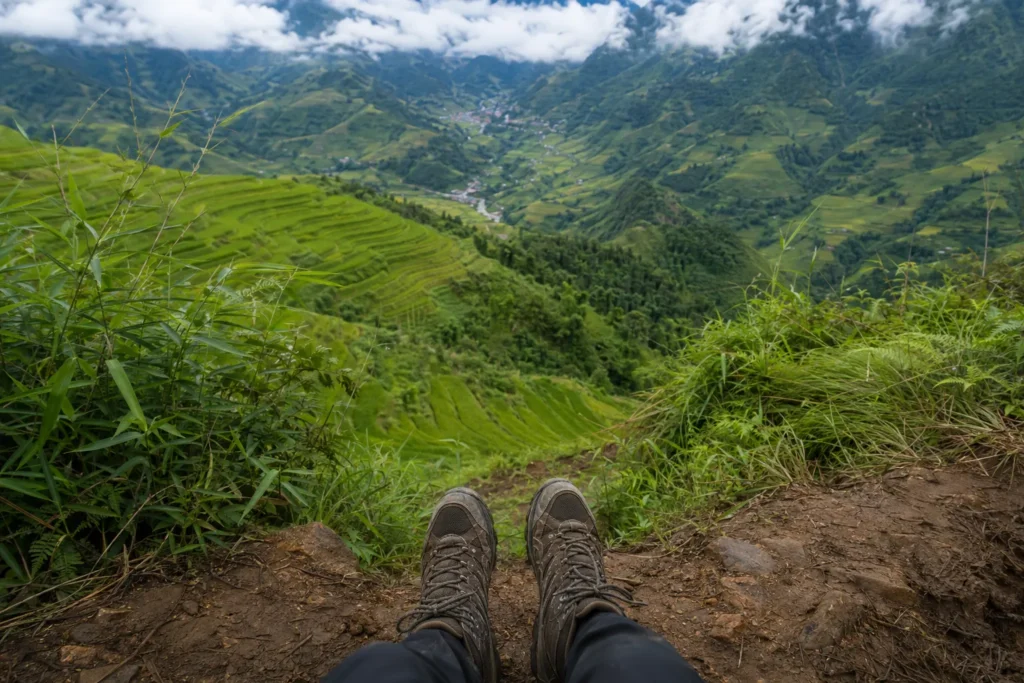
This route combines the O Quy Ho Pass road with a 6km trek through Sin Chai village. The waterfalls are on the pass road, about 12km from Sapa. Love Waterfall sits 1.1km inside the national park from the road, through a bamboo forest trail that’s easy to follow.
The Tram Ton Pass viewpoint, Vietnam’s highest road at 2,047 meters, is on the approach to the waterfalls. On a clear morning, the views stretch across the entire highland range.
Guided option: This full-day tour covers both waterfalls, the pass, and a trek to Sin Chai village with transport, a local guide, and lunch.
What Nobody Tells You About Trekking in Sapa
The Local Women Who Follow You
This is the most important section of this Sapa trekking guide for first-timers. On almost every trail near Lao Chai and Ta Van, local Black Hmong women will approach your group at the start of the walk. They’ll introduce themselves, offer to show you the way, and walk alongside you for hours. They’re friendly, informative, and genuinely good company.
However, at the end of the day, they’ll guide you to a stall or pull out handmade goods and create significant social pressure to buy. The items themselves are often genuinely beautiful. The problem is the expectation, not the craft.
How to handle it: at the start of the trail, be clear and polite immediately. Say you have a guide already or that you prefer to walk alone. Say it once, firmly, and keep moving. Most women will respect this and leave. Hesitation or vague responses are interpreted as encouragement. Be kind but be direct from the start.
The Fake Guide Problem
Some individuals in Sapa town offer trekking guide services without any local knowledge or community connection. They charge similar rates to genuine local guides and often follow the same routes. The difference is that no money reaches the village communities and the cultural information is superficial.
Accordingly, book guides through established platforms or directly through community organizations. Sapa Sisters ($25-40 per day) connects trekkers with Hmong and Red Dao women who are actual community members. Similarly, the guided tours listed in this Sapa trekking guide use local community guides.
Trail Conditions in Wet Weather
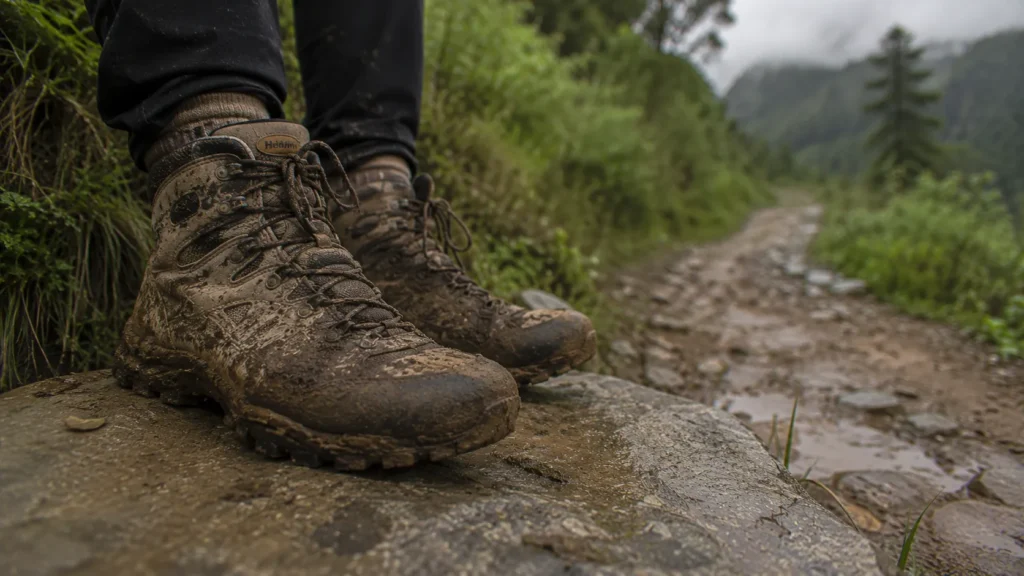
The Sapa trekking guide would be incomplete without a rain warning. The Muong Hoa Valley trail becomes genuinely slippery in wet conditions. Clay soil sections, particularly between Y Linh Ho and Lao Chai, turn into a mudslide hazard in heavy rain. Local women who guide the trail regularly use makeshift bamboo sticks as walking poles. Do the same.
Waterproof boots or aggressive-grip trail shoes are essential year-round. Sandals and flat-soled shoes are dangerous on wet clay. The rainy season (June-August) doesn’t cancel the trails. It makes them more challenging and more spectacular.
Practical Tips for Trekking in Sapa
Download ExoTrails before you leave town. This offline GPS platform has the most accurate trail data for the Sapa area. It doesn’t require signal and shows the correct path at the key junctions where navigation apps fail.
Start early. The best light on the terraces is between 6:30am and 9am. Additionally, starting early means finishing before the afternoon heat and potential rain. Most trailheads are reachable from Sapa town by Grab or xe om in 20-30 minutes.
Carry 200,000-500,000 VND cash. No ATMs exist on any trail. Cash covers lunch at a homestay, a cold drink at a village stall, and transport back to town from the trail endpoint.
Book the right base for your trekking days. Staying in Ta Van means your Muong Hoa Valley trek ends at your front door. Eco Hills Homestay is literally on the trail endpoint in Ta Van. For the Hoang Lien and Sa Seng routes, Topas Ecolodge inside the national park provides the closest base. For the full accommodation breakdown, see Where to Stay in Sapa: Best Hotels and Homestays 2026.
Activate a Vietnam eSIM before arrival. Signal drops completely in the national park and on the remote village routes. Activate a Vietnam eSIM before your flight and download all offline maps before leaving Sapa town.
FAQ
Is it safe to trek in Sapa without a guide? The Muong Hoa Valley route is safe self-guided with offline maps and the correct junction knowledge. Hoang Lien National Park is not recommended without a guide. For a complete self-guided route breakdown, see Sapa Trekking Without a Guide: Step-by-Step 11km Route.
How difficult are the Sapa trekking routes? The main valley routes are easy to moderate. They involve elevation change but no technical climbing. Wet conditions make all routes harder. Hoang Lien National Park is moderate with navigation challenges. Allow 5-7 hours for full-day routes.
What should I wear for trekking in Sapa? Waterproof boots or aggressive-grip trail shoes year-round. Lightweight layers that dry quickly. A rain jacket regardless of the forecast. Avoid cotton. The humidity means cotton stays wet for hours.
How do I book a local guide in Sapa? Sapa Sisters connects trekkers directly with Hmong and Red Dao community guides at $25-40 per day. Alternatively, book through the guided tours in this Sapa trekking guide. See 10 Best Things to Do in Sapa: What’s Actually Worth It for the full activity context. For everything beyond the trails, Sapa Valley Travel Guide: How to Slow-Travel Vietnam’s Highlands covers transport, where to stay, and how to plan your time in the region.