Chiesetta di Piedigrotta & Castello Murat: Pizzo’s Cave Church and Historic Castle
Pizzo has two attractions that appear in no major Italian travel guide. The Chiesetta di Piedigrotta is one of them: a church carved into a volcanic sea cave by shipwrecked sailors in the 17th century, filled with three centuries of accumulated religious sculpture. The second is the castle where Napoleon’s brother-in-law was executed by firing squad in 1815.
Both are within a 10-minute walk of Piazza della Repubblica. Both cost under €5 to enter. Neither appears in the standard Calabria itinerary. This guide covers both, with 2026 ticket prices, opening hours, and the specific details most guides get wrong.
Quick Info: 2026 Tickets and Hours
| Site | Entry fee | Hours (summer) | Combo ticket |
|---|---|---|---|
| Chiesetta di Piedigrotta | €5 | 09:00–13:00 / 15:00–18:00 | €8 combined |
| Castello Murat | €3 | 09:00–13:00 / 15:00–18:00 | combined |
| Combined ticket | €8 | Valid 72 hours | Saves time, adds flexibility |
Chiesetta di Piedigrotta: The Cave Church Built by Shipwrecked Sailors

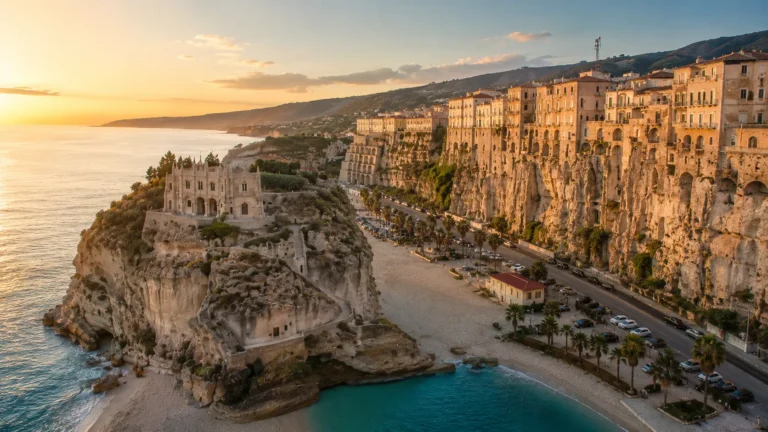
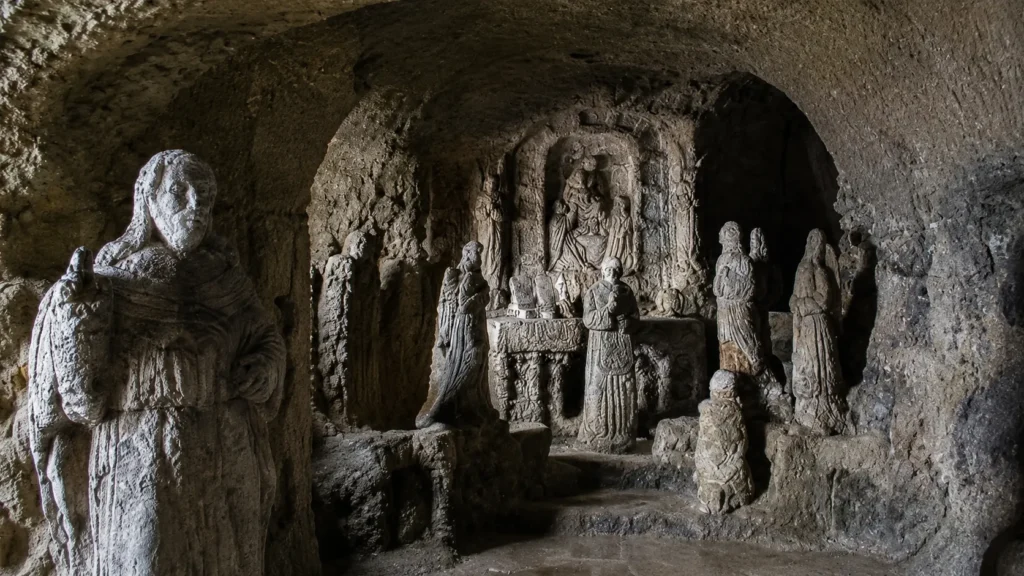
The Chiesetta di Piedigrotta sits at sea level, carved directly into the volcanic tufa cliff below Pizzo’s promontory. The approach path descends from the harbor area, cutting between the cliff face and the sea. The entrance is a low arch in the rock, opening into a cave interior that smells of salt water and candle wax.
The origin story is specific. In 1650, a group of Spanish sailors survived a shipwreck on Pizzo’s rocky coast. In gratitude, they carved a votive chapel into the nearest sea cave and installed a statue of the Virgin Mary. Over the following three centuries, successive artists and devotees added sculptures to the interior, creating a layered collection of religious art that now covers every available surface.
The Sculptures Worth Finding
The Chiesetta di Piedigrotta interior rewards patience. The light is dim, the space is irregular, and the sculptures range from formally executed religious figures to folk art carvings that feel genuinely medieval. However, several specific pieces are worth finding deliberately.
The Death of Saint Rita: A full-size sculpture depicting the Angel of Death crowning Saint Rita, carved in painted tufa with a detail and emotional intensity unusual for a cave setting. It’s positioned to the left of the main altar and catches the light from the entrance arch in the morning hours.
The Three Magi with Camels: A nativity-related group showing the Wise Men arriving on camels, carved with considerable anatomical attention to the animals. The camels are rendered more accurately than the human figures, suggesting a sculptor with direct knowledge of the animals, which is unusual for 17th-century southern Italy.
The polychrome terracotta Nativity: The most formally accomplished piece in the cave, depicting the Nativity scene in painted terracotta with Renaissance-influenced figures. It occupies the apse and was the original focal point of the sailor’s chapel.
Specifically, visit in the morning session (9:00-13:00) for the best light. The entrance arch faces east, and morning light penetrates the cave at an angle that illuminates the sculptures in a way the afternoon session cannot replicate.
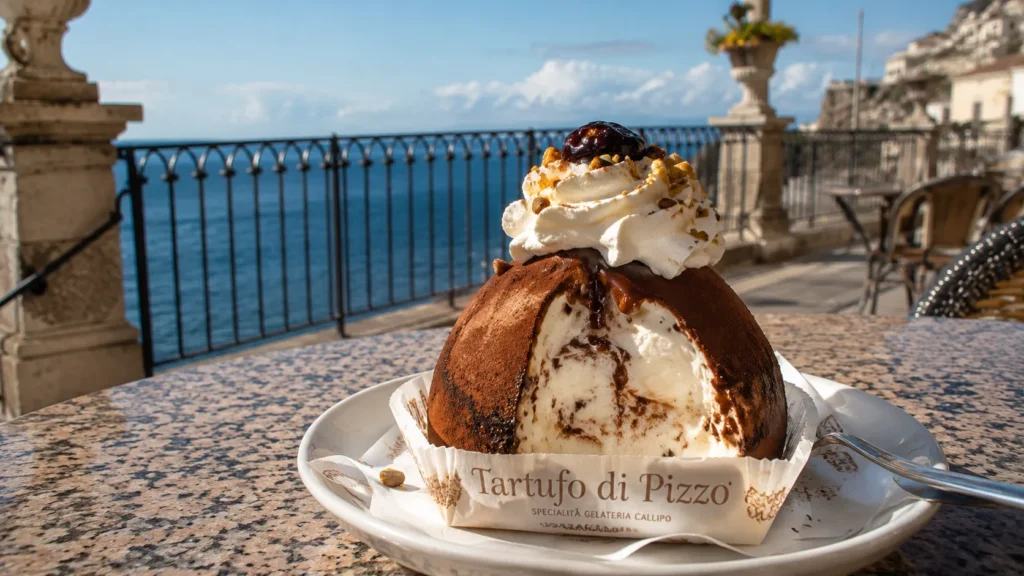
I arrived at the Piedigrotta on my first Pizzo visit at 2:30pm. The gate was locked. The midday closure runs from 13:00 to 15:00, and I’d read the opening times wrong. I walked back up to the piazza, had a second Tartufo di Pizzo, and returned at 15:00. The silver lining: I now know the afternoon light in the cave is fine, just different. But go in the morning.
Castello Murat: The Second Stop on the Chiesetta di Piedigrotta Route

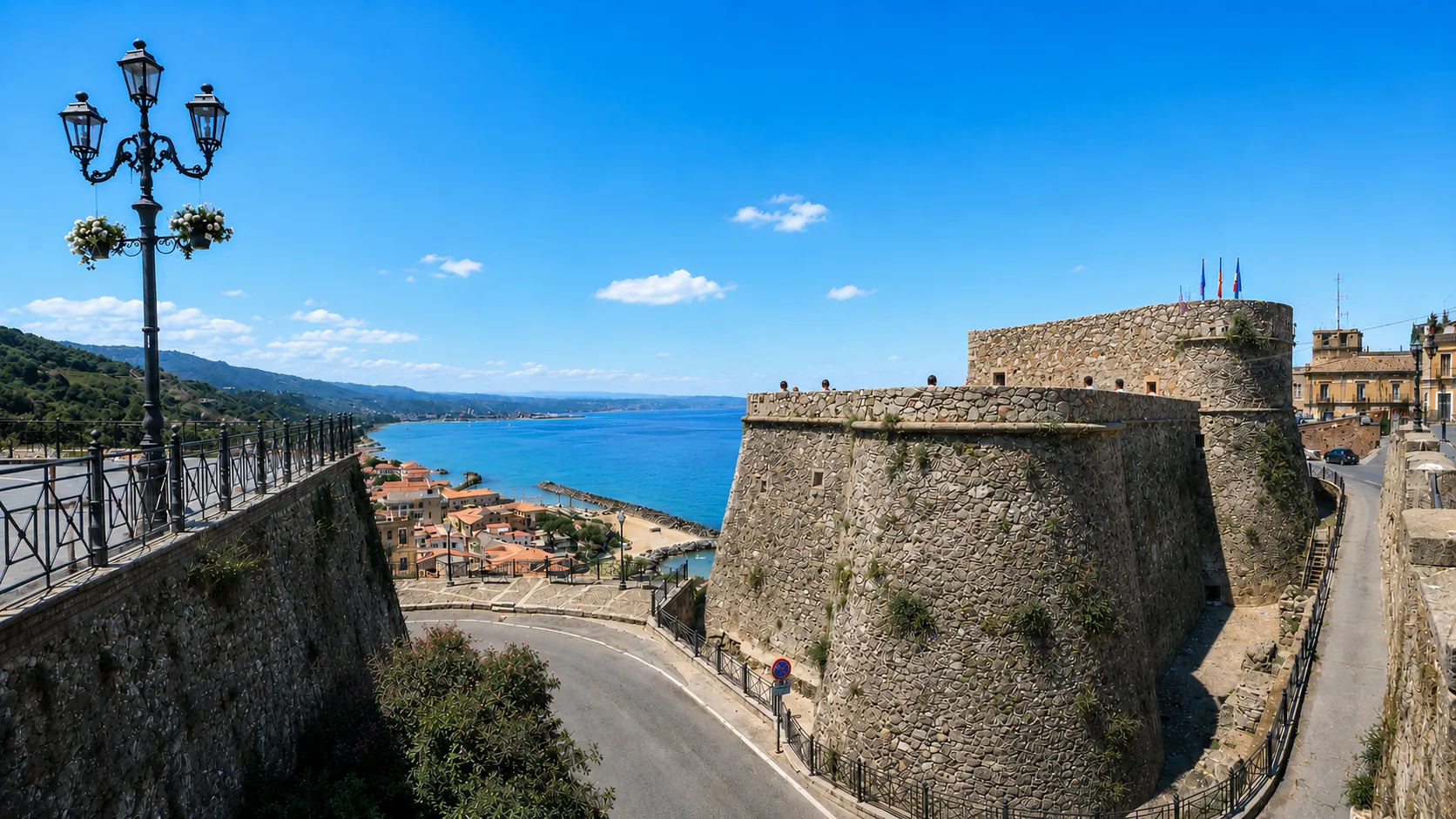
Castello Murat is the second site in this Chiesetta di Piedigrotta visit combination, and it adds a completely different layer to the Pizzo day. The castle stands at the northern tip of Pizzo’s promontory, a 15th-century Aragonese fortification that served successively as a defense tower, a Bourbon prison, and finally the site of one of the more dramatic endings in Napoleonic history.
Joachim Murat, Marshal of France and Napoleon’s brother-in-law, was appointed King of Naples in 1808. After Napoleon’s defeat, Murat attempted to maintain his kingdom by allying with Austria, then switched sides, then attempted to rally Italian nationalism against the Austrian restoration. He landed on the Calabrian coast in October 1815 with a small force. He was captured almost immediately, brought to Pizzo, and tried by a military court in three days. The firing squad executed him on October 13, 1815.
The castle museum documents this episode with period portraits, correspondence, the transcript of his trial, and the room where he spent his final night. Additionally, the courtyard where the execution took place is open to visitors. Murat famously refused a blindfold and gave the order to fire himself, a detail documented in multiple eyewitness accounts displayed in the museum.
The Maritime Museum Section
A section of the Castello Murat museum that almost every guide skips: the maritime collection on the upper floor. It contains a traditional Calabrian swordfishing boat, used for the mattanza technique that once defined this stretch of the Tyrrhenian coast. The boat is small, narrow, and built with a high observation platform at the prow for spotting swordfish from above. Moreover, the collection includes nets, harpoons, and photographic documentation of the mattanza hunts from the early 20th century.
This is the most context-rich display in the castle for understanding Pizzo as a fishing town rather than purely a historical site.
How to Combine Both Sites in One Visit
The logical order is Chiesta di Piedigrotta first, Castello Murat second. Here’s why.
Piedigrotta is at sea level, reached by descending from the harbor. Castello Murat sits above at the promontory tip. Starting at Piedigrotta means descending first and ascending on the return, which is easier than the reverse. Furthermore, the cave church benefits most from morning light, making the early visit the better choice photographically.
Suggested sequence:
- 09:00: Arrive at Piedigrotta on opening. 45-60 minutes inside.
- 10:15: Walk up to Piazza della Repubblica. Coffee and Tartufo di Pizzo at a piazza cafe.
- 11:00: Walk to Castello Murat, 5 minutes from the piazza. 45-60 minutes for the museum and courtyard.
- 12:15: Lunch at a harbor restaurant before the midday closure of the waterfront.
The combined ticket (€8, 72-hour validity) covers both sites and is available at either entrance. Card payment is accepted and preferred at both sites in 2026.
For a guided version of this route with full historical context for both sites, this Pizzo walking tour covers both sites and the town center in 1.5 hours. It’s the most efficient option for visitors with limited time in Pizzo. For more activities and bookable experiences in Pizzo, see Top Experiences in Pizzo: What to Book for Your Calabria Trip.

Practical Tips
These practical tips apply to any Chiesetta di Piedigrotta visit, whether you’re combining with Castello Murat or visiting independently.
Go to Piedigrotta in the morning. The 13:00-15:00 midday closure catches many visitors off guard. The morning session (09:00-13:00) also has the best light. Check current hours before visiting as they may vary in shoulder season.
Buy the combined ticket at whichever site you visit first. The €8 ticket (72-hour validity) saves time at the second site and gives flexibility if you want to return for a second look at either.
Bring cash as backup. Card payment is accepted at both sites in 2026, but cash is useful for the Piedigrotta entrance where the ticketing is less formal.
Combine with the full Pizzo day. Both sites fit naturally into a full day that includes Tartufo di Pizzo on the piazza and a harbor lunch. For the complete Pizzo guide, see A Day in Pizzo Calabro: The Ultimate Guide to the Home of Tartufo Gelato. For where to stay on the coast, see Where to Stay in Tropea: Best Luxury Boutique Hotels & Scenic Agriturismos.
Compare car rental rates for exploring the Costa degli Dei if you’re driving between Tropea and Pizzo.
Activate a European eSIM before departure. Activate an eSIM before your flight and download offline maps for Vibo Valentia province.
FAQ
How much does it cost to visit Chiesta di Piedigrotta in 2026? €5 for single entry. €8 for the combined ticket covering both Piedigrotta and Castello Murat, valid for 72 hours. Card payment accepted.
What are the opening hours for Piedigrotta church? Summer season (1 March-31 October): 09:00-13:00 and 15:00-18:00 daily. The 13:00-15:00 midday closure applies. Arrive in the morning session for the best light.
Is the Castello Murat museum worth visiting? Yes. The Murat execution story is genuinely dramatic and well-documented in the museum. The maritime collection on the upper floor adds unexpected depth about Pizzo’s fishing history.
Can I visit both sites in one morning? Yes, comfortably. Allow 45-60 minutes for each site. Start at Piedigrotta at 09:00, walk to Castello Murat by 10:30, and finish by noon with time for Tartufo di Pizzo on the piazza.