Is Sighisoara Worth Visiting? The Ultimate Guide & Things to Do
Is Sighisoara worth visiting? The short answer is yes. What makes it special? A 64-meter clock tower. Vlad the Impaler’s birthplace. A medieval citadel where people still live inside the walls. It is one of the few fortified towns in Europe still continuously inhabited. UNESCO recognized it for a reason. Cobblestone streets wind between pastel-colored Saxon houses. Defense towers still stand. Cars are banned inside the citadel. This guide covers everything you need to plan a visit. My Brasov winter itinerary puts Sighisoara in the wider Transylvania route.
Quick Info
| Info | Details |
|---|---|
| Location | Mures County, central Transylvania |
| UNESCO status | World Heritage Site since 1999 |
| Clock Tower | 20 RON adult, 5 RON student |
| Casa Vlad Dracul | 10-15 RON upper floor exhibit |
| Medieval Festival | Last weekend of July |
| Day tour | Book a Sighisoara & Viscri day tour |
| Car rental | Compare rental prices here |
| eSIM | Stay connected with an eSIM |
The Legend of Dracula: Visiting the Birthplace of Vlad the Impaler
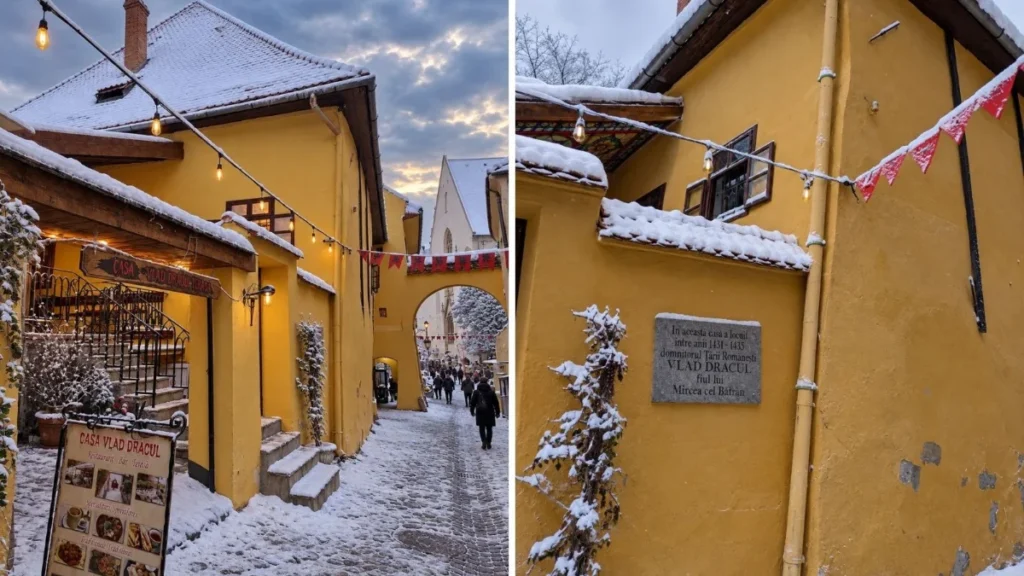
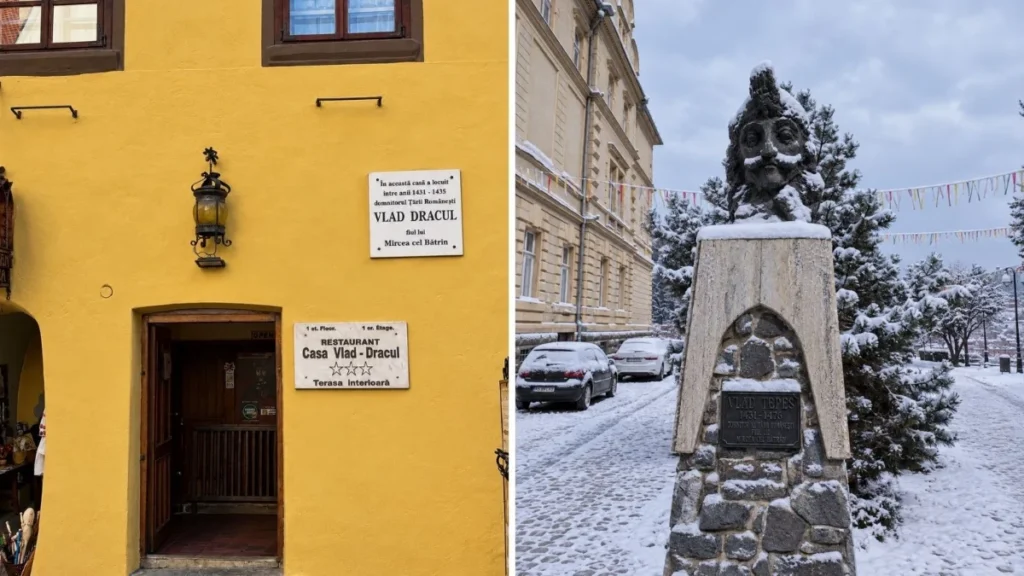
Sighisoara’s most famous resident never actually became Dracula here. But his father did live in this town. Vlad II Dracul was exiled to Sighisoara between 1431 and 1435. His son, Vlad III Ţepes, was born during that exile. The house where it happened still stands in the citadel.
Casa Vlad Dracul: The Medieval House and Restaurant
The mustard-yellow building sits at Piața Muzeului 8. A dragon plaque marks the facade. The ground floor operates as a traditional restaurant. You eat beneath medieval vaults that have stood for centuries. Upstairs, a small exhibit recreates “Dracula’s Birth Room” with dim lighting and period props. Entry costs 10 to 15 RON.
The restaurant itself is worth a stop. Traditional Romanian dishes served in a building from the 1400s. The food is decent. Atmosphere does the heavy lifting. Eating where Vlad’s family once lived adds a layer that no modern restaurant can replicate.
Top Historical Landmarks Inside the Citadel Walls
The things to do in Sighisoara cluster tightly inside the citadel. You can walk between every landmark. Nothing requires transport. Start at the Clock Tower and work your way uphill.
The Sighisoara Clock Tower (Turnul cu Ceas) & Viewpoint
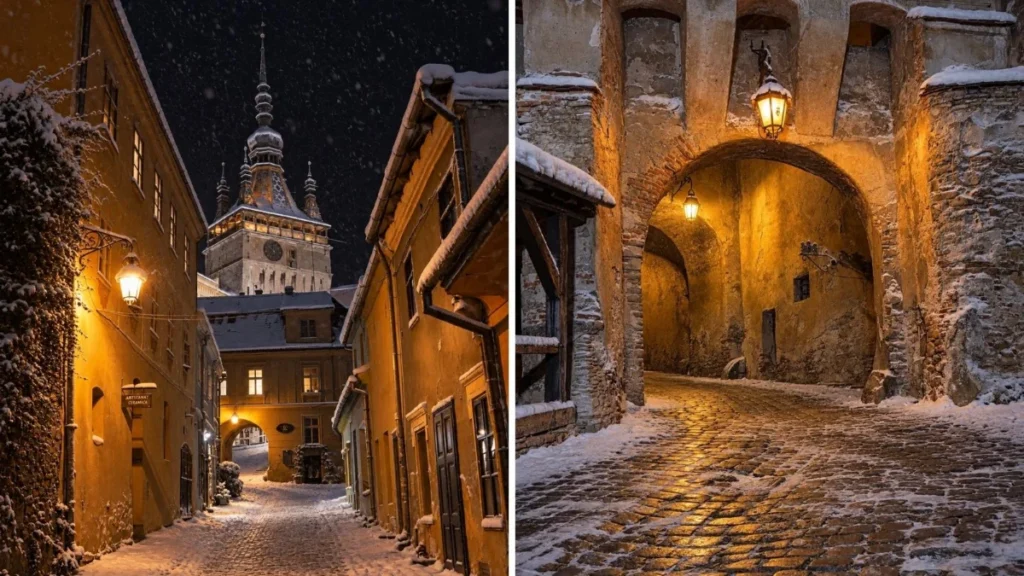
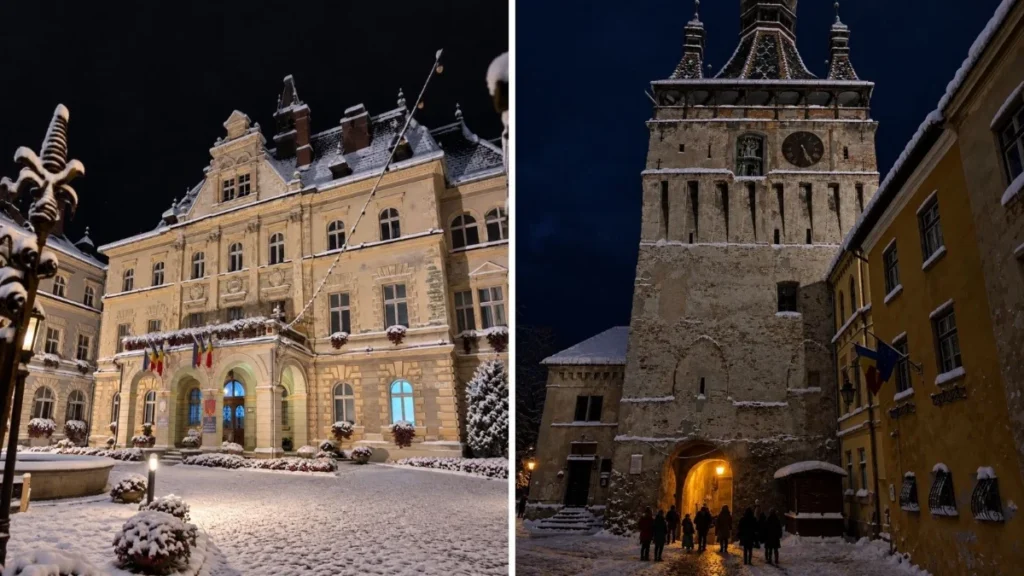
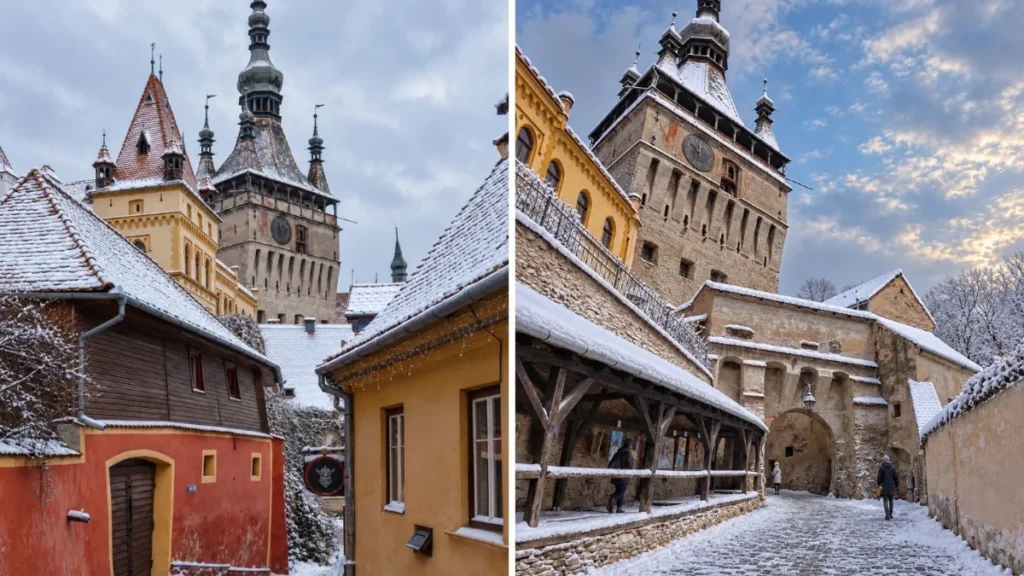
The Sighisoara Clock Tower rises 64 meters above the citadel’s main gate. It controlled access to the fortified town for centuries. Above the clock face, carved linden-wood figures represent pagan gods. Each figure stands for a different day of the week. They rotate into view as the days change.
Winter hours run Tuesday to Friday 09:00 to 15:30. Weekends open 10:00 to 15:30. Mondays the tower is closed. Entry costs 20 RON for adults. Students pay 5 RON. The wooden observation balcony at the top gives a full 360-degree panorama. Citadel rooftops, the river valley, and surrounding hills spread in every direction.
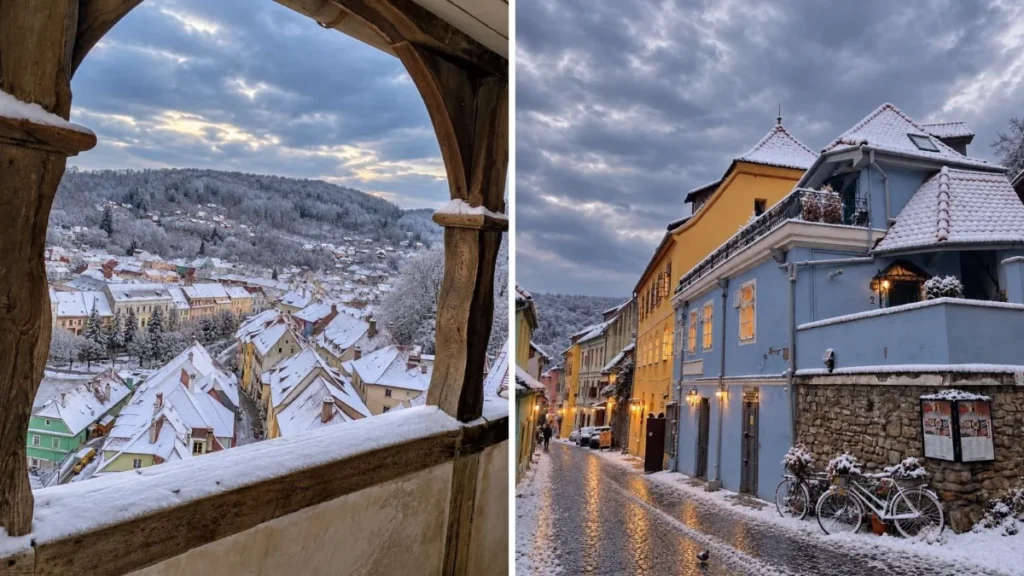
When I reached the top, Sighisoara’s colorful rooftops spread below me. Orange, yellow, green, red. I was looking out from the center of a medieval city. Nothing had changed in centuries. People walked the stone streets below. Watching from above gives a completely different perspective. Spend time at the top. Do not rush it. I have heard about the medieval festival here for years. One day I want to come back during the full festival atmosphere. That is going on the future plans list.
Walking Up the Covered Scholars’ Stairs (Scara Școlarilor)
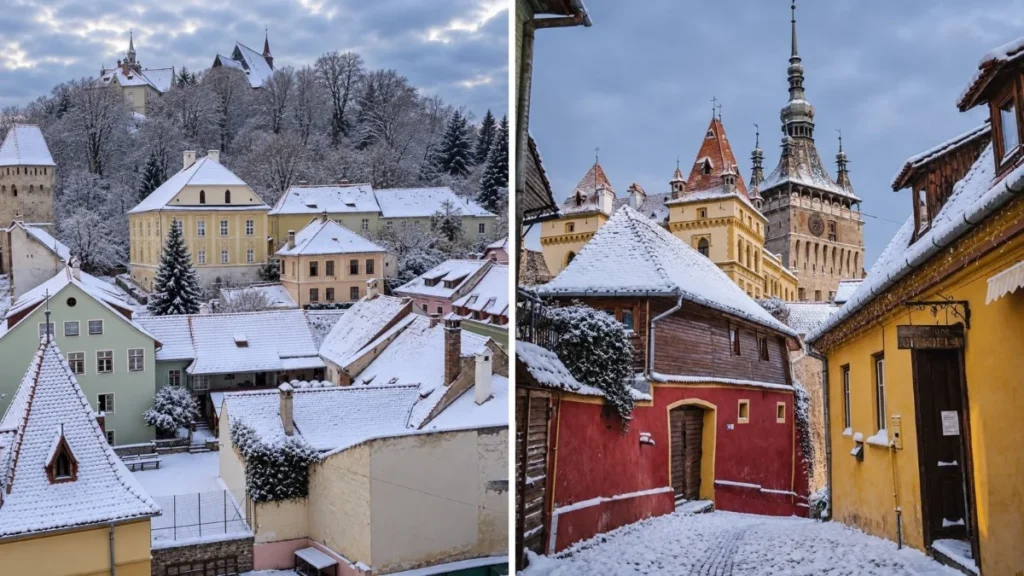
The Scholars’ Stairs connect the lower citadel to the Church on the Hill. Built in 1642, the original structure had 300 wooden steps. Students used the covered tunnel to reach school safely through winter storms and snow. An 1849 renovation reduced the count to 175 steps. Every one of them creaks underfoot.
The stairs are free and open at all hours. Most visitors stop at the Clock Tower and never climb this far. That works in your favor. The higher you go, the fewer people you see.
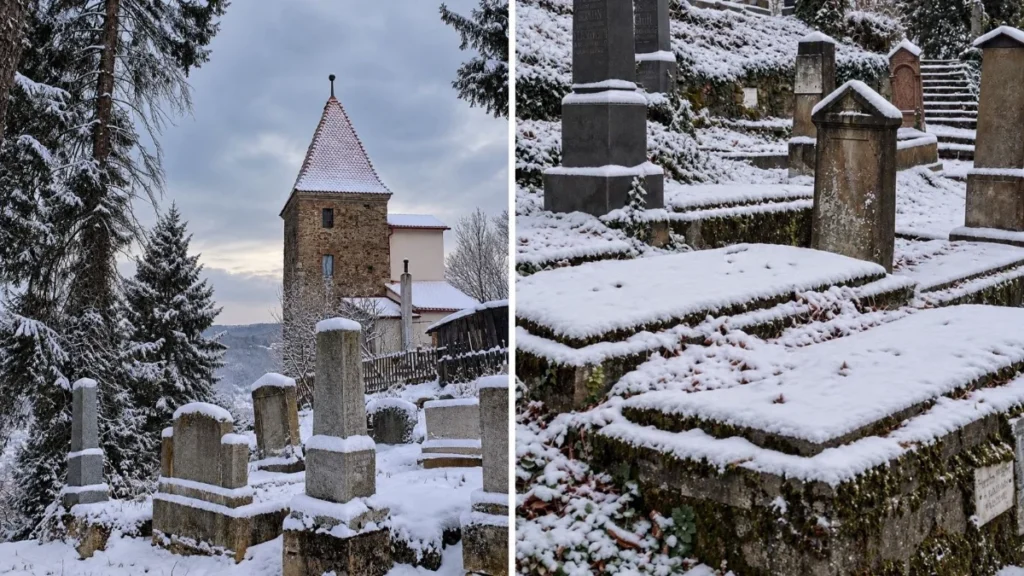
I walked up the Scholars’ Stairs and every step groaned under my weight. The covered wooden tunnel channeled me uphill. When I reached the top, the Saxon Cemetery appeared. Mossy tombstones leaned at odd angles. Ancient trees shaded the graves. Inscriptions in old German marked each stone. Tourist crowds stay at the Clock Tower. Almost nobody walks up to the cemetery. That means the hill belongs to you.
The Haunted Vibe of the Saxon Cemetery and Church on the Hill
Biserica din Deal sits at the top of the Scholars’ Stairs. It is one of the oldest Gothic hall churches in Transylvania. A medieval crypt lies beneath the floor. Entry costs 10 to 15 RON. The interior is austere and powerful. Stone columns hold up a vaulted ceiling that has seen 700 winters.
Behind the church, the Cimitirul Evanghelic stretches through the trees. This is the Sighisoara cemetery that gives the hilltop its atmosphere. Centuries-old Saxon graves line the paths. Stone sarcophagi covered in ivy sit between crooked crosses. German inscriptions weather away slowly. The place is free to enter. Silence fills every corner. Among the things to do in Sighisoara, this spot is the most atmospheric.
Experiencing the Famous Sighisoara Medieval Festival (What to Expect)
The Sighisoara Medieval Festival takes over the citadel every July. Knight duels, street theatre, and craft markets fill the streets during the last weekend. It is the largest medieval festival in Romania.
A warning comes with the excitement. Hotel prices inside the citadel triple during festival week. Rooms book out months in advance. The atmosphere shifts from quiet medieval to crowded carnival. If you want empty stone streets and a calm sunset walk, avoid festival dates.
Winter and late autumn offer the opposite. Fewer tourists. Lower prices. Fog drifting through the towers. The citadel feels like it belongs to another century. Is Sighisoara worth visiting outside the festival? Even more so.
Instagram Spots: The Most Colorful Streets in Sighisoara
Photographing Strada Tâmplarilor (Carpenter’s Street)
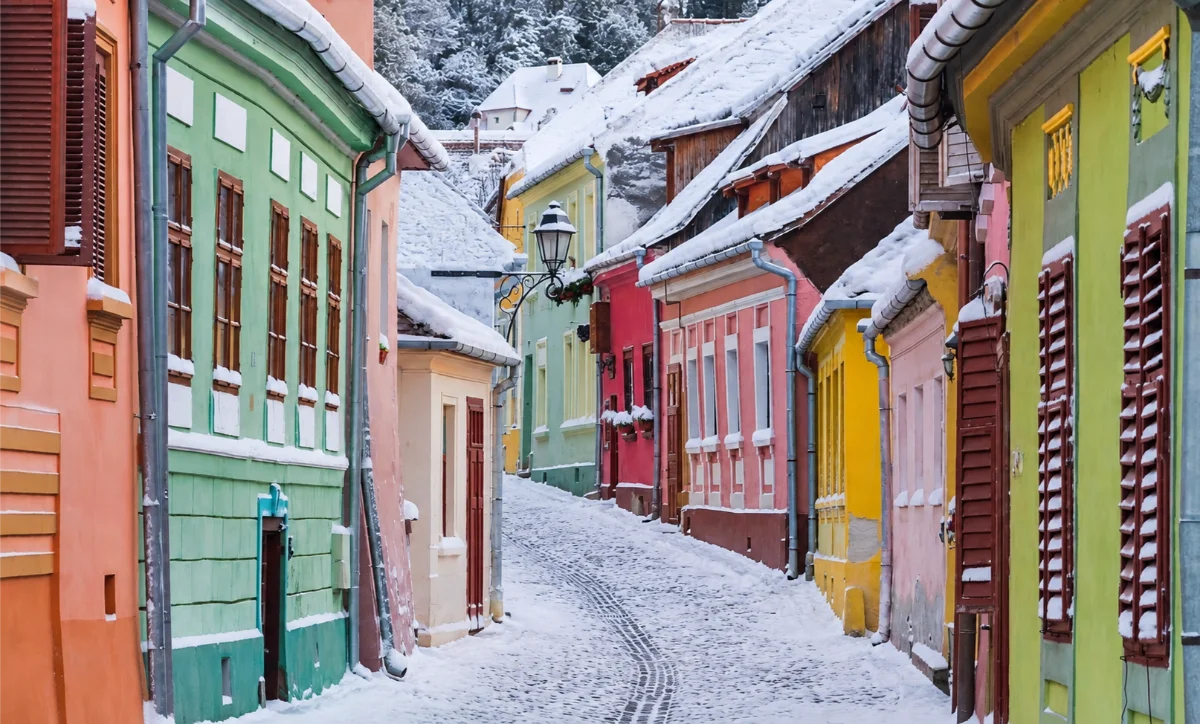
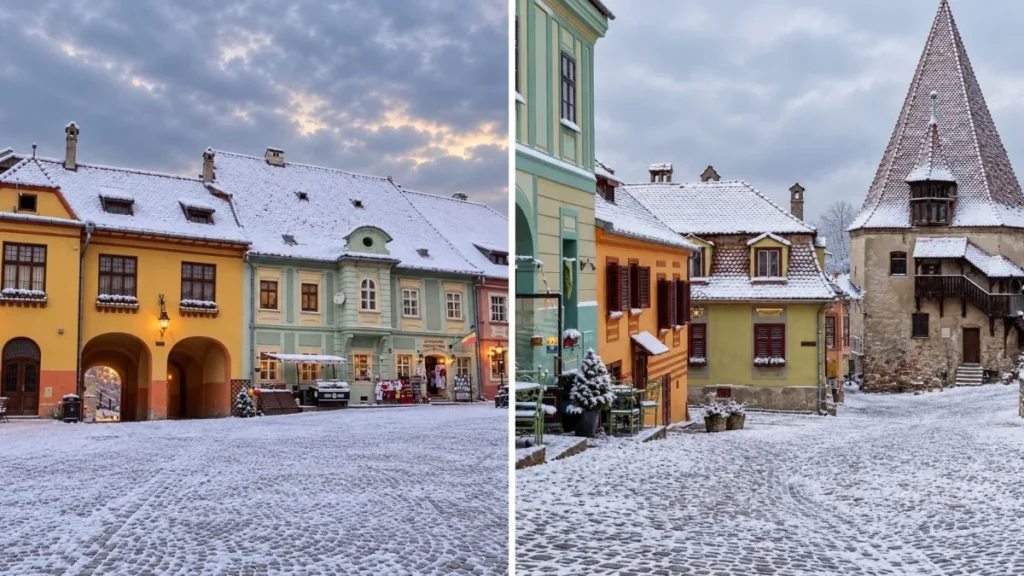
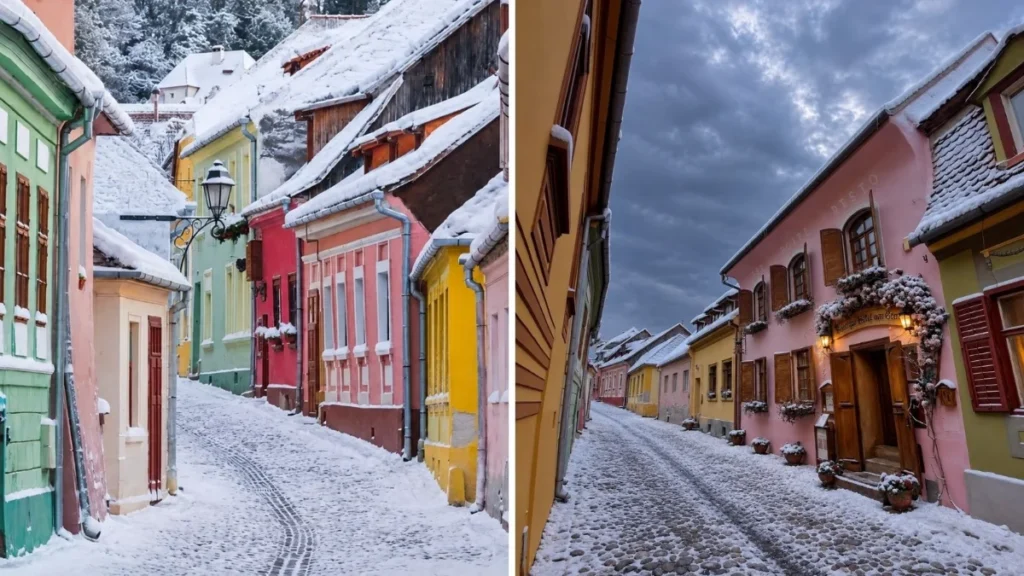
Strada Tâmplarilor is the most photogenic street in the citadel. Pastel yellow, pink, and green Saxon houses curve along the cobblestones. The Clock Tower rises behind them.
Arrive between 08:30 and 10:00 for the best light. Tour buses reach the citadel by mid-morning. Before that, the streets are yours. Soft morning light warms the facades. Shadows stretch long across the stone. Piața Cetății’s north corner offers a clean angle with the tower in the background. Afternoon light works too but the crowds change the mood.
How to Visit Sighisoara on a Day Trip from Brasov (Train vs Bus)
A Brasov to Sighisoara day trip requires honest planning. The distance is not huge but transport options vary wildly.
Rental car: The best option. The drive takes about 1 hour 45 minutes to 2 hours via DN13. You set your own pace. Rupea Castle and Saschiz Fortified Church sit along the route. Both make excellent stops. Compare rental prices here if you plan to drive.
Guided tour: A comfortable alternative. Most tours include a stop at Viscri village. Travel time runs about 2 hours each way. A Sighisoara & Viscri UNESCO day tour handles all logistics from Brasov.
Train: Not recommended right now. Railway construction between Apața and Cața stretches the journey past 3.5 hours. Delays are frequent. A one-way ticket costs 40 to 60 RON. Until the infrastructure work finishes, driving or a tour is the smarter choice.
My Sighisoara hotel guide covers the best options inside and outside the walls. Peles Castle sits in the opposite direction but makes another excellent Transylvania day trip. My Sinaia travel guide covers that route.
Practical Tips
Parking. Cars cannot enter the citadel. Park in the lots below the walls. Rates run 5 to 10 RON per hour. Weekend mornings fill fast.
eSIM. Signal works inside the citadel. Pick up an eSIM before your trip for maps and translation.
Clock Tower hours. Closed on Mondays. Winter hours end at 15:30. Arrive by 15:00 to have time at the top.
Shoes. Cobblestones inside the citadel are uneven and slippery when wet. The Scholars’ Stairs are steep. Wear proper shoes, not sandals.
Overnight vs day trip. A day trip covers the highlights. But sleeping inside the citadel walls adds the evening and morning light. Both are magical. An overnight stay makes Sighisoara feel completely different.
FAQ
Is Sighisoara worth visiting? Yes. It is one of the few continuously inhabited medieval citadels in Europe. The Clock Tower, Scholars’ Stairs, and Saxon Cemetery alone justify the trip. Vlad Ţepes’s birthplace adds a layer no other Transylvania stop offers.
How do I get from Brasov to Sighisoara? Drive or take a guided tour. The car ride takes under 2 hours. Trains currently take 3.5 to 4.5 hours due to construction. A Brasov to Sighisoara day trip by car is the best option.
When is the Sighisoara Medieval Festival? Last weekend of July every year. Expect higher prices and massive crowds. Book months ahead if you plan to attend.
Can I visit Sighisoara in one day? Yes. The citadel is compact. A full day covers the Clock Tower, Casa Vlad Dracul, Scholars’ Stairs, and the cemetery. An overnight stay adds atmosphere.
Is the train from Brasov to Sighisoara reliable? Not currently. Track maintenance work causes delays. Journey times run 3.5 to 4.5 hours. Until construction finishes, drive or book a tour.
What is the best time to photograph the citadel? Early morning between 08:30 and 10:00. Tour buses arrive by mid-morning. Before that, the streets are empty and the light is warm.
Is the Saxon Cemetery worth visiting? Absolutely. It is one of the most atmospheric spots in Sighisoara. Most visitors never climb the Scholars’ Stairs to reach it. That solitude is part of its power.