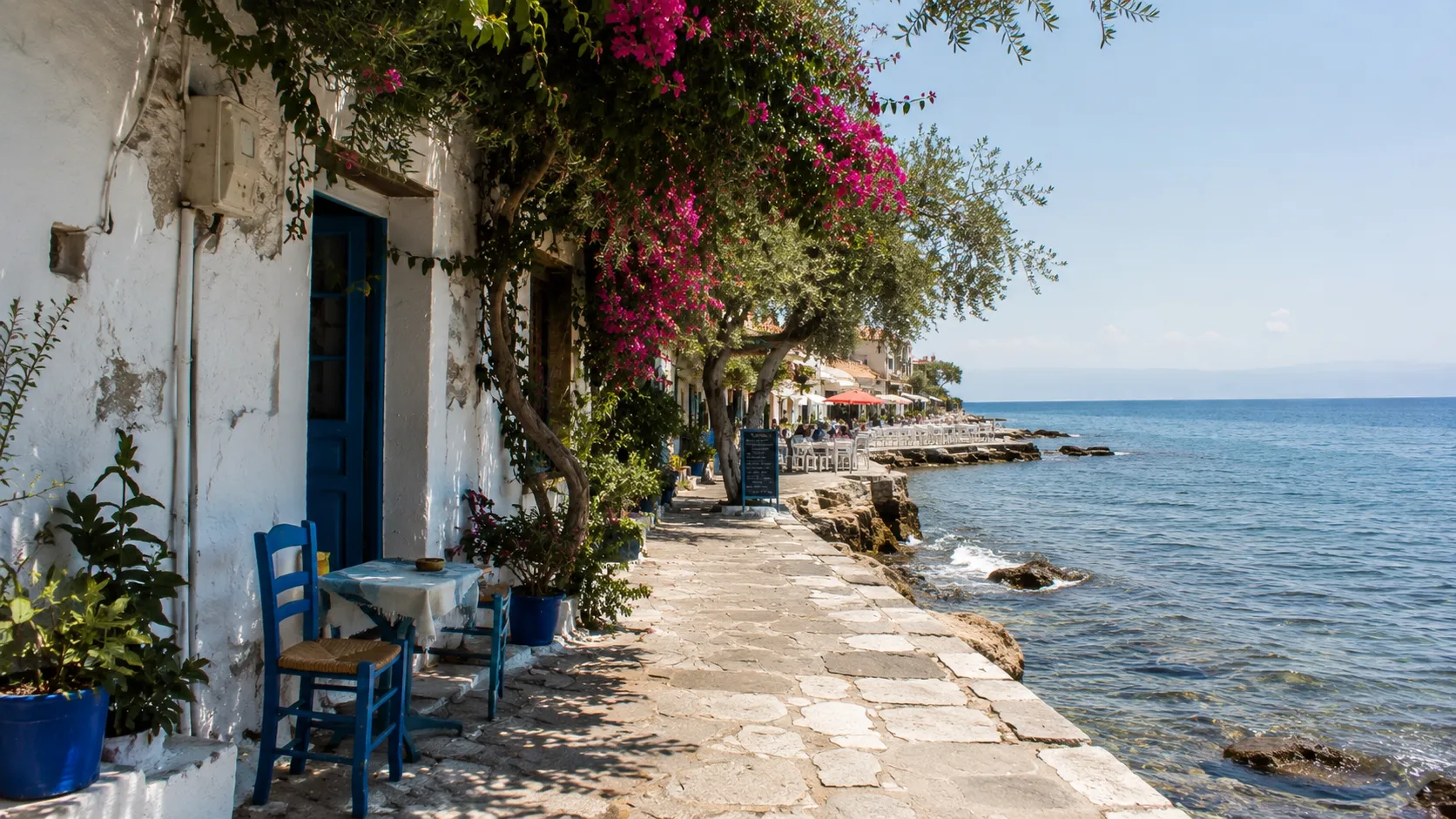
Is Peloponnese Worth Visiting? Honest 2026 Review
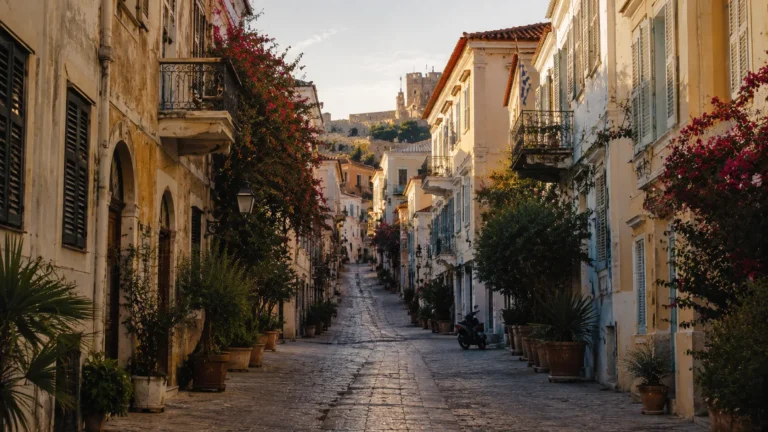
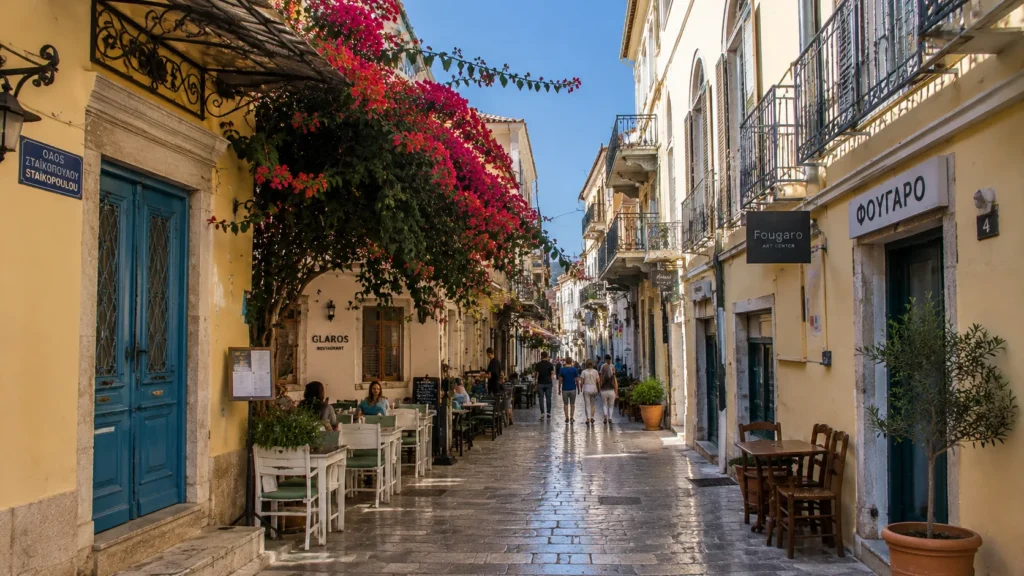
I planned three days in the Peloponnese. Ten days later, I was still there, working remotely from a stone terrace, watching fishing boats come in below Nafplio’s old town. If you’re wondering whether the Peloponnese is worth visiting, that answer tells you something. But let me give you a more useful one.
This is the part of Greece that looks nothing like your Instagram feed. No blue domes. No caldera views. What it has instead is five UNESCO World Heritage Sites on a single road trip, medieval cities carved into cliffsides, and coastline so empty you’ll wonder if you read the map wrong. In 2026, when Santorini is capping visitors and Mykonos adds peak-season surcharges, that matters.
Here’s everything you need to decide if the Peloponnese is worth visiting for your 2026 trip.
Quick Info
| Category | Details |
|---|---|
| Best for | History, slow travel, road trips |
| Not ideal for | Nightlife, non-drivers, trips under 3 days |
| Sweet spot | 7–10 days |
| Best base | Nafplio |
| Getting there | Fly Athens, rent a car at the airport |
| Best time | May–June or September–October |
Why the Peloponnese is Worth Visiting in 2026
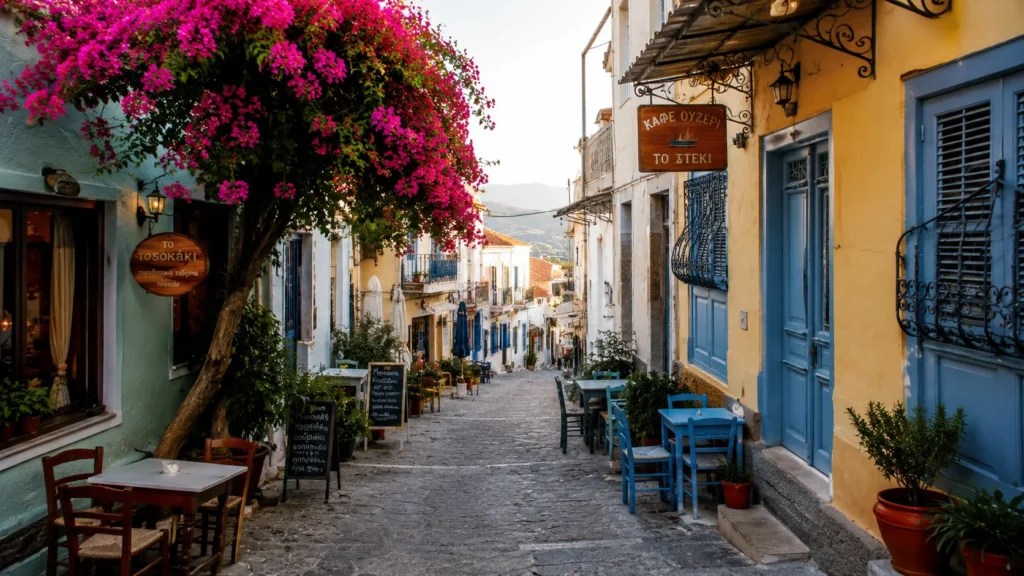
The Peloponnese is worth visiting precisely because it’s the Greece that existed before mass tourism reshaped the islands. Locals still eat dinner at 9pm. Tavernas don’t have menus in six languages. You’ll drive past olive groves harvested by the same families for generations.
In 2026, that gap between the Peloponnese and the islands has widened. Santorini now has restrictions on cruise passenger numbers. Mykonos carries peak-season surcharges. The Peloponnese, however, has none of this. It remains genuinely free — and that’s increasingly rare in Mediterranean Europe.
Five UNESCO Sites on One Road Trip
No other region in Greece offers this density. Ancient Olympia, Epidaurus, Mycenae, Mystras, and the Byzantine churches of the Mani are all within driving distance. Moreover, most of these sites remain uncrowded outside peak morning hours. That combination is hard to find anywhere.
The “Real Greece” Factor
The Peloponnese is where Greeks themselves still vacation. That changes the texture of the experience entirely. Prices are lower, the food is considerably better, and nothing feels performed for tourists. Sparta is an unremarkable modern city. However, ten minutes away, the Byzantine ghost city of Mystras is extraordinary — and almost nobody goes there first.
Why Choose Peloponnese Over the Greek Islands?
Cost
You can stay in a boutique hotel inside Nafplio’s Venetian old town for what you’d pay for a basic room in Oia with no sea view. Additionally, the Peloponnese is driveable from Athens. No flights, no expensive ferry crossings. That changes the budget math significantly.
Crowds
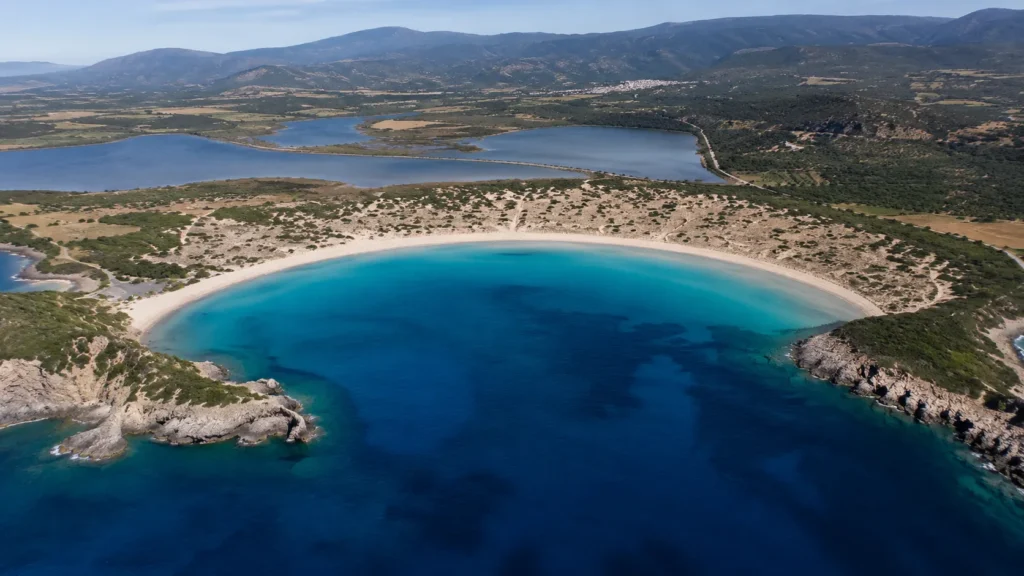
Voidokilia beach — the famous horseshoe bay in Messenia — is getting busier. That said, it’s still nothing like Navagio or Red Beach in high season. The Mani coastline is largely empty. You’ll find bays with five other people in them. Similarly, the ancient sites, while popular in the mornings, clear out considerably by early afternoon. That’s still possible here. On the popular islands, it isn’t.
Authenticity
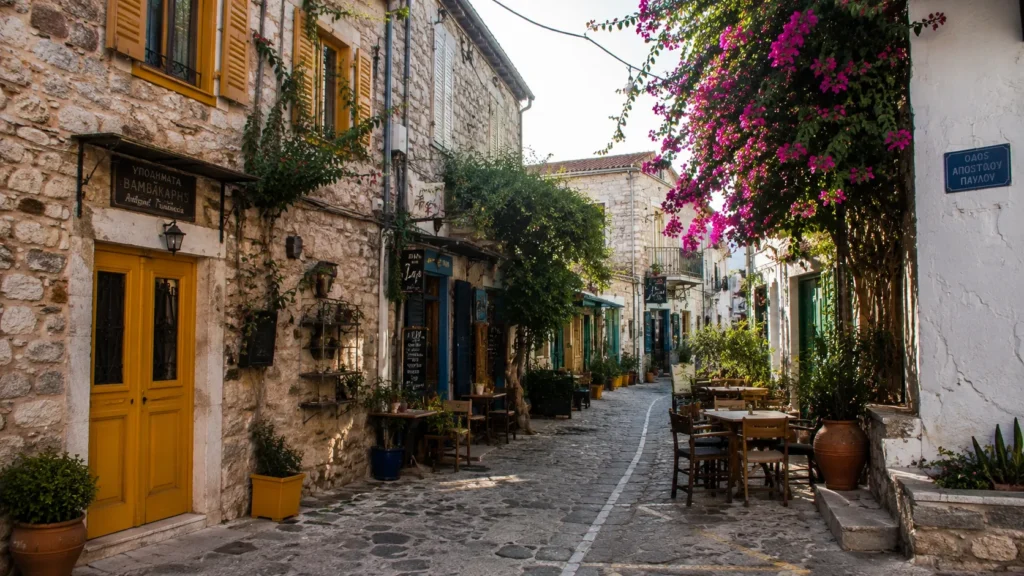
The Peloponnese rewards curiosity. Every inland turn hides another medieval village. Every coastal road ends at a single taverna with plastic chairs and excellent grilled fish. That texture disappears fast on the popular islands. Here, it’s still intact — for now.
Who Should (and Shouldn’t) Visit
Go if you:
- Want history with actual context, not just ruins with a gift shop
- Are comfortable driving — winding mountain roads, narrow village streets
- Travel slowly and like staying somewhere long enough to know it
- Have at least 5–7 days to spare
Skip it if you:
- Don’t want to rent a car. Public transport between villages runs once daily, sometimes less. Getting from Areopoli to Vathia by bus, for example, is not realistic. A car is essential ,not optional. See [How to Get to the Peloponnese] for the full picture.
- Are looking for beach clubs or nightlife
- Have fewer than three days
The Peloponnese rewards slow travel disproportionately. Specifically, the Mani Peninsula punishes rushed itineraries. Give it time and it gives back considerably.
The Honest Verdict: Pros and Cons
| Pros | Cons |
|---|---|
| Far cheaper than the islands | Requires a car |
| 5 UNESCO sites in one road trip | Mountain roads are slow |
| Uncrowded beaches and ruins | Less nightlife |
| Genuine local culture | Some areas very remote |
| Excellent food and wine | Fuel stations sparse in deep Mani |
| No cruise-surge pricing | — |
Practical Tips
Start in Nafplio. If you’re unsure where to begin, the answer is Nafplio. It’s walkable, beautiful, and perfectly positioned for Mycenae and Epidaurus. It’s the right first base for almost everyone. For a full breakdown of the region’s best bases, read [Where to Stay in the Peloponnese].
Don’t underestimate driving times. Mountain roads carry a 50km/h limit. A 100km route can take 2.5 hours. Build a buffer into every day — particularly in the Mani and Arkadia.
Go in May or September. The ancient sites are walkable without heat exhaustion. The sea is warm. The crowds haven’t peaked. It’s obvious advice, and it’s obvious because it’s correct.
Book your rental car before you arrive. In 2026, most local rental offices require an International Driving Permit for US, Canadian, and Australian licenses. Sort this before your flight. Compare car rental rates for the Peloponnese early — availability drops fast in summer.
FAQ
Is the Peloponnese good for first-time Greece visitors? Yes — particularly if you want more than beach time. Nafplio is one of the most manageable and beautiful base towns in all of Greece. Mycenae is 20 minutes away. It’s a strong introduction to Greek history without Athens chaos.
Do I really need a car in the Peloponnese? Yes. KTEL buses connect major towns, but village connections can run once a day or less. For anything beyond Nafplio, a car is the only realistic option.
How does it compare to Crete? Crete is larger and more developed. If you have 8–10 days, the Peloponnese is the smarter choice — you can see it meaningfully in that time. Crete needs at least three weeks. Read [Peloponnese vs Crete: Which is Better for You] for a full comparison.
How many days do you need? Seven days is the sweet spot. Three days covers Nafplio and Argolis well. Ten days gets you properly into Mani and Messenia. See [How Many Days in the Peloponnese] for itinerary options by duration.
Ready to see the bigger picture? My Peloponnese Travel Guide 2026 covers every corner of the region.
Ready to book your base? Where to Stay in Peloponnese: 2026 Region Guide breaks it down by region.
The beaches alone justify the trip. 12 Best Beaches in Peloponnese: Crystal Waters Without the Crowds shows what’s waiting.The villages are where the Peloponnese reveals itself. The 10 Most Beautiful Villages in Peloponnese covers the ones worth slowing down for.