Peloponnese Food Guide: What to Eat in Southern Greece
The Peloponnese food guide starts where most travel guides stop. Greek food gets reduced to the same five dishes everywhere. Horiatiki, souvlaki, spanakopita. However, the Peloponnese has a food culture that most travel guides don’t bother to document.
Sfela is a brined cheese from the Mani that most Greeks outside the region have never heard of. Syglino is a smoked pork preparation with roots going back centuries. The Kalamata olive actually comes from Kalamata. Nemea produces red wines that regularly beat the islands at international competitions. This Peloponnese food guide covers all of it, region by region, with honest notes on where to find each dish.
Quick Info
| Dish / Product | Region | Where to find it | Notes |
|---|---|---|---|
| Sfela cheese | Mani, Laconia | Every Mani taverna | Order grilled as saganaki |
| Syglino | Mani | Mani mezedhes plates | Smoked pork, served cold |
| Kalamata olive | Messenia | Everywhere | The real thing costs more |
| Lalagia | Mani (Areopoli) | Areopoli bakeries, morning only | Fried dough, buy fresh |
| Lupin beans | Mani | Free appetizer at most tavernas | Always order them |
| Nemea Agiorgitiko | Nemea, Corinthia | Wine shops, tavernas, estate tours | Book a tasting |
| Thyme honey | All regions | Local markets, roadside shops | Mani thyme honey is exceptional |
| Laconia figs | Laconia | Roadside stalls, late summer | Best in August-September |
Why the Peloponnese Food Guide Starts in the Mani
The Mani has the most distinctive food culture in this Peloponnese food guide. Geography explains it. The peninsula was isolated for centuries, accessible only by sea. As a result, Maniot cuisine developed separately from the rest of Greece, preserving techniques and ingredients that disappeared elsewhere.
The isolation created necessity. Preservation methods like smoking (Syglino) and brining (Sfela) were practical solutions, not aesthetic choices. Moreover, the harsh landscape of the deep Mani meant that wild herbs, legumes, and cured meats formed the basis of the diet rather than the fresh vegetables and seafood common on the islands.
Today, that culinary heritage is still largely intact. Specifically, the villages of the deep Mani serve food that hasn’t changed much in two hundred years. This Peloponnese food guide treats the Mani as its starting point for exactly that reason.
Sfela: The Fire Feta
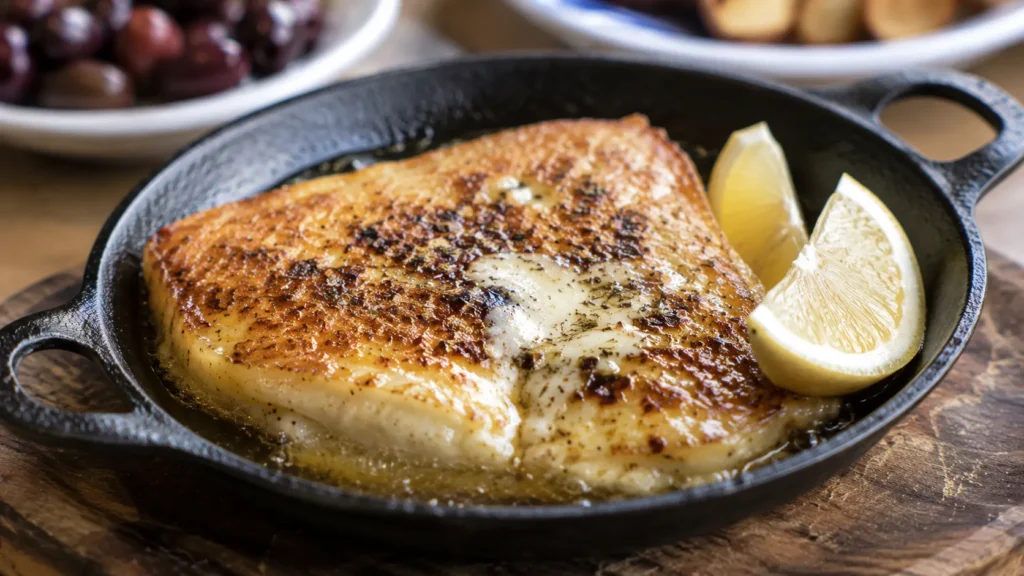
Sfela is the defining cheese of this Peloponnese food guide. It’s a PDO-protected brined cheese from the Mani and southern Laconia, sharper and firmer than feta, with a saltiness that survives heat without melting into a puddle.
The best way to eat Sfela is grilled as saganaki. Order it this way specifically. Raw, it’s good. Grilled in a hot pan until it forms a golden crust on the outside while staying firm inside, it’s one of the best cheese preparations in Greece. Squeeze lemon over it immediately when it arrives.
Most Mani tavernas serve Sfela. However, quality varies significantly. In Areopoli, Gerolimenas, and Limeni, you’re most likely to get the genuine article. Further north toward Kalamata, it’s often replaced with feta passed off as Sfela. Similarly, in tourist-facing restaurants near Nafplio, the real thing is harder to find.
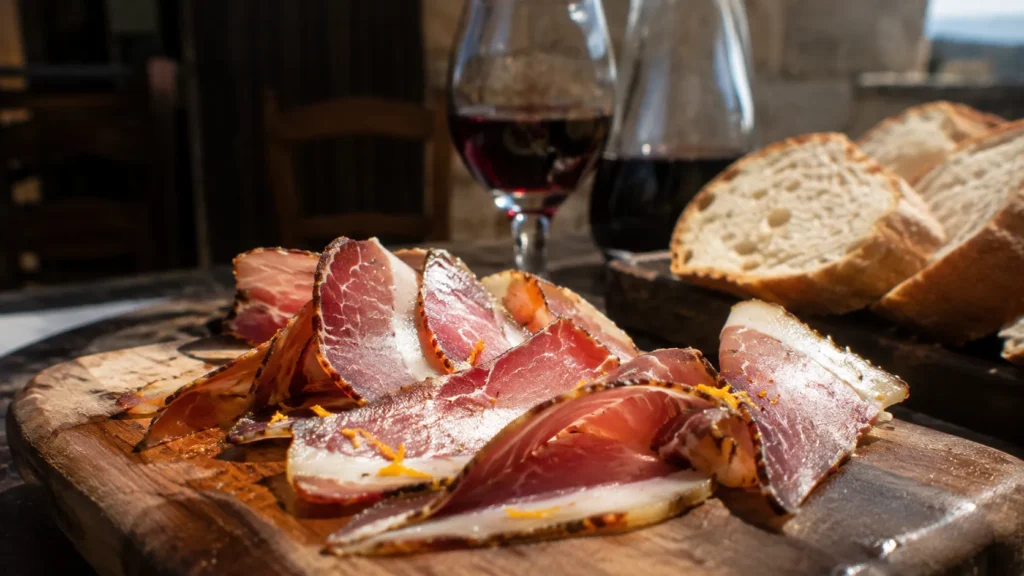
Syglino: Smoked Pork from the Deep Mani
Syglino is cured, smoked pork prepared with orange peel and local herbs. It’s one of the oldest preserved meat traditions in Greece and central to any serious Peloponnese food guide. The meat is served cold, thinly sliced, as part of a mezedhes plate.
The flavor is unlike any other Greek charcuterie. The combination of smoke, citrus, and the herbs of the Taygetos mountains gives Syglino a complexity that’s specific to the Mani. Furthermore, it pairs well with Sfela and the local Agiorgitiko from Nemea.
Finding authentic Syglino requires going to Mani. Supermarket versions exist but miss most of the character. In Areopoli, several small producers sell directly. Ask at your hotel or the morning bakery.
Kalamata Olives and World-Class Oil
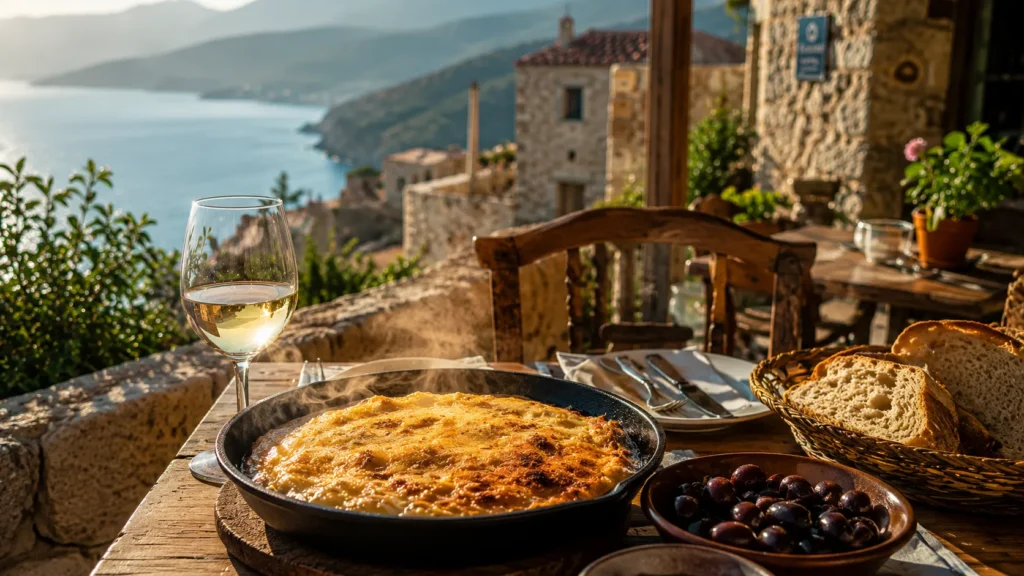
The Kalamata olive is probably the most internationally recognized product in this Peloponnese food guide. However, most people eating “Kalamata olives” outside Greece are eating a variety, not the real PDO-protected product from the actual Kalamata region.
The genuine article is larger, darker, and less processed than the export versions. The flesh is firmer and the flavor more complex. Buy them at a local market in Kalamata or directly from a roadside stall in Messenia. Price is higher than supermarket versions. That’s how you know you have the real thing.
Peloponnese olive oil deserves equal attention. The region produces some of the highest-quality extra virgin olive oil in the world, with lower acidity levels than most Italian or Spanish competition. Specifically, the oils from the Laconia and Messenia regions are consistently among the best in Greece. Buy a bottle from a producer rather than a supermarket.
Nemea Wine: The Agiorgitiko Grape
Nemea is the most important wine region in this Peloponnese food guide and one of the most underrated in all of Europe. The Agiorgitiko grape, grown at altitude in the Nemea valley, produces deep red wines with cherry fruit, soft tannins, and good aging potential.
Most boutique producers in Nemea are small operations working by appointment. In 2026, tastings run between €15 and €35 per person. The most efficient way to experience the region, particularly if you’re based in Nafplio, is a guided tasting. This six-hour tour from Nafplio visits two award-winning wineries and the ancient stadium of Nemea and includes transport.
Additionally, Nemea wine is available throughout the Peloponnese at tavernas and wine shops. Order the house red in any decent Peloponnese restaurant and there’s a good chance it’s Agiorgitiko. Ask specifically for “Nemea” if you want to be sure.
Lalagia and the Morning Bakeries of Areopoli
Lalagia are fried dough pieces, served hot with honey or sugar, made fresh in the bakeries of Areopoli in the morning. They’re not a restaurant dish. Moreover, they’re not available all day. The Areopoli morning bakery sells them from around 7am until they run out, which is usually before 10am.
Buy a bag and eat them walking through the town before anyone else is awake. They’re the best possible start to a day in the deep Mani. This is also the cheapest food experience in this entire Peloponnese food guide, at around €2-3 for a generous portion.
Lupin Beans: The Default Mani Appetizer
Lupin beans are served as a free appetizer at almost every taverna in the Mani. They come in a small bowl, boiled and salted, and are eaten by squeezing the bean out of its skin. The texture is firm and slightly bitter.
They’re a specifically Maniot tradition. Indeed, further north toward Nafplio or Corinth, lupin beans disappear from menus entirely. Order them every time they appear. They’re one of the most genuine and affordable tastes in this Peloponnese food guide.
Traditional Taverna Etiquette in the Peloponnese
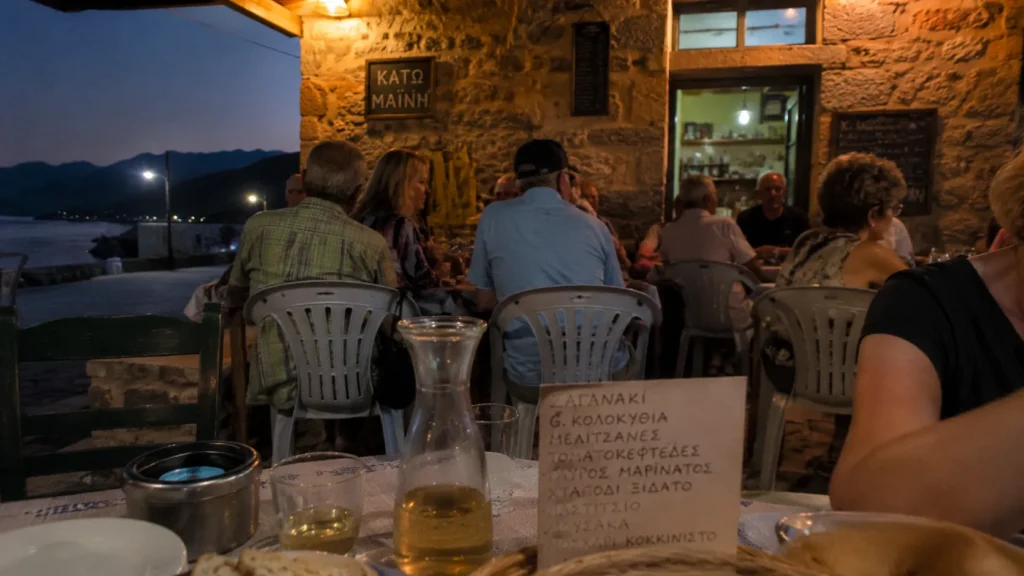
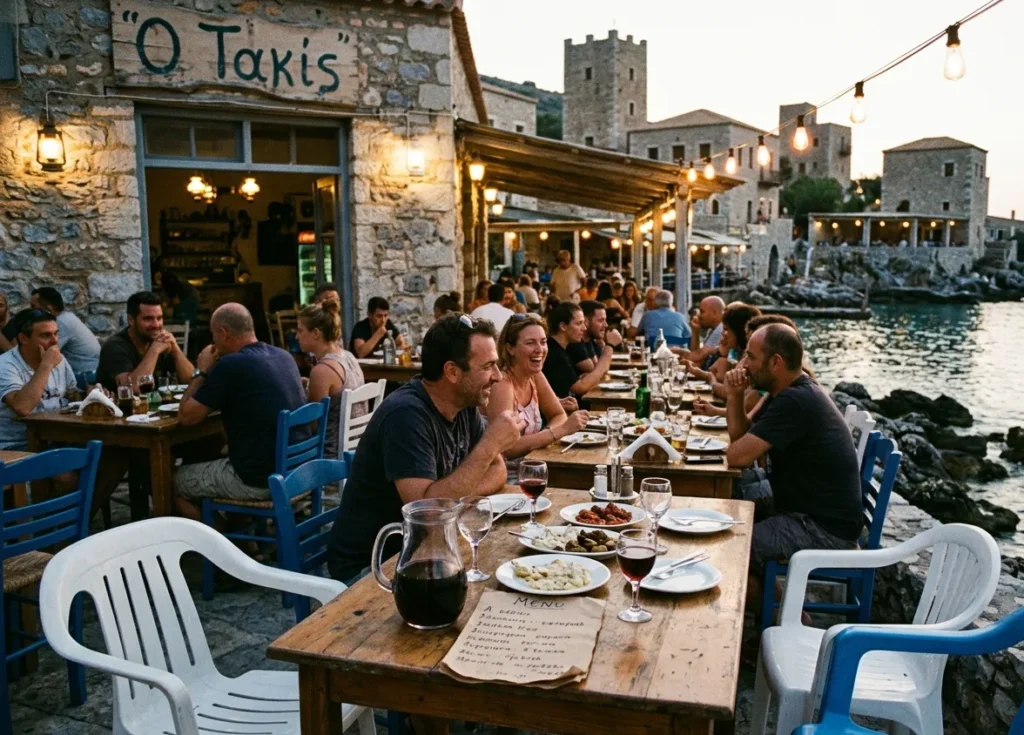
The best tavernas in this Peloponnese food guide share three characteristics: plastic chairs, handwritten menus, and no English-language signs. These are reliable indicators of a kitchen that cooks for locals rather than tourists.
Dinner in the Peloponnese starts at 9pm. Arriving before 8:30pm at a local taverna often means you’ll be eating before the kitchen is fully warmed up. Show up at 9pm or later, order a carafe of the house wine, and let the meal take as long as it takes. That’s the correct way to use this Peloponnese food guide.
In Mani specifically, don’t arrive at a popular coastal restaurant expecting a table on a summer evening without a reservation. Limeni harbor tavernas fill by 8pm in July and August. Call ahead or ask your hotel to book.
Practical Tips
Order Sfela grilled, always. Raw Sfela is fine. Grilled Sfela saganaki is one of the best things you’ll eat in the Peloponnese. Don’t leave without having it this way at least once.
Buy Kalamata olives and olive oil to take home. Local market versions are significantly better than anything available outside Greece. A 500ml bottle of good Laconia olive oil costs around €8-12 and makes an excellent gift.
Plan a wine tasting if you’re near Nafplio or Corinth. Nemea is 30 minutes from Nafplio. The region rewards a half-day visit. For a full itinerary that includes wine country, see Ultimate 7-Day Peloponnese Road Trip Itinerary (2026 Updated).
Pair the food guide with the right base. Where you stay determines which cuisine you access most easily. For a full regional breakdown, see Where to Stay in Peloponnese: Best Towns & Hotels for 2026.
FAQ
What is the most famous food in the Peloponnese? Kalamata olives are the most internationally recognized. Locally, Sfela cheese and Syglino smoked pork from the Mani are the most distinctive dishes you won’t find elsewhere.
Where can I try Nemea wine in the Peloponnese? At any decent taverna throughout the region, or at the source in Nemea via a winery tasting. This guided tour from Nafplio visits two award-winning wineries and includes transport.
What should I order at a Mani taverna? Start with lupin beans if they’re offered. Order Sfela saganaki as a starter. Ask what the kitchen made that day for a main. In Limeni and Gerolimenas, grilled fish is exceptional. In Areopoli, meat dishes are better.
Is the food in the Peloponnese expensive? No. A full meal for two with wine at a local taverna runs €35-55 in most places. Limeni and Monemvasia harbor restaurants charge more, typically €50-80 for two. For the money, the quality is exceptional compared to equivalent meals on the popular islands.
A good trip here takes some planning. My Peloponnese Travel Guide 2026 does the heavy lifting.The best food is always near the best bases. Where to Stay in Peloponnese: 2026 Region Guide covers where to position yourself for the region’s best eating.The Mani has its own culinary identity. Where to Eat in Mani: Best Restaurants & Local Tavernas covers the places locals actually go.