
3 Days Franconia Christmas Markets Itinerary: A Winter Fairytale Guide
This Franconia Christmas market itinerary took me through three medieval towns in southern Germany. I had always gone to the bigger markets in Munich or Cologne. Then a family visit changed my plans entirely. Three days, three towns, and zero rental cars later, I was sold. The stalls were smaller. The crowds were thinner. The Glühwein honestly tasted better, too.
This trip felt like a real Germany winter fairytale. Not in a theme-park way, but in a quiet, personal way. These towns still celebrate Christmas the way they have for centuries. If you want hidden Christmas markets in Germany, Franconia is where to look.
Quick Info
| Info | Details |
|---|---|
| Route | Würzburg → Rothenburg ob der Tauber → Bad Wimpfen |
| Duration | 3 days |
| Transport | Regional trains, no car needed |
| Best ticket | Deutschland-Ticket (covers the full route, including Baden-Württemberg) |
| Car rental | Compare rental prices here (we didn’t rent one) |
| eSIM | Stay connected with an eSIM |
| Top tour | Private Night Watchman Tour, Rothenburg |
| Best time | Late November to late December |
Why the Franconian Fairytale Route Is Germany’s Best Kept Winter Secret
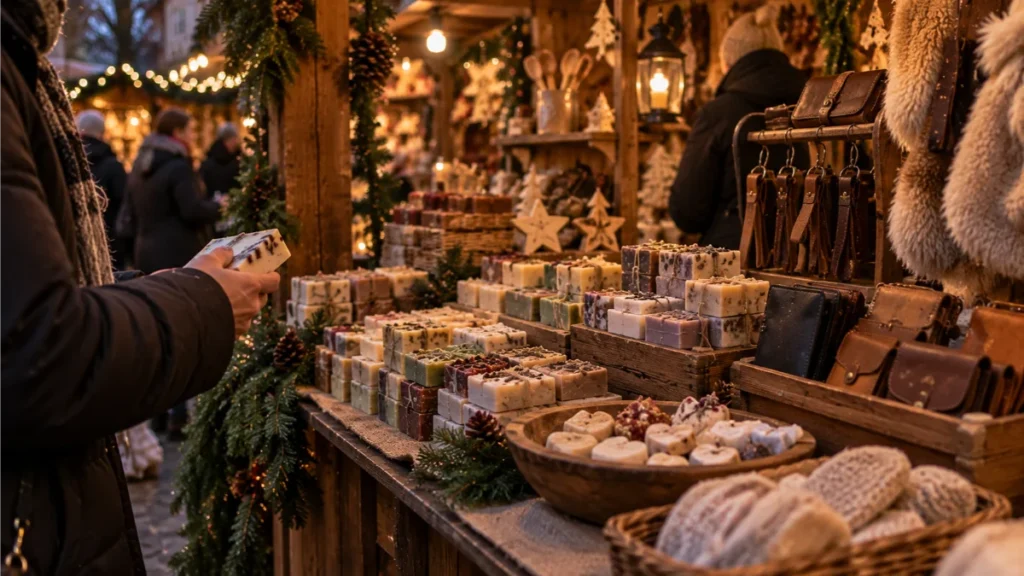
Most winter itineraries in Germany send you to Nuremberg or Dresden. Those markets are beautiful, but they are enormous. The crowds alone can feel overwhelming by mid-December. Franconia offers something completely different. These towns still feel genuinely local during Advent. Vendors know each other by name. The market stalls sell what people from the region actually buy.
Würzburg, Rothenburg, and Bad Wimpfen connect naturally by train. Each town brings something the others do not. One has a Baroque palace surrounded by vineyard hills. Another has medieval walls and a legendary market. The third hides an authentic Christmas market most visitors never discover.
This is not a rushed, city-hopping kind of trip. The Franconia Christmas market itinerary works best slowly. Spend a full day in each town. Wander without a checklist. That is how hidden Christmas markets in Germany reveal themselves. Think of it as your own Germany winter fairytale, just with better sausages.
Day 1: Würzburg, Palaces, Castles, and Cozy Stalls
Start your Franconia Christmas market itinerary in Würzburg. The city is easy to reach by train from Frankfurt. You can also connect quickly from Munich. Most visitors walk from Würzburg Hauptbahnhof straight to the market.
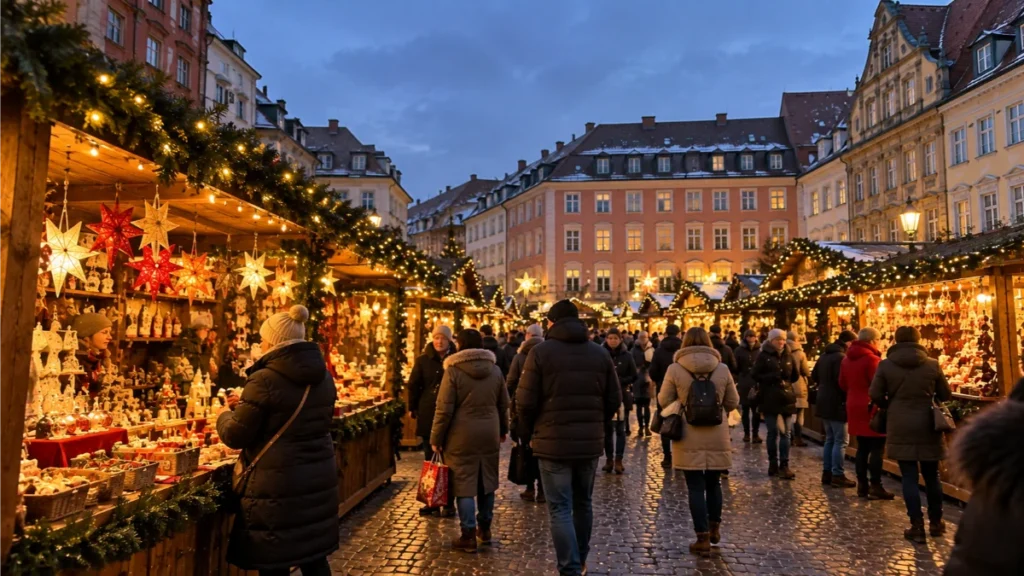
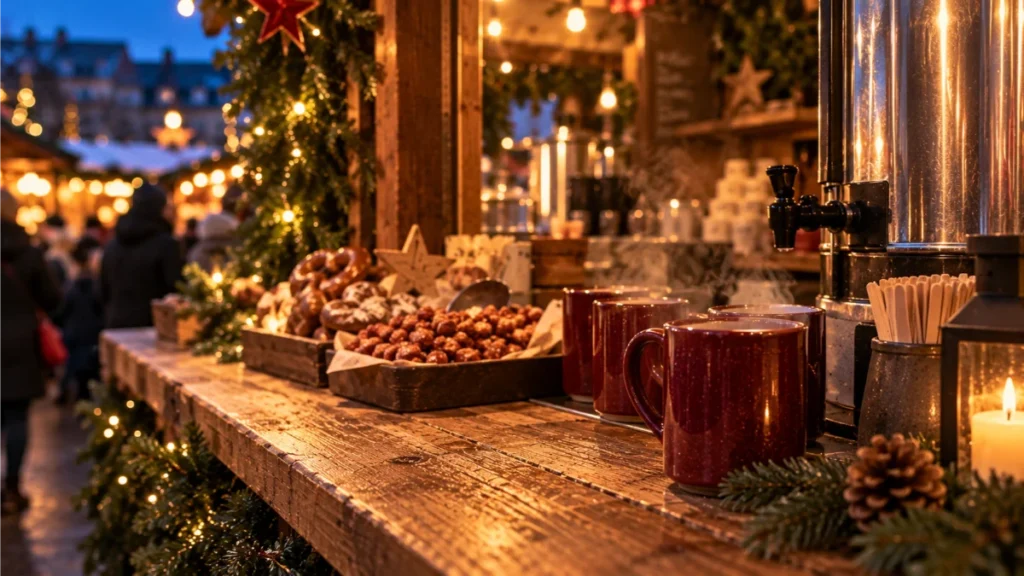
The Würzburg Christmas market wraps around the Marienkapelle. Stalls sell handmade ornaments, roasted almonds, and Franconian wine. This region produces excellent whites. Skip the Glühwein at least once and try Silvaner instead. It tastes better than you expect on a cold evening.
After the market, visit the Würzburg Residenz. Even in winter, the palace and its famous ceiling fresco deserve your time. Then walk across the Alte Mainbrücke. On cold evenings, the bridge gets quieter. The Marienberg Fortress glows above the river.
If time allows, walk up to Festung Marienberg. The views over the Main river are striking in winter light. On a clear day, you can see the vineyards stretching along the hillsides. Most of the walking in Würzburg is flat, so it suits travelers with luggage.
End the day with Franconian sausages at the stalls near the Rathaus. Pair them with another glass of local wine. Würzburg sets the tone for the rest of this medieval town Christmas route. It is large enough to fill a full day, yet compact enough to walk easily.
Day 2: Rothenburg ob der Tauber, the Ultimate Christmas Town
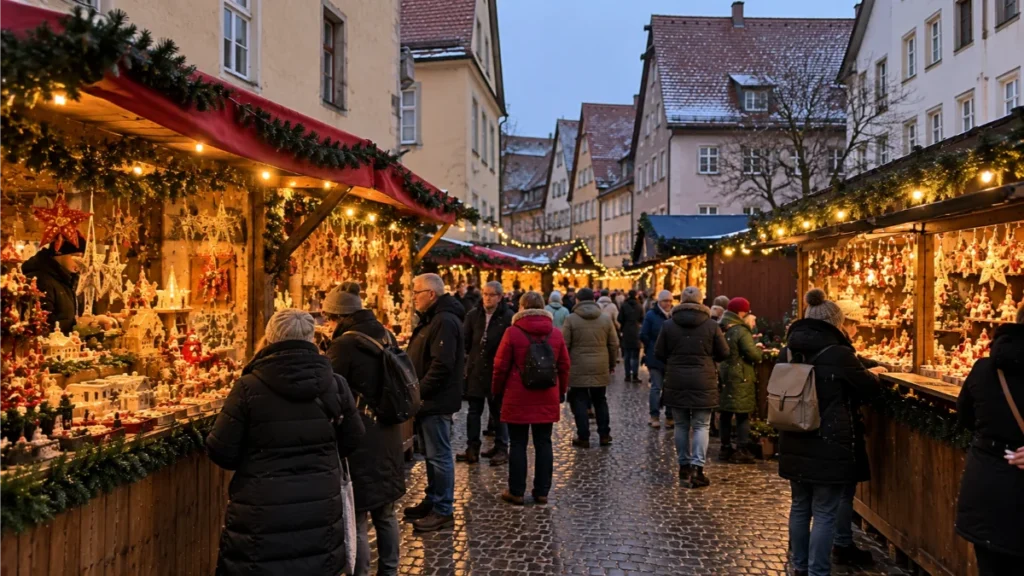
Rothenburg ob der Tauber is the heart of this itinerary. The Rothenburg ob der Tauber Christmas market is called the Reiterlesmarkt. It fills the Marktplatz and surrounding lanes. Walking through the medieval gates into the market feels like stepping inside a storybook.
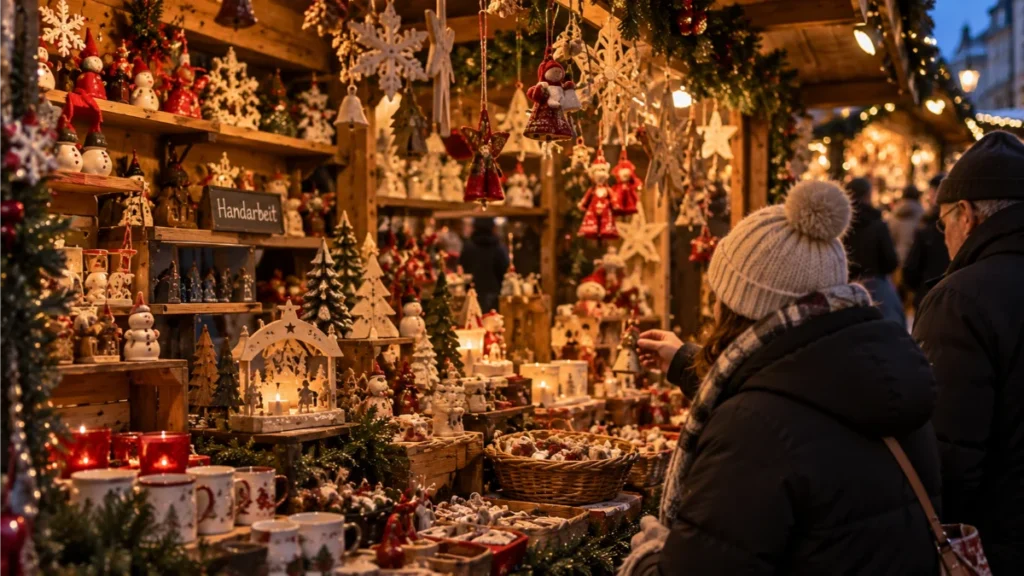
Spend the morning at the stalls. The Reiterlesmarkt is famous for handcrafted wooden decorations. You will also find Schneeballen everywhere. That is Rothenburg’s signature pastry. Visit the Käthe Wohlfahrt Christmas store for ornaments you cannot find anywhere else. In the afternoon, walk the town walls. The views over the Tauber valley are worth every step.
The Reiterlesmarkt gets its name from a local legend about a ghostly rider. You will see references to the story throughout the market. The atmosphere after dark is especially strong. Fairy lights reflect off the half-timbered facades. The smell of roasted almonds fills the narrow lanes.
After the market, book a private Night Watchman Tour. The one-hour evening walk covers quiet medieval streets and St. James Church. The night watchman shares stories about local legends and city history. It pairs perfectly with the Reiterlesmarkt atmosphere.
Choosing your hotel carefully matters if you visit without a car. I put together a full guide on where to stay in Rothenburg ob der Tauber. It covers picks inside the walls and near the station.
Rothenburg deserves an overnight stay. The evening atmosphere is completely different from the daytime crowds. Once the day-trippers leave, the streets empty out. That quiet, lantern-lit version of the town is the real reward. It is also why this Franconia Christmas market itinerary spreads across three full days.
Day 3: Bad Wimpfen, a Hidden Medieval Magic
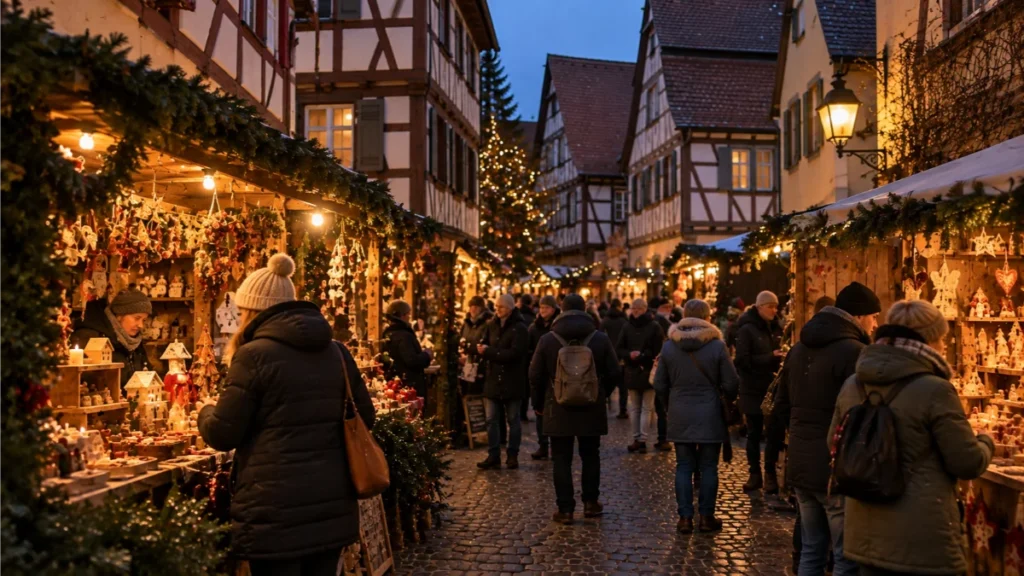
On the final day, this itinerary leaves Franconia behind. Bad Wimpfen sits in the Neckar valley, in Baden-Württemberg. It is not technically part of Franconia. However, it connects naturally by train from Rothenburg. The Altdeutscher Weihnachtsmarkt fills the medieval center. Stalls line up between half-timbered houses and stone towers. It is one of the most authentic hidden gems in Germany for winter.
One critical warning comes first. The Bad Wimpfen Christmas market runs only on weekends. It opens Friday to Sunday during the first three Advent weekends. Check the exact dates before building your schedule around it. My Bad Wimpfen Christmas Market guide covers opening hours, food, and activities.
This trip was different for me. We had a brand-new baby in the family to meet. So my time in Bad Wimpfen was shorter than I would normally plan. I focused on the Kaiserpfalz and the historic center instead. Honestly, no amount of honey-roasted almonds was worth missing those family hours.
If your schedule allows, give Bad Wimpfen a full day. The Kaiserpfalz ruins are impressive on their own. The Blue Tower offers views across the Neckar valley. A longer visit also lets you stay for the evening atmosphere. On Friday and Saturday nights, the town runs a Night Watchman Tour.
The train station sits below the historic center. Expect a short uphill walk after arriving. For the full route from Stuttgart or Rothenburg, I wrote a separate guide. It explains how to travel between Franconian Christmas markets by train. Bad Wimpfen is also a perfect medieval town Christmas stop to end the trip.
Practical Tips
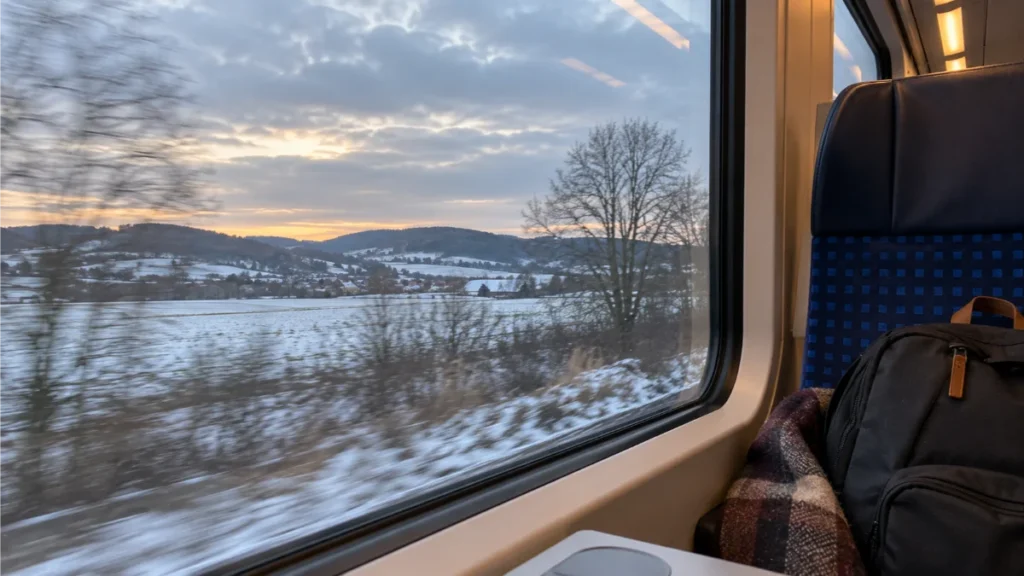
Train travel. Regional trains connect all three towns on this route. You do not need a car. The Deutschland-Ticket covers the full journey across Bavaria and Baden-Württemberg. The Bayern Ticket only works within Bavaria. It will not cover the leg to Bad Wimpfen. You can travel Franconia by train in winter without any stress.
Luggage. Keep your bags manageable. Steinach, the transfer point for Rothenburg, has no luggage lockers. The branch-line train typically arrives at a small platform. The transfer is short and simple. Just do not bring a bag you cannot carry quickly.
Car rental. We did not rent a car for this trip. If you prefer driving the Romantic Road, compare rental prices before you book. It opens up smaller villages along the way.
eSIM. Mobile data makes checking train schedules much easier. Pick up an eSIM before your trip and stay connected from landing.
Packing. Temperatures drop below freezing in December. Bring thermal layers, a waterproof jacket, and shoes with grip. Cobblestones get icy after dark. A warm scarf and gloves are essential for evening market visits. You will be standing outside for hours.
Timing. Arrive at each market by early afternoon. Stalls close between 8 and 9 PM. The best atmosphere starts after sunset.
Christmas market dates. Most Franconia markets run late November through December 23. Bad Wimpfen is the exception with its weekend-only schedule. Confirm every date before booking your trains and hotels.
FAQ
When do the Franconia Christmas markets open? Most markets open in late November and close around December 23. Bad Wimpfen is the exception. It only operates on Advent weekends. Always confirm the exact dates before planning your trip.
Can I visit all three towns in one day? You could, but you would rush through everything. This Franconia Christmas market itinerary works best over three days. One town per day gives you time to explore properly. That slower pace is what makes this Germany winter fairytale work.
Do I need a car for this route? No. Regional trains connect Würzburg, Rothenburg, and Bad Wimpfen. The Steinach transfer to Rothenburg is straightforward. Keep your luggage light and you will be fine.
What is the Reiterlesmarkt? The Reiterlesmarkt is Rothenburg ob der Tauber’s Christmas market. It takes its name from a local legend about a ghostly rider. The market fills the Marktplatz and the surrounding medieval streets every Advent season.
Is Bad Wimpfen worth a short visit? Yes. Even a half-day covers the Kaiserpfalz and the stalls. A longer stay is always better. A short stop still gives you a genuine feel for the town. It is one of the best hidden Christmas markets in Germany.
What makes this Franconia Christmas market itinerary different from other German routes? Scale. These three towns are smaller and less commercial than the big-city markets. You get handmade crafts, local wine, and genuine Advent traditions. It feels more like a Germany winter fairytale than a tourist attraction.


One Comment